
Dissolving a Business in Europe: What Founders Need to Know
Dissolving a business in Europe? Starcycle breaks down the legal steps, costs, and timelines that founders must know before closing.


Closing a company in Europe is rarely straightforward. Whether winding up an LLC, ending a GmbH, or shutting down an SAS, the process involves legal filings, tax clearances, creditor notifications, and regulatory steps that vary significantly by country. How To Close An LLC? Founders navigating the dissolution of an LLC across European jurisdictions often find that local rules, timelines, and compliance requirements differ far more than expected. Understanding what each step actually demands, from deregistration to final liquidation, is the first move toward a clean exit.
Starcycle specializes in guiding founders through every stage of this process, removing the burden of piecing together advice from multiple sources. The platform handles striking off a company, settling outstanding liabilities, and completing formal dissolution steps, so nothing gets missed. For founders ready to move forward without getting buried in paperwork or local compliance requirements, Starcycle offers a clear path to business closure.
Table of Contents
- Why Many European Founders Underestimate Business Dissolution
- What Dissolving a Business in Europe Actually Involves
- The Most Common Mistakes Founders Make During Dissolution
- Why Closing a European Business Has Become More Complicated Than Ever
- What Founders Should Do Before Filing for Dissolution
- Who Can Help Founders Dissolve a Business in Europe?
- How Starcycle Shows What Founder-Centered Dissolution Can Look Like
- Sign up to Make Your Business Closure Process Easier
Summary
- European business dissolution is significantly more complex than founding, yet founders receive almost no preparation for it. Research from Stryber found that 9 out of 10 startups fail, meaning the majority of founders who launch a company will eventually need to close one, but accelerators and investors rarely address what that actually involves.
- Cross-border operations add layers of residual obligation that persist long after a business has physically moved on. Research from the EU Joint Research Centre found that nearly half of European VC-backed firms that relocate do so within their first three years, meaning founders often face dissolution in jurisdictions they had limited time to fully understand, with each relocation potentially leaving behind tax, social security, and deregistration obligations in the original country.
- The most consequential mistake founders make is treating the dissolution filing as the finish line rather than the starting point. Before any registry filing is possible, companies must complete tax clearances, payroll reconciliations, creditor notification periods, and jurisdiction-specific employment settlements, each with its own authority, timeline, and documentation requirements. In Germany alone, a GmbH requires a notarized shareholder resolution just to initiate the process.
- The scale of the challenge is growing across the continent. According to the INTRUM European Payment Report 2025 via SMEunited, 10 million businesses risk closure if economic conditions do not improve, and EU business data show bankruptcies jumped 4.4 percent in Q3 2025. Founders entering this process now are submitting filings to registries and tax authorities already handling higher volumes of closure-related disputes, where incomplete paperwork attracts more scrutiny than usual.
- Record retention obligations catch founders off guard well after dissolution appears complete. Across most European jurisdictions, tax and accounting records must be retained for 6 to 10 years after a company closes, with employment records sometimes subject to even longer mandatory retention periods. Distributing assets before all creditor notification periods have closed adds another layer of personal exposure, since valid claims can surface months after a dissolution filing is submitted.
- Starcycle addresses this gap by giving founders a structured path through the closure process, with centralized action plans, key-date tracking, and document organization, all built specifically for founders who need clarity rather than scattered checklists.
Why Many European Founders Underestimate Business Dissolution
Founders who build companies in Europe learn quickly that the system rewards action. Register fast, hire fast, grow fast. The infrastructure for starting is clear, well-documented, and increasingly digital. The infrastructure for stopping is none of those things.
"The infrastructure for starting is clear, well-documented, and increasingly digital. The infrastructure for stopping is none of those things."
🎯 Key Point: The startup ecosystem is built almost entirely around launch and growth, leaving founders dangerously unprepared for dissolution.

That asymmetry is the core of the problem. According to Stryber's research on startup failure in Europe, 9 out of 10 startups fail — which means most founders will eventually face closing a company. Yet almost nothing in the startup ecosystem prepares them for that moment. Accelerators teach pitch decks. Investors talk about exit multiples. Nobody gives you a checklist for winding down.
⚠️ Warning: With 9 out of 10 European startups ultimately failing, ignoring the dissolution process isn't an edge case risk — it's a near-certainty most founders are completely unprepared for.
🔑 Takeaway: The startup knowledge gap around closing a business isn't a minor oversight — it's a systemic blind spot that affects the vast majority of European founders.
What do founders actually get wrong when they stop operating?
The failure point is usually a misreading of what "stopping" means under the law. A founder stops paying invoices, closes the bank account, and tells their accountant the company is dormant, believing the chapter is closed. What they have actually done is leave a legal entity fully intact, still registered, still subject to annual filings, and still visible to tax authorities.
The pattern becomes even more complicated for founders who moved their business across borders. Research from the EU Joint Research Center, shared via Philip Salter on LinkedIn, found that nearly half of European VC-backed firms relocate within their first three years. Each relocation creates lingering obligations in the original country: deregistration with local tax authorities and closure of social security accounts for former employees persist long after the business has physically left.
Why does delaying dissolution make the process harder?
Most founders delay dissolution, telling themselves they'll handle the paperwork when things settle down. Dissolving a company feels like an administrative task rather than an urgent one. But the longer a company remains legally active without activity, the harder it becomes to rebuild the records, contracts, and filings that regulators will eventually request. Platforms like Starcycle address this gap by providing founders with a clear sequence of steps, key dates to track, and document organization that prevents the slow buildup of unresolved obligations.
The psychological piece matters too. Keeping a dormant company registered feels like keeping a door open, while dissolving it feels like admitting the door is permanently shut. That emotional hesitation carries a practical cost most founders discover only after the delay has compounded the problem.
What the dissolution process involves once you decide to move forward is more structured than most people expect and more demanding than most people prepare for.
Related Reading
- How To Close An LLC
- How To File Business Bankruptcies
- Closing A Company
- How To Close A Business With The Irs
- How Much To Dissolve Llc
What Dissolving a Business in Europe Actually Involves
Closing a European company requires coordinated legal, tax, financial, and operational steps — and the process is far more involved than most founders expect. The formal registry filing is typically the last step, not the first — meaning everything else must be resolved, settled, and documented before you can officially draw a line under the entity.
"The formal registry filing when dissolving a European company typically comes last — after legal, tax, financial, and operational obligations have all been addressed." — Close a European Company
💡 Tip: Don't assume filing the dissolution paperwork starts the process. In most European jurisdictions, it concludes it — after creditors are paid, tax accounts are cleared, and assets are distributed.
⚠️ Warning: Skipping or reordering steps in the dissolution process can result in personal liability, regulatory penalties, or the company remaining legally active long after you intended to close it.
🔑 Takeaway: A successful European company dissolution is a multi-phase process — coordinated across legal, tax, financial, and operational workstreams — with the formal registry filing serving as the final confirmation, not the starting gun.

What actually has to happen before you can file
The order of steps matters more than most founders expect. Before any dissolution filing is possible, the business must formally authorize the closure through the appropriate internal process: a shareholder resolution, a board vote, or a documented corporate decision consistent with local company law. This is not a formality you can skip or backdate. In Germany, for example, a GmbH requires a notarized shareholder resolution to initiate dissolution, a requirement that has no equivalent in many U.S. state processes and often catches founders off guard.
Why do tax obligations have to be resolved before filing?
Tax obligations do not pause when operations stop. Most European tax authorities require final VAT returns, corporate income tax filings, and payroll reconciliations before formal strike-off. Some jurisdictions require a tax clearance certificate—official confirmation from the revenue authority that no outstanding liabilities exist—before the registry will process a dissolution application. Skipping this step does not eliminate the obligation; it delays closure and compounds risk.
How do employment obligations affect the dissolution timeline?
Employment relationships follow the same pattern. Local labor laws across Europe set specific notice periods, severance entitlements, and final payment requirements that must be honored before closure. A founder dissolving a company in France faces obligations under the Code du Travail that differ substantially from those in Ireland or the Netherlands. Employment obligations do not end when you stop paying salaries; they end only when formally resolved and documented.
How do founders track multiple obligations without missing critical items?
Most founders track these obligations manually across spreadsheets, email threads, and calendar reminders. As obligations multiply across tax registrations, vendor contracts, software subscriptions, and employee settlements, gaps between resolved and forgotten items become harder to spot. Founders closing U.S. companies have found that structured business closure platforms like Starcycle, which centralize action items, deadlines, and document records, significantly reduce the risk of overlooked obligations. Clarity about what remains open is the only reliable way to close cleanly.
The broader context adds pressure. According to the INTRUM European Payment Report 2025 via SMEunited, 10 million businesses risk closure without economic improvement, and EU business data tracked by eudebates.tv shows bankruptcies jumped 4.4 percent in Q3 2025. European registries, tax authorities, and creditors are simultaneously processing higher volumes of closure-related filings. A poorly prepared dissolution enters an already strained system, where incomplete filings attract heightened scrutiny.
What record retention obligations remain after the company is gone?
Keeping records is something founders often forget about after a business closes. In most European countries, tax and accounting records must be kept for six to ten years after closure, with employment records requiring even longer retention. Discarding records prematurely can create serious problems if a tax authority, former employee, or creditor raises questions years later. Though the company may no longer exist, the founder remains responsible for maintaining those records.
The mistakes are rarely dramatic, which is exactly what makes them costly.
The Most Common Mistakes Founders Make During Dissolution
The quiet mistakes are rarely the ones founders expect. According to Nathaniel Berman on LinkedIn, common founder errors can accumulate to more than $500,000 in total losses, with damage building in the gaps between what founders thought would happen and what the dissolution process actually required.
"Common founder errors can add up to more than $500,000 in total losses, with damage building in the gaps between expectation and reality." — Nathaniel Berman, LinkedIn
🚨 Warning: The most costly mistakes during dissolution aren't always obvious. They accumulate silently in overlooked filings, missed deadlines, and mismanaged liabilities before founders recognise the damage.
🔑 Takeaway: A $500,000+ exposure isn't the result of one catastrophic decision but the compounded cost of small missteps across every stage of winding down. Getting dissolution right from the start protects what you've built.

Where the real exposure hides
The failure point is usually not the dissolution filing itself, but everything surrounding it. Across European jurisdictions, founders consistently underestimate the parallel obligations: VAT deregistration, social insurance account closures, municipal trade license cancellations, and industry-specific permits. Each follows its own timeline and authority. Closing the company entity does not automatically close any of these; each requires separate action, often with separate deadlines, filed with separate bodies.
Why does dissolution trigger a second round of obligations?
The same pattern shows up in both single-country closures and cross-border wind-downs: founders treat corporate dissolution as the finish line when it is the starting gun for a second round of administrative work. A business operating in Germany, the Netherlands, and Poland may need to address employer deregistration in each country independently, even after the parent entity dissolves. Missing one jurisdiction does not pause the obligation—it converts it into a compliance problem that compounds while the founder has moved on.
What happens when founders rely on spreadsheets and memory alone?
Most founders manage this process through spreadsheets, email threads, and memory. Dissolution offers neither low stakes nor forgiving timelines. Tools built for structured shutdown workflows, like business closure platforms that centralize action plans, key dates, and document tracking, exist because the cost of a missed obligation during wind-down almost always exceeds the cost of the system that would have caught it.
Why does distributing assets too early put founders at personal risk?
Distributing remaining assets before all liabilities are confirmed is one of the most serious mistakes a founder can make during dissolution. Operations have stopped, and the decision is made, but tax authorities, creditors, and former employees do not always surface their claims immediately. In some European countries, creditor notification periods can extend for months after a dissolution filing to allow outstanding claims to emerge. Distributing assets before that window closes can leave founders personally exposed if a valid claim appears afterward.
How do record retention obligations outlast the company itself?
Keeping records exacerbates this problem in unexpected ways. Corporate records, tax filings, employment contracts, and financial statements must be retained for years after the company closes, with employment records often requiring the longest retention. According to Nathaniel Berman on LinkedIn, unresolved obligations do not disappear when the company closes; they become harder to manage without the infrastructure that once supported them.
Even founders who handle the filings correctly, close the registrations, and retain the records often discover that the process itself is more difficult than the rules suggest.
Why Closing a European Business Has Become More Complicated Than Ever
Modern companies are networks of contracts, registrations, data obligations, and commercial relationships spanning borders, platforms, and jurisdictions. Unwinding all of that requires far more than a dissolution filing: systematic, multi-layered coordination across every digital and legal touchpoint a business has accumulated.
"Unwinding a modern business requires far more than a dissolution filing: it means untangling an entire ecosystem of cross-border contracts, data obligations, and commercial relationships." — Business Closure Reality Check
⚠️ Warning: Many founders assume a dissolution filing is the finish line. In reality, it marks only the starting point of a complex unwinding process.
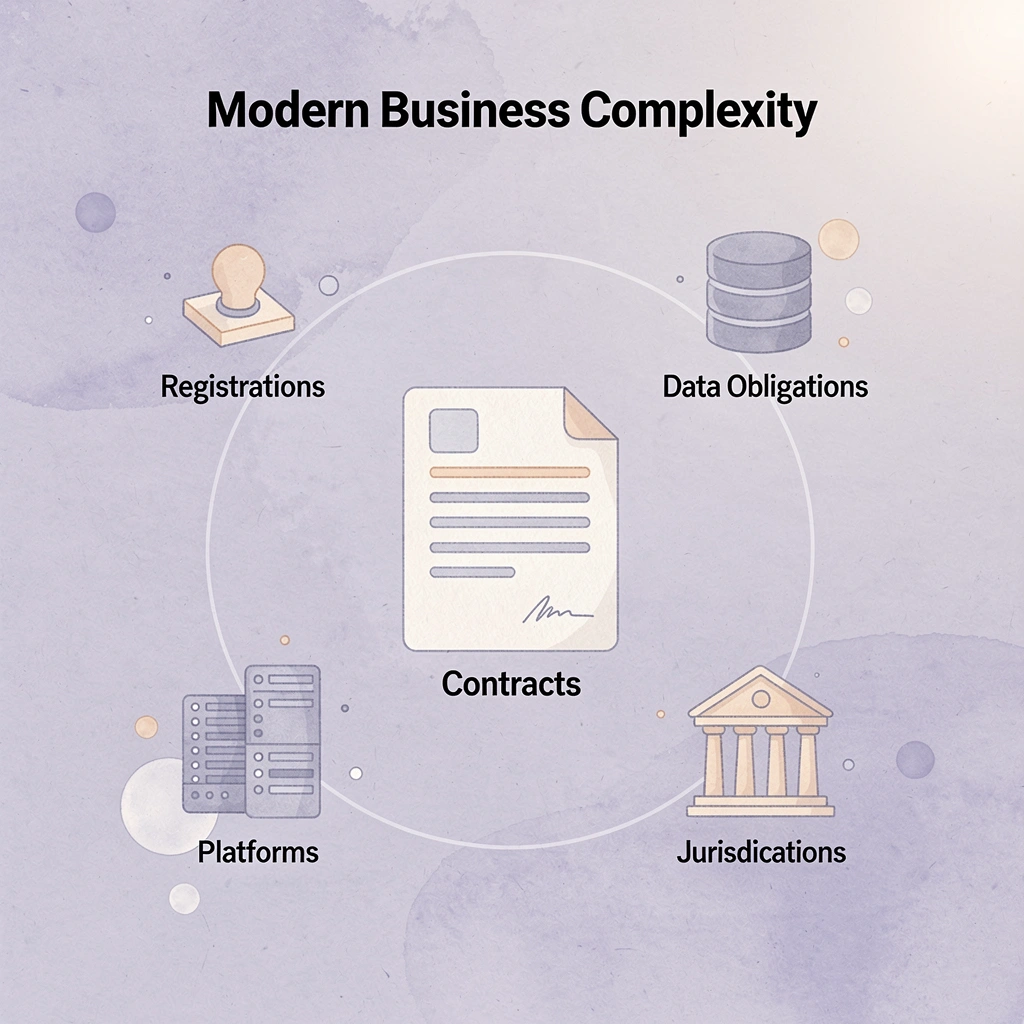
According to SMEunited's 2025 reporting on the INTRUM European Payment Report, 10 million businesses risk closure if economic conditions do not change. Each one carries its own collection of SaaS subscriptions, vendor agreements, and payment platform accounts that require individual attention before formal deregistration can even begin. A company using twelve software tools, three payment processors, and two cloud storage providers faces at least seventeen separate termination conversations to manage — all before the paperwork starts.
🔑 Takeaway: With 10 million businesses at risk of closure across Europe, the real administrative burden isn't the legal dissolution — it's the seventeen-plus individual vendor terminations that must happen first.
💡 Tip: Build a complete inventory of every active subscription, contract, and platform account before initiating any formal closure proceedings — missing even one can delay deregistration or trigger unexpected charges.
What does a founder actually need to close when dissolving a business?
Most founders think about closing a legal entity. What they need to close is a commercial ecosystem. Cross-border employment relationships require offboarding that follows each location's rules. GDPR obligations require a documented plan for data handling. Marketplace accounts on platforms like Amazon or Shopify require their own closure procedures, independent of company registry filings. None of these steps wait for each other, and none are triggered automatically when you file for dissolution.
Why does a rough checklist fail as obligations multiply across jurisdictions?
Most founders build a rough checklist from memory or an internet search, which works for simple, single-jurisdiction companies. As obligations multiply across countries, platforms, and regulatory frameworks, that approach breaks down: important deadlines get buried in email threads, subscription cancellations get missed until the next billing cycle, and closure drags on for months. A structured approach with tracked deadlines and organized documentation enables a clean closure. Our Starcycle platform addresses this complexity by centralizing action plans, key dates, and contract tracking in one place.
How does the EU regulatory environment complicate closing a business in Europe?
The ERT CEO Survey found that 38% of CEOs reduced their investment plans in Europe, reflecting tough choices about their companies there. When those choices lead to a business closing, the complexity described here emerges. The regulatory environment across EU member states was designed for compliance while a business operates, not when it closes. Closing a business means running that compliance machinery backward, often without clear instructions.
Complexity is not the problem; confusion is. When business owners understand the full scope of what needs to be undone, they can plan it, assign it, and track it. The problem is that most discover the full scope only after they have started filing, which is exactly the wrong order of operations.
What comes next may be the most counterintuitive part of the entire process.
Related Reading
- IRS Closing A Business
- Involuntary Dissolution Of Llc
- How To Liquidate A Company
- How To Dissolve A Nonprofit
- Irs Cancel Ein
- Notice Of Dissolution
- How To Wind Down A Company
What Founders Should Do Before Filing for Dissolution
Filing for dissolution is not the end of the process. The real work happens in the weeks before you file, and founders who skip preparation encounter expensive surprises after the process has started.
"Founders who skip preparation find out about expensive surprises after the process has already started." — Key Insight
⚠️ Warning: Many founders treat filing for dissolution as the first step when it's actually the last. Jumping straight to filing without proper preparation triggers costly legal and financial complications that are difficult to reverse.
💡 Tip: Use the weeks before filing to audit outstanding liabilities, notify stakeholders, and close open accounts. Proactive preparation is the most effective way to avoid unexpected delays and expenses during dissolution.

Why does sequencing obligations matter before any paperwork is filed?
The critical difference between a clean shutdown and a drawn-out one is the order in which you do things. Before submitting any dissolution paperwork, founders need a complete picture of every active obligation: loans, leases, vendor contracts, software subscriptions, tax registrations, payroll accounts, insurance policies, and professional memberships. These continue running until someone actively closes them. According to the IRS, businesses that fail to properly dissolve can face penalties of up to $500 per month for unfiled tax returns.
Most founders investigate obligations only after initiating dissolution, discovering problems they cannot easily fix. A better approach: run the obligations audit first, then sequence closure around what it reveals. Contracts with notice periods must be triggered before filing. Tax accounts need to be reviewed before the final return is submitted. Regulatory deregistrations across multiple jurisdictions must be mapped before any single-country closure is treated as complete.
How can founders manage complexity across contracts, deadlines, and countries?
Most founders manage this through spreadsheets, calendar reminders, and email threads, which work for short lists but break down across multiple countries, contract types, and compliance deadlines. Starcycle was built for U.S. founders facing this complexity, offering structured action plans, key date tracking, and contract management in one place. The underlying principle applies everywhere: confusion is a systems problem that responds well to structure.
Why does stakeholder communication deserve more attention during wind-down?
Stakeholders deserve more attention than most founders give to communication. Employees, contractors, investors, and suppliers need to understand what is happening and when. Uncertainty creates friction, and friction during a wind-down can cause disputes that delay closure. According to Founders CPA, founders must file dissolution paperwork within 90 days of the board resolution in most states, so stakeholders need early notice to act within that window.
What records should founders organize before the team disbands?
Keeping records organized might seem like mere paperwork until you need important files months or years after your team closes down. Financial statements, tax filings, employment records, shareholder resolutions, and regulatory correspondence may all be required later. Build that collection of files before the team breaks up and you lose access to systems.
Founders who close their businesses cleanly are not the ones who move fastest. They treat preparation as the actual work, not as a delay before the real work begins. That shift in mindset, from filing as the goal to preparation as the discipline, makes everything else easier.
Who Can Help Founders Dissolve a Business in Europe?
One of the biggest mistakes founders make during dissolution is assuming they need to figure everything out on their own. While some straightforward closures can be managed independently, many European business dissolutions involve legal, tax, accounting, employment, and regulatory considerations that benefit from professional guidance. The right support helps founders avoid costly mistakes, identify overlooked obligations, and navigate country-specific requirements more efficiently.
"Many European business dissolutions involve legal, tax, accounting, employment, and regulatory considerations: making professional guidance not optional, but essential for founders who want to close cleanly."
💡 Tip: Engage the right professionals early in the dissolution process to save founders significant time, money, and legal exposure.
⚠️ Warning: Attempting to handle a multi-jurisdictional closure without expert support is one of the most common and costly mistakes founders make across Europe.

The challenge is that no single provider handles every type of business closure across Europe. The most appropriate solution depends on the company's structure, incorporation location, whether it has employees, and how complex its operations have become.
🔑 Takeaway: Because no universal solution exists, founders must assess their specific situation before deciding which professional or service provider is best positioned to guide their closure.
What does a founder-first approach to dissolution look like?
Starcycle represents a founder-first approach to business closure that many entrepreneurs wish existed more broadly. Rather than treating dissolution as a legal filing exercise, Starcycle helps founders navigate the broader closure process through structured action plans, deadline tracking, contract and subscription management, record organization, and guided support designed for founders winding down U.S.-based businesses. With transparent pricing starting at $399. Starcycle reduces the uncertainty and administrative burden that often accompany business closure. While European founders will need providers operating within their own jurisdictions, Starcycle illustrates an important principle: successful dissolutions depend on managing the entire closure process, not simply submitting paperwork.
Which business service providers support the dissolution process?
Several business services companies provide support during the dissolution process, depending on the founder's location and needs. Ownr offers incorporation and business administration services for reviewing records and governance documents. LawDepot provides legal document templates for resolutions, notices, and agreements needed during wind-down. Osome supports company administration, accounting, compliance, and corporate services across several jurisdictions. For UK-based businesses, providers such as 1st Formations, Quality Company Formations, Rapid Formations, and Your Company Formations offer company administration resources relevant to closures and strike-off procedures.
Many founders rely on specialists whose expertise addresses dissolution challenges. Corporate law firms specializing in business closures are engaged when companies have multiple shareholders, investor involvement, intellectual property concerns, or complex legal obligations. Insolvency practitioners become necessary when a business cannot meet its financial obligations or requires formal liquidation. National company secretarial service providers assist with corporate filings and regulatory procedures in specific jurisdictions. Accounting firms manage final tax filings, VAT obligations, payroll matters, financial statements, and tax clearance processes that must be completed before dissolution.
How does business complexity affect the level of support needed?
The best provider depends on how complicated the business closure is. A small company with no employees, minimal assets, and straightforward operations may need only limited administrative help. A larger company with staff, international customers, investor involvement, intellectual property assets, or operations in multiple countries may need coordinated support from lawyers, accountants, and corporate service providers.
Several factors determine what level of support a founder needs. The country where the company was incorporated is the starting point, as dissolution procedures differ significantly across Europe. Whether the company has employees can dramatically affect the process, since employment obligations are often among the most heavily regulated aspects of the closure process. Outstanding liabilities—loans, unpaid obligations, lease agreements, and creditor claims—frequently require specialized guidance. Businesses with cross-border operations face additional challenges, as obligations may exist in multiple jurisdictions simultaneously. Tax complexity often determines whether founders can manage the process themselves or need professional assistance.
Why is dissolution about more than a single filing?
Dissolution requires more than a single filing. It demands proper handling of legal obligations, tax responsibilities, stakeholder relationships, contracts, records, and compliance requirements before the company ceases to exist.
The right support helps founders navigate dissolution with fewer surprises and delays.
How Starcycle Shows What Founder-Centered Dissolution Can Look Like
When founders research dissolution, they ask practical questions: What forms need to be filed? Which agencies must be notified? What deadlines matter? What happens to outstanding obligations? These questions matter, but they address only part of the challenge.
"Paperwork is rarely the most difficult aspect of dissolution: it's everything surrounding closure that catches founders off guard." — Starcycle
🎯 Key Point: Most founders focus on filing requirements when they should be thinking about the full transition process: contracts, stakeholders, deadlines, and emotional closure all demand equal attention.
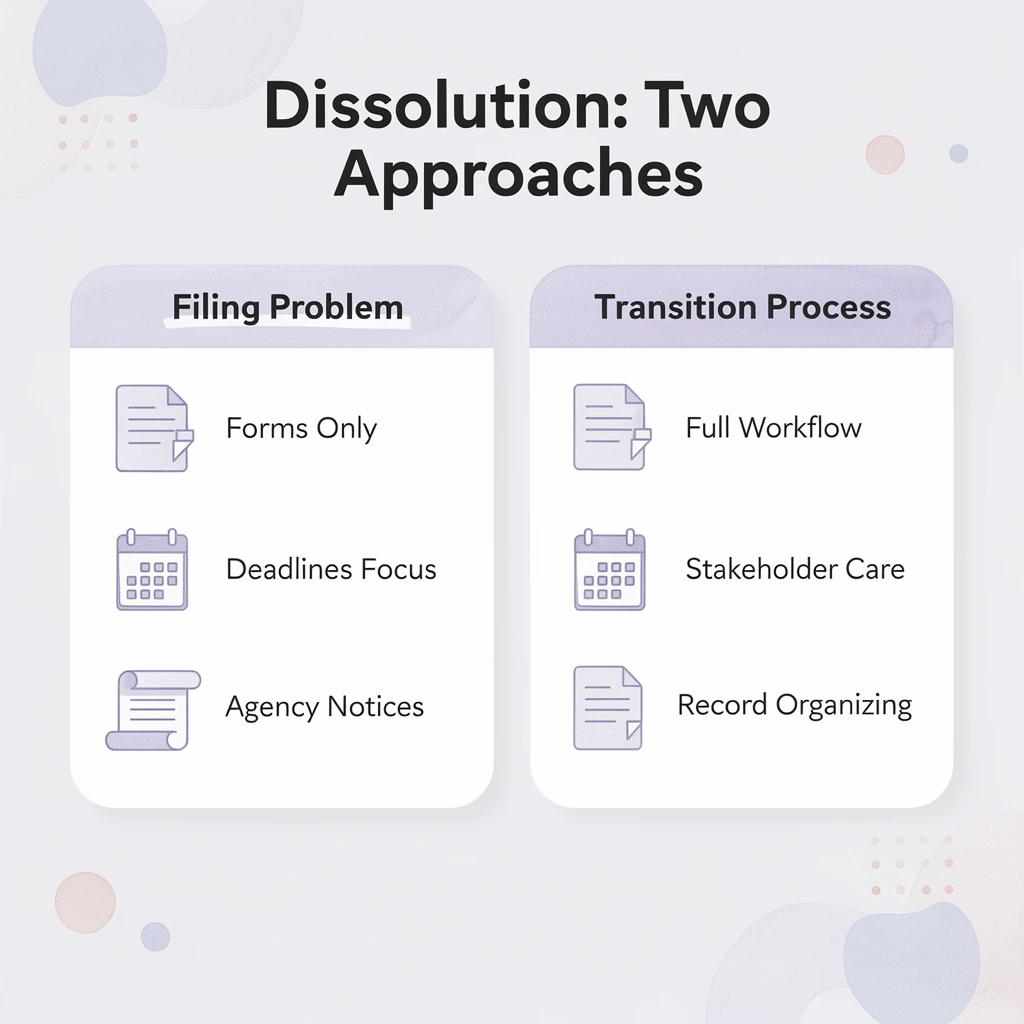
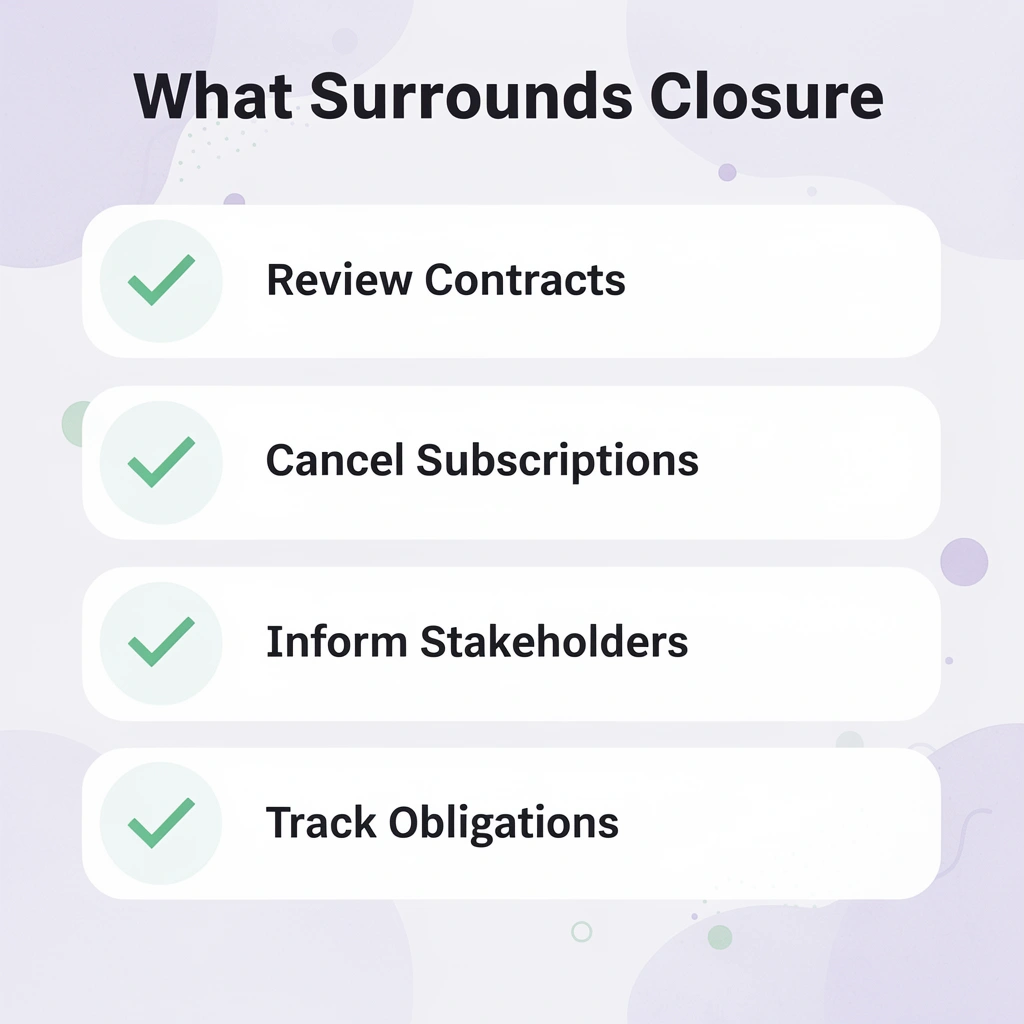
Most founders discover that paperwork is rarely the most difficult aspect. The real challenge is managing everything surrounding closure: reviewing contracts, canceling subscriptions, organizing records, informing stakeholders, tracking deadlines, and resolving obligations. Meanwhile, founders are often processing the emotional reality of ending a company they may have spent years building.
⚠️ Warning: Founders who treat dissolution as purely a paperwork problem routinely miss critical operational and emotional steps — creating liability and prolonged stress long after the company closes.
Starcycle's approach stands out by treating dissolution as a transition process rather than a filing problem. Although the company supports only U.S.-based closures, it highlights an important shift in how founders should think about winding down a business.
🔑 Takeaway: The most founder-centered dissolution platforms reframe closure not as a bureaucratic checklist, but as a structured transition that addresses the legal, operational, and human dimensions of ending a company.
What does a guided wind-down process actually provide?
The platform was built on the idea that founders need more than paperwork help. They need clarity, structure, and a clear understanding of what must happen before proper closure. Starcycle provides guided wind-down support with tailored action plans based on each founder's circumstances, making it easier to understand remaining obligations and priorities.
The platform helps founders track key deadlines, an area where many closures encounter problems. Missed filings, forgotten obligations, and overlooked requirements often create avoidable delays. By maintaining visibility throughout the process, our Starcycle platform reduces the likelihood that important tasks fall through the cracks.
Contract and subscription management addresses a common pain point. Modern businesses accumulate dozens of recurring commitments over time, and identifying and unwinding those obligations proves more difficult than founders expect. Our Starcycle platform brings structure to this process, making it easier to understand what remains active.
Why does record organization matter after a business closes?
Keeping records organized is important. When businesses close, founders often need to maintain access to documents long after operations cease. Tax records, contracts, corporate documents, and financial information may require retention. Organizing these materials before closure prevents problems and ensures important information remains accessible.
How does Starcycle address the human side of closing a business?
Most importantly, Starcycle understands what many dissolution providers miss: closing a business is not merely an administrative event—it is often deeply personal. For founders, dissolution can bring uncertainty, disappointment, relief, excitement, or a combination of all four. Our founder-centered approach recognizes this reality and aims to make the process clearer, faster, and more human.
With transparent pricing starting at approximately $299–$300, we eliminate the uncertainty founders face when seeking closure support. Rather than navigating hidden fees or unclear offerings, founders gain visibility into what assistance is available and its cost.
European founders will still need local providers that understand their specific legal requirements. However, Starcycle shows what entrepreneurs need during business closure: help managing the entire transition, not just filing paperwork. Most founders think dissolution is about ending a company. In reality, it creates a clean path toward whatever comes next.
Sign up to Make Your Business Closure Process Easier
Founders who map out what they owe early, keep track of deadlines carefully, and organize records before filing close faster and have less to carry forward. This pattern holds whether you're winding down a GmbH in Germany, a SAS in France, or an LLC in the United States.
"Founders who plan their closure process early — tracking obligations, deadlines, and records before filing — consistently close faster and with fewer complications." — Observed Pattern Across Global Closures
🎯 Key Point: Early planning is the single biggest factor in a smooth business closure — regardless of the country or entity type you're winding down.
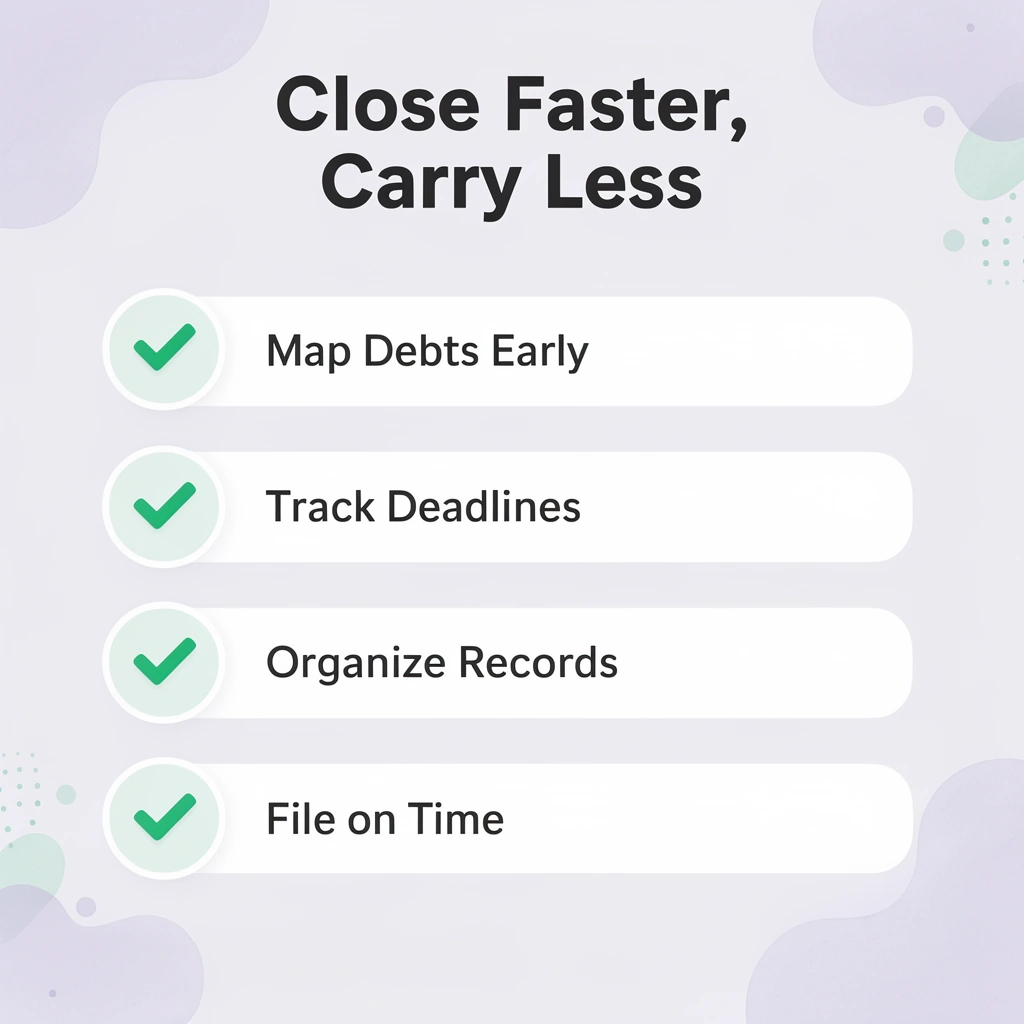
If you are closing a U.S. company, business closure through Starcycle provides a structured path with action plans, key date tracking, and document organization built for founders seeking clarity over chaos.
💡 Tip: Don't navigate U.S. company closure alone — Starcycle's structured process removes guesswork so you can focus on what comes next.
⚠️ Warning: Founders who skip organized record-keeping before filing risk delays, unexpected liabilities, and costly compliance gaps that persist long after the business closes.