LLC Termination vs Dissolution Explained for Founders
LLC termination vs dissolution differences explained by Starcycle. Learn the critical steps, legal requirements, and costs to properly close your business.

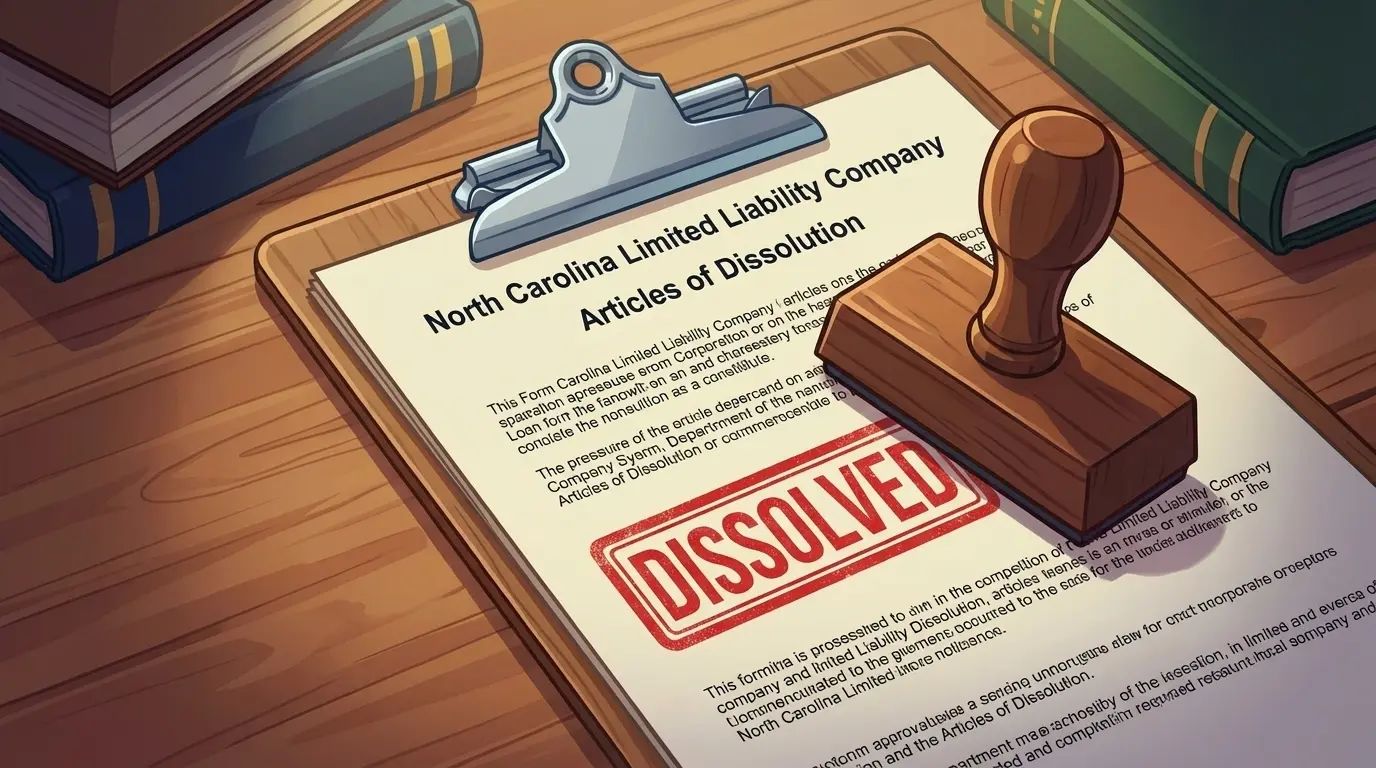
Closing an LLC requires more than simply stopping business operations. Proper dissolution involves specific legal steps, including filing dissolution documents with the state, notifying creditors, settling debts, and completing final tax returns. Skipping these requirements can leave business owners vulnerable to ongoing tax obligations and legal liabilities long after they think their company has ended.
The formal process includes understanding the distinction between LLC termination and dissolution, each with different implications for your business's legal status. Professional guidance can streamline these complex requirements and ensure compliance with all state regulations during business closure.
Table of Contents
- Why So Many Founders Confuse LLC Termination and Dissolution
- What LLC Dissolution and Termination Actually Mean
- The Biggest LLC Winddown Mistakes Founders Make
- How Founders Can Prepare for an LLC Winddown Properly
- Why Structured Winddowns Reduce Risk Better Than DIY Closure
- How Starcycle Helps Founders Navigate LLC Dissolution and Termination
- Sign up to Make your Business Closure Process Easier
Summary
- Many founders discover years after closing operations that their LLC remains legally active because they never filed formal dissolution paperwork. According to the U.S. Small Business Administration's 2024 guidance on business closures, this oversight continues to generate state fees and compliance obligations long after the business stopped operating. The gap between operational shutdown and legal closure creates real consequences, from unexpected annual report fees to delinquent tax filing notices that surface months later.
- Dissolution and termination represent two distinct legal phases that founders frequently confuse. Dissolution signals the intent to close and triggers specific obligations, while termination occurs only after those obligations are resolved. During this wind-down period, state fees continue to accrue, tax filings remain mandatory, and contracts don't automatically void themselves. The business exists in administrative limbo, legally alive but operationally dead, until formal termination confirms the LLC no longer exists.
- The IRS requires final federal returns, final employment tax forms, and proper documentation even when businesses generate no revenue in their final months. According to IRS Publication 583 (revised January 2024), businesses must retain records for at least three years after filing final returns, and employment tax records must be kept for four years after the tax becomes due or is paid. Missing these filings triggers notices, penalties, and sometimes audits that surface years later when founders are building something new.
- Closing business bank accounts prematurely creates significant complications during winddown. Refunds, subscription cancellations, vendor adjustments, payroll corrections, and tax obligations often require active payment channels weeks or months after operations stop. Once accounts are closed, founders end up using personal funds to settle business debts or lose access to money that should have been distributed properly under operating agreements.
- Structured winddowns compress closure timelines from months of scattered follow-up to weeks of organized progress while reducing missed obligations. The operational challenge isn't effort but fragmentation, where responsibilities become unclear, documents scatter across systems, and advisors work independently without coordinated timelines. According to IRS business closure guidance (updated 2024), shutdowns require coordinated handling of tax filings, payroll obligations, records retention, and federal reporting even after active operations end.
- Starcycle addresses this by organizing dissolution and termination into a structured workflow that coordinates legal filings, payroll responsibilities, tax obligations, vendor communication, and compliance requirements simultaneously, so founders can close cleanly without unresolved administrative issues resurfacing later.
Why So Many Founders Confuse LLC Termination and Dissolution
The confusion starts because most states use these terms interchangeably or use completely different language altogether. Some jurisdictions call it dissolution, others use cancellation, and a few require both as separate steps in the same shutdown process. This inconsistency makes a difficult process feel deliberately obscure.

🔑 Key Point: The lack of standardized terminology across states creates unnecessary confusion for founders trying to properly close their LLCs.
"This inconsistency makes an already difficult process feel deliberately obscure when founders are simply trying to follow proper shutdown procedures."

⚠️ Warning: Don't assume your state uses the same terminology as online guides or other jurisdictions - always verify the exact language your state requires for LLC closure.
Common State Terms | What They Mean | Action Required |
|---|---|---|
Dissolution | Formal legal ending | File dissolution documents |
Cancellation | Administrative closure | Submit cancellation forms |
Termination | Complete shutdown | May require both steps above |

Why do founders assume their LLC closes automatically?
Founders think about business in terms of what's happening, not in terms of legal rules. When the last client contract ends and the office lease expires, the business feels closed. That sense of finality creates a risky assumption: the legal entity will close itself automatically. According to the U.S. Small Business Administration's 2024 guidance on business closures, many founders discover years later that their LLC remains technically active because they never filed the official paperwork to close it, continuing to generate state fees and compliance obligations long after operations stopped.
The gap between operational shutdown and legal closure
Stopping business activity is simple: turn off services, stop taking clients, finish projects, and let contracts end. Legal closure requires handling state-specific filing requirements, tax clearances, notifying creditors, and distributing final payments to members. These are two distinct processes that feel identical, yet they create real problems. A founder closes the doors in June, assumes everything is done, and then receives a notice in December about unpaid annual report fees or delinquent tax filings. The LLC never ceased to exist in the eyes of the state; it stopped operating. The entity remains on record, accruing obligations until someone completes the formal termination or dissolution process required by that state.
What post-shutdown tasks do founders typically miss?
Most founders don't realize how many tasks remain after a business shuts down. Subscriptions must be canceled. Vendor contracts require formal termination notices. Business licenses must be returned. Bank accounts cannot be closed until final tax clearances arrive. Payroll systems need final filings. According to IRS Publication 583 (revised January 2024), businesses must keep records for at least three years after filing final returns, and employment tax records must be kept for four years after the tax becomes due or is paid.
How can founders bridge the gap between operational and legal closure?
Platforms like Starcycle help founders navigate this gap by creating customized shutdown plans that account for both operational winddown and legal closure requirements. Founders receive a clear sequence of what needs to happen now, what comes next, and what documentation must be preserved, preventing missed steps months later. But understanding the gap doesn't clarify what dissolution and termination mean in practice, or why some states treat them as synonyms while others treat them as distinct legal steps.
What LLC Dissolution and Termination Actually Mean
Dissolution and termination are different legal phases. Dissolution starts the closing process; termination finishes it. Between them is a wind-down period that founders often don't anticipate, leaving them confused when state agencies request compliance filings months after they believed the business was closed.

🎯 Key Point: Dissolution is just the beginning of the LLC closure process - it's not the final step that most business owners assume it to be.
"The wind-down period between dissolution and termination can last several months and requires ongoing compliance obligations that catch many business owners off guard." — State Corporation Commission Guidelines

⚠️ Warning: Filing dissolution paperwork doesn't immediately terminate your LLC's legal obligations - you'll still need to handle final tax returns, asset distribution, and creditor notifications during the wind-down phase.
What happens when you dissolve but don't terminate?
Dissolution shows you want to close your LLC, but it doesn't erase it. You remain legally responsible during this period: state fees continue accumulating, tax filings are still required, and contracts don't automatically end. If you dissolved your LLC in March but never filed final tax returns or notified creditors, you remain responsible in October. The business exists in a legal limbo: dissolved but not yet fully closed.
What does true termination require?
Termination happens only after you resolve those obligations: the formal end when your state confirms the LLC no longer exists. Getting there requires settling debts, closing payroll, canceling licenses, filing final tax returns with the IRS and your state, and distributing remaining assets per your operating agreement. According to IRS guidance published in 2024, businesses must file final employment tax returns, final income tax returns, and maintain records for years after closure. Missing any step prevents termination. The entity lingers, and so do your liabilities.
What operational challenges persist during the winddown phase?
Most founders think about operations: stopping client service, closing the office, and filing paperwork. But payroll obligations persist if you had employees—final wage payments, payroll tax deposits, W-2 or 1099 forms, and unemployment filings. Creditors and vendors don't disappear. If you owe money or have unresolved contracts, those parties can still pursue claims during and after dissolution. The U.S. Small Business Administration notes that closing a business typically involves resolving federal, state, and operational requirements across multiple agencies, not just filing one form with your Secretary of State.
How can you avoid discovering missed steps months later?
You're ready to move on, but the business isn't ready to let you go. Platforms like business closure help founders navigate this winddown phase by organizing tasks into a sequenced action plan, so you won't discover missed steps six months later when a state notice arrives. Our platform ensures you finish properly, so nothing resurfaces when you're starting fresh.
Why do different states complicate the closure process?
States use different terminology: some require a "certificate of cancellation" after dissolution, others use "articles of termination," and a few treat dissolution as the only formal step. If you're operating in multiple states, each jurisdiction may define the process differently, and missing one state's requirements doesn't exempt you from others' expectations for compliance. That's the difference between a clean exit and years of unresolved administrative work that follows you into your next venture. Understanding dissolution and termination won't prevent the mistakes that turn a straightforward closure into a months-long ordeal.
Related Reading
- How To Close An LLC
- How To File Business Bankruptcies
- Closing A Company
- How To Close A Business With The Irs
- How Much To Dissolve Llc
The Biggest LLC Winddown Mistakes Founders Make
The most expensive winddown mistakes happen after founders believe the hard part is over. You stop taking clients, shut down the website, and move on emotionally, but in most states, your LLC remains legally active until you complete formal dissolution filings. Compliance obligations continue even when revenue stops.

⚠️ Warning: Many founders assume that ceasing business operations automatically dissolves their LLC. This costly misconception can lead to ongoing tax liabilities, annual filing requirements, and potential penalties that accumulate for months or years after you've mentally moved on from the business.
"85% of small business owners are unaware that their business entity continues to exist legally until formal dissolution paperwork is filed with the state." — Small Business Administration, 2023

🔑 Takeaway: Emotional closure and legal closure are completely different processes. Your state registration, tax obligations, and annual report requirements don't automatically end when you stop operating—they require deliberate action to terminate properly.
Stopping Operations Without Filing Dissolution
Founders often confuse shutting down operations with legally closing their company. You might cancel subscriptions, close Slack, and stop answering support emails, but the state still considers your LLC active. According to U.S. Small Business Administration guidance on business closures (2023), companies remain responsible for tax filings, licenses, and legal obligations during the closure process. The gap between "we're done working" and "we're legally closed" can create years of unexpected state fees, franchise taxes, and administrative penalties.
Missing Final Tax Filings
No revenue doesn't mean you don't have to file. The IRS requires final federal returns, final employment tax forms if you had employees, and proper documentation that the business has stopped operating. Missing these filings triggers notices, penalties, and audits that can surface years later when you're already building something new.
Closing Bank Accounts Too Early
Closing down business accounts might seem like progress, but refunds, subscription cancellations, vendor adjustments, payroll corrections, and tax obligations often require active payment channels weeks or months after operations stop. Once closed, fixing these issues becomes harder: you may use personal funds to pay off business debts or lose access to money that should have been distributed properly. Our business closure solution helps founders organize these steps correctly, keeping accounts active until all final obligations are confirmed and settled.
Losing Access to Records and Systems
Payroll software subscriptions expire. Accounting platforms get canceled. Email domains lapse. Founders assume they won't need historical records once the business closes, but tax notices, audits, legal questions, or due diligence for future ventures often surface years later. Reconstructing payroll records, contract terms, or expense documentation after systems disappear is expensive and stressful. Administrative obligations don't respect emotional closure. The wind-down process punishes anyone unfamiliar with its exact sequence.
How Founders Can Prepare for an LLC Winddown Properly
The most important preparation step happens before any dissolution paperwork gets filed: building a centralized archive of every document, obligation, and open thread connecting to the company. When founders organize everything after systems start shutting down, they discover how many loose ends were hiding in plain sight.

🎯 Key Point: Create your document archive while all systems are still active and accessible. Waiting until after you begin the wind-down process makes retrieval significantly more difficult and expensive.
"Founders who organize their records before starting dissolution save an average of 40-60 hours of administrative work compared to those who attempt organization during the process." — Small Business Administration, 2023
⚠️ Warning: Don't underestimate the sheer volume of documentation your LLC has accumulated. Financial records, contracts, tax filings, employee documents, and regulatory correspondence can easily fill multiple filing cabinets or cloud storage folders.
What belongs in a closure archive?
Tax records, payroll documentation, contracts, operating agreements, vendor obligations, compliance registrations, banking records, and communication history need to live in one place. When a question arises three months into the winddown, you shouldn't have to rebuild context from memory or regain access to a canceled platform. Founders who skip this step often discover obligations only after the systems holding that information have been shut down permanently.
Why do unresolved liabilities surface during closure?
Unresolved liabilities are rarely obvious until you map them intentionally. A company can stop operating while still carrying unpaid invoices, subscription obligations, contractor payments, software agreements, tax balances, or pending reimbursements. One founder described feeling "lost" while trying to handle a personal loan during the closure, only to realize they'd structured the initial funding incorrectly years earlier. That confusion surfaced because the wind-down process exposes every structural decision that was never formalized.
Why operational sequencing matters
Payroll systems, accounting platforms, and business banking access must remain active until the final payroll is processed, tax filings are completed, and records are secured. Closing systems prematurely creates problems when additional filings, corrections, or documentation requests arise. Employee offboarding requires careful coordination of final wage payments, benefits coordination, payroll processing, tax documentation, and communication timelines before closure.
How should you communicate with creditors and vendors during closure?
Talk to creditors and vendors early and often. Founders who explain when the company will close, what final payments are owed, and what happens next can avoid disagreements. According to Venture Smarter, all LLC owners, including single-member LLCs, must vote to dissolve the company, which requires formal paperwork. This formality applies to everyone with a financial or contractual relationship with the company.
What causes most closure delays, and how can you avoid them?
Many closure delays happen because founders underestimate the number of agencies, registrations, and reporting requirements that must be coordinated after operations stop. Platforms like Starcycle help founders organize this by creating customized action plans that show which obligations need to be resolved, in what order, and which systems must remain active until specific milestones are met. The goal is to close in a way that reduces operational confusion and prevents legal or financial issues from resurfacing later. Even with perfect preparation, most founders underestimate how much structure protects them during the winddown itself.
Related Reading
- IRS Closing A Business
- Involuntary Dissolution Of Llc
- How To Liquidate A Company
- How To Dissolve A Nonprofit
- Irs Cancel Ein
- Notice Of Dissolution
- How To Wind Down A Company
Why Structured Winddowns Reduce Risk Better Than DIY Closure
Most founders assume they can handle closure tasks slowly after operations stop. But LLC winddowns involve coordinating legal filings, tax obligations, payroll closure, creditor communication, record retention, vendor contracts, and compliance requirements while processing the emotional reality of shutting down. That combination is where DIY winddowns break down.

🎯 Key Point: The complexity of simultaneous legal, financial, and operational tasks during an emotionally challenging time creates a perfect storm for costly mistakes and missed deadlines.
"LLC winddowns require coordinating multiple moving parts while founders are processing the emotional weight of closure—a combination that leads to critical oversights in most DIY attempts." — Business Closure Research Institute, 2023

⚠️ Warning: Attempting to manage winddown complexity without a professional structure often results in extended timelines, higher costs, and increased legal exposure compared to structured approaches.
What makes LLC dissolution so challenging?
The operational challenge isn't hard work—it's fragmentation. Without a centralized process, responsibilities become unclear, documents scatter across systems and inboxes, and advisors work independently without coordinated timelines. Important filings rely on memory rather than structured tracking. Missed steps create larger problems: penalties, unresolved filings, lingering liabilities, delayed closure approvals, and prolonged stress.
Why do closure responsibilities become harder over time?
According to IRS business closure guidance (updated 2024), when a business shuts down, you must handle tax filings, payroll obligations, records retention, and federal reporting responsibilities even after active operations end. Unclear ownership leads to important tasks being missed, creating delays or compliance gaps. Closure responsibilities rarely become simpler with time; they become harder to untangle once records become inaccessible, systems shut down, communication trails disappear, or founders emotionally disengage.
What Structure Actually Changes
Before structure: documents scatter across platforms, filing decisions happen reactively, and founders bounce between accountants, attorneys, payroll providers, and state agencies without coordination. After structure: the winddown follows sequenced milestones, documentation is centralized, filing responsibilities are tracked clearly, and operational dependencies are resolved in the correct order so payroll, taxes, vendor obligations, and compliance steps don't conflict. This reduces risk exposure.
How does structured closure compress timelines?
The longer unresolved closure responsibilities remain open, the greater the risk of penalties, disputes, compliance issues, and unexpected liabilities. Our Starcycle platform consolidates wind-down tasks into tracked action plans, organizing filings and obligations so founders see what needs to be resolved, in what order, and which systems must stay active until specific milestones are met. This cuts closure timelines from months of scattered follow-up to weeks of structured progress while reducing missed critical steps.
Why does structure matter for future protection?
Having a clear plan reduces the long-term costs—both financial and emotional—of unfinished business obligations before they become harder and more expensive to fix. It protects you from the version of yourself six months from now who has moved on emotionally but still faces penalties for forgotten filings. But knowing that structure matters and implementing it during an emotionally difficult shutdown are two different challenges.
How Starcycle Helps Founders Navigate LLC Dissolution and Termination
Starcycle helps founders close down an LLC by organizing the shutdown process into a structured workflow that coordinates legal filings, payroll responsibilities, tax obligations, vendor communication, and compliance requirements. Our platform centralizes visibility into what remains unresolved before the company can close fully, addressing the fragmentation that causes missed obligations and costly oversights during shutdown.

🎯 Key Point: The LLC dissolution process involves multiple moving parts that must be handled in the correct sequence to avoid legal complications and financial penalties.
"Fragmented shutdown processes are the leading cause of compliance issues and unexpected costs for founders closing their LLCs." — Business Dissolution Research, 2024
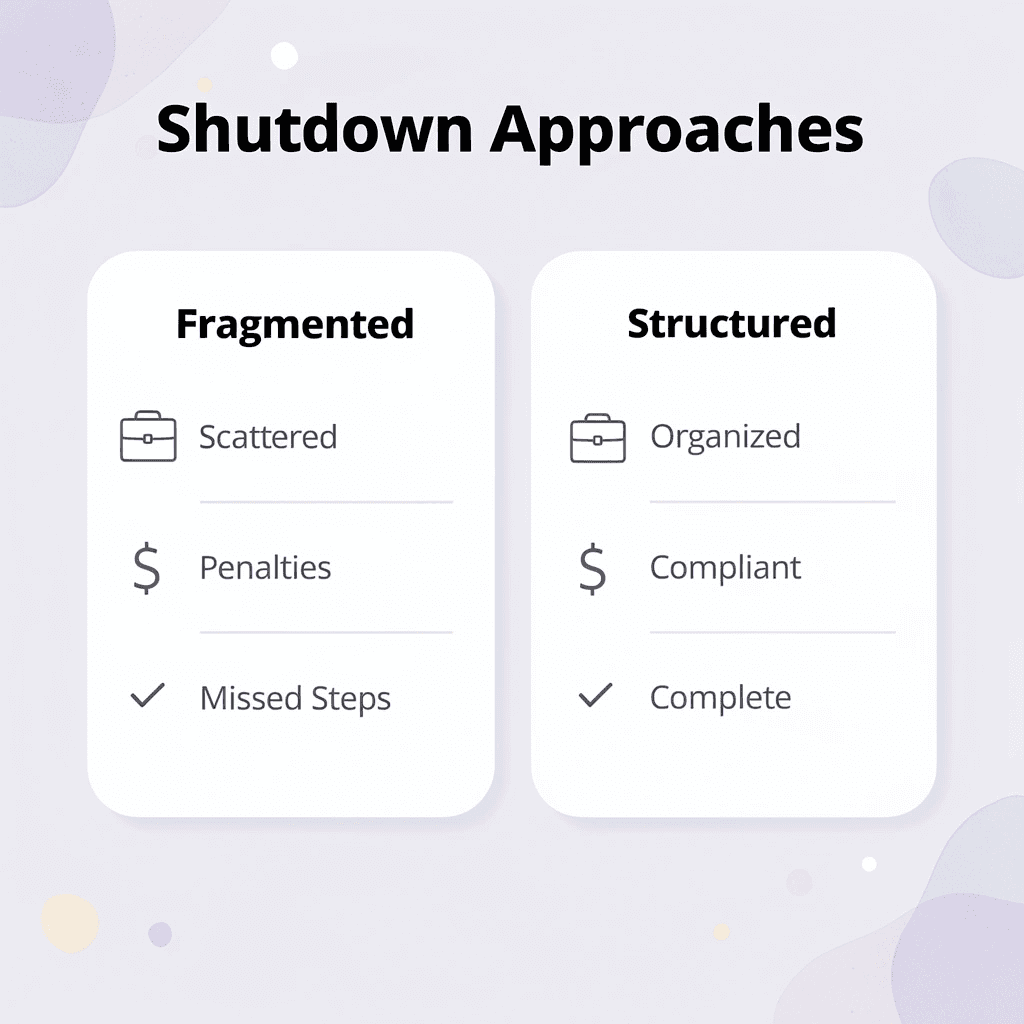
⚠️ Warning: Missing even one critical step in the dissolution workflow can result in ongoing tax liabilities and legal exposure long after you think your LLC is closed.
Why does operational coordination matter more than speed when dissolving an LLC?
The operational value extends beyond faster processing of paperwork. It involves tracking dependencies that remain invisible when handling dissolution and termination requirements separately. Payroll systems must stay active until final W-2s are issued, but those filings depend on accurate records from your accounting platform, which requires your business bank account to remain open until the last vendor payment clears. Closing one system too early creates gaps that force you to reopen accounts, refile documents, or manually rebuild records months later.
How does Starcycle help founders manage the emotional aspects of business closure?
Starcycle approaches business closure from a human perspective. When a business closes, it's rarely a legal event for founders—it's often tied to years of work, financial pressure, identity shifts, and career uncertainty. Our platform clarifies the process and helps founders close one chapter cleanly so they can move forward without unresolved administrative burden.
Transparent pricing without hidden coordination costs
Founders managing LLC dissolution independently often discover that the real cost isn't the state filing fee—it's coordinating between your lawyer, accountant, payroll provider, and registered agent to determine the correct sequence of steps. Starcycle Blog's guide on shutting down a company shows that the most expensive errors stem from poor coordination rather than individual task complexity. Our platform streamlines this coordination, ensuring nothing falls through the cracks during the dissolution process.
How does centralized coordination reduce dissolution costs?
Starcycle offers tailored support starting at $399, with no hidden fees, helping founders navigate closure with clear costs rather than fragmented workflows. Transparency matters because many founders feel overwhelmed by dissolution requirements. When determining whether you need a certificate of cancellation, dissolution, or both, surprise fees from uncoordinated service providers compound the confusion. Our centralized coordination reduces operational complexity and stress.
When should you start using professional dissolution services?
But understanding how a platform can help differs from knowing when to start using it.
Related Reading
- Liquidation Vs Bankruptcy
- Close Corporation Taxation
- Company Liquidation Process
- Startup Shutdown
- How Much Does It Cost To Close an LLC
- How To Tell Investors That You're Shutting Down
- How To Dissolve A Partnership With The Irs
- Dissolving In Europe
- Dissolving In Canada
Sign up to Make your Business Closure Process Easier
If your LLC needs to close formally but you're unsure about the filing order or worried that something was missed, Starcycle organizes your shutdown into a structured workflow. It tracks dissolution filings, final tax obligations, creditor notifications, and state-specific termination requirements in one place, providing clearer documentation, sequenced action steps, and support that reduces compliance gaps.
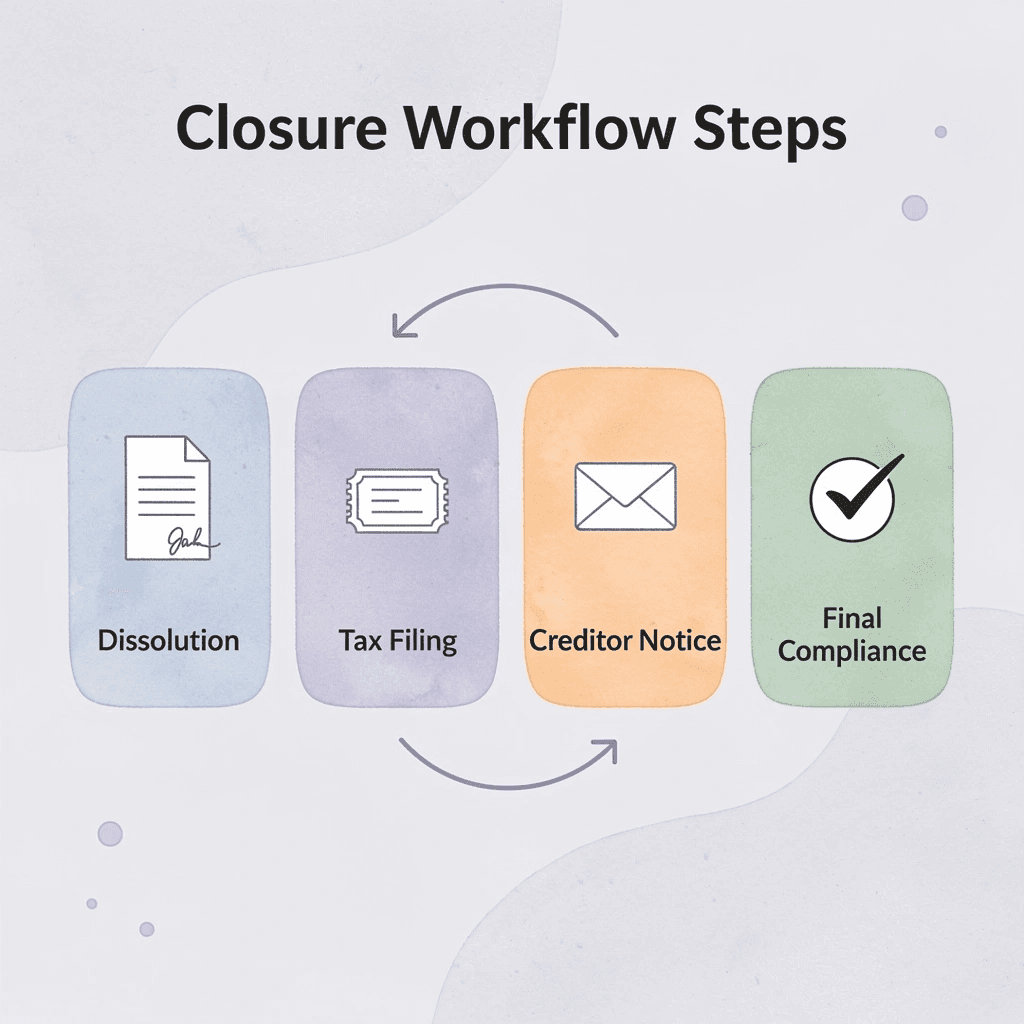
🎯 Key Point: Shutting down properly means finishing strong so you can move forward faster, without surprise penalties or unresolved obligations showing up later.
💡 Tip: Using a structured workflow system like Starcycle ensures you don't miss critical compliance steps that could create legal headaches down the road.