
What a Notice of Dissolution Actually Means for Your Business
A Notice of Dissolution protects your business during closure. Starcycle explains legal requirements, timelines, and critical steps to avoid liability.

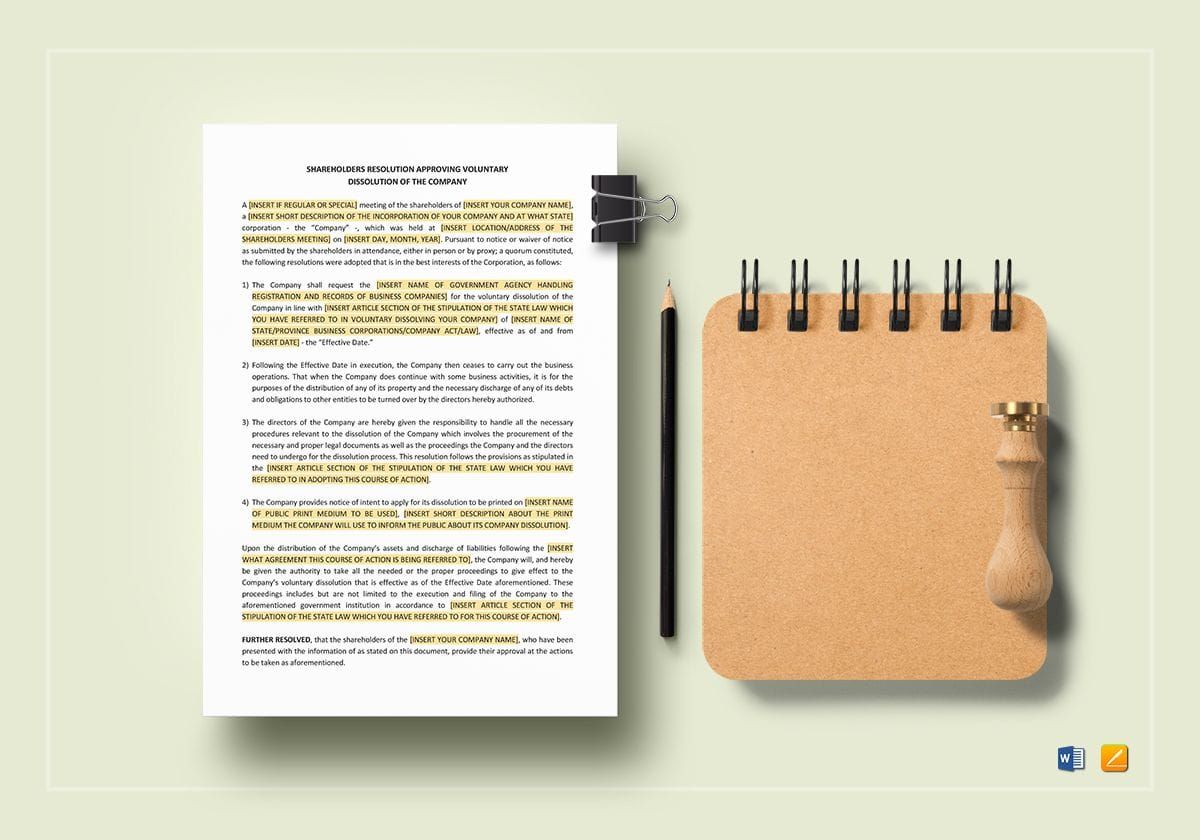
Closing an LLC requires more than simply stopping operations. Business owners must file a Notice of Dissolution with their state to formally end the company and protect themselves from future liability. This document notifies government agencies, creditors, and business partners that the LLC is permanently shutting down.
The dissolution process involves multiple steps beyond the initial filing, including settling debts, distributing assets, and meeting final tax obligations. Professional guidance can streamline these requirements and ensure compliance with state regulations throughout business closure.
Table of Contents
- Why Many Founders Misunderstand the Notice of Dissolution
- What a Notice of Dissolution Actually Means
- When Businesses Typically Need a Notice of Dissolution
- The Biggest Mistakes Businesses Make During Dissolution
- Why Business Closures Become Emotionally Difficult for Founders
- How Starcycle Helps Founders Navigate Business Dissolution More Clearly
- Sign up to Make your Business Closure Process Easier
Summary
- Many LLCs and corporations remain legally active long after operations stop because founders assume inactivity automatically dissolves the entity. According to state business filing agencies, an inactive business continues generating annual report requirements, franchise taxes, and compliance obligations until formal dissolution paperwork is approved. This creates situations in which founders discover thousands of dollars in accumulated penalties years after they believed their business had closed, simply because the legal entity was never formally dissolved.
- Up to 43% of startup founders ultimately buy out their cofounders due to interpersonal conflicts and power struggles, which means many business closures occur under emotional strain, making administrative follow-through less likely. The psychological weight of formally closing a company leads many founders to indefinitely postpone dissolution, leaving entities open "just in case" they restart operations later. But incomplete closures prolong administrative stress rather than providing flexibility, with founders continuing to receive state correspondence, tax notices, and penalty warnings for businesses that stopped operating months or years earlier.
- Formal dissolution notices must include nine standard elements to satisfy statutory requirements: entity name, filing jurisdiction, effective date, reason for dissolution, creditor claim instructions, claim deadline, mailing address for claims, authorized signatories, and state filing confirmation. Missing any of these components can invalidate the notice, leaving the business legally active despite the founder's intention to close. The notice alone doesn't complete the shutdown; it simply triggers creditor claim periods (typically 90 to 180 days) and establishes a timeline for resolving debts before the state will approve final dissolution.
- Distributing funds to owners before settling creditor claims or tax liabilities is the most damaging sequencing error in business dissolution. Once money leaves the business account, recovering it to satisfy legitimate obligations becomes legally complicated and personally expensive. State dissolution statutes require debt settlement before asset distribution precisely because reversing that order exposes everyone involved to extended liability, yet founders frequently resolve obligations out of order because they underestimate how many steps remain after operations stop.
- According to Psychology Today, 70% of business owners have no formal exit plan, and that absence isn't purely logistical. Many founders keep entities open because dissolving formally feels like publicly admitting defeat, even when the business no longer operates. This creates a specific kind of limbo where the company stops functioning but never truly ends, generating low-level anxiety through recurring state notices and compliance reminders instead of providing closure. Entrepreneurial culture frames closures as failures rather than transitions, making the administrative act of dissolution feel emotionally heavier than it needs to be.
- Business closure addresses this by converting the overwhelming sense of "I need to deal with this eventually" into a structured process with concrete timelines and defined tasks, starting at $399 to make professional dissolution guidance accessible without the legal fees that often keep founders stuck in administrative limbo.
Why Many Founders Misunderstand the Notice of Dissolution
Many founders think a business closure becomes official when operations stop: the website comes down, client work ends, and subscriptions get canceled. Operationally, the company feels finished. Legally, however, that often is not true.

🎯 Key Point: Operational shutdown and legal dissolution are completely different processes. Your business remains a legal entity with ongoing obligations until you file the proper paperwork.
"85% of small business owners incorrectly assume their company is legally dissolved when they stop operations." — Small Business Administration, 2023

⚠️ Warning: Even after you stop generating revenue, your business may still face tax obligations, annual fees, and legal liability until you complete the formal dissolution process.
What's the difference between closing and dissolving an LLC?
In many states, a business remains legally active until formal dissolution paperwork is filed with the state. An LLC or corporation can continue long after revenue stops, employees leave, or operations cease entirely. Many founders don't realize that inactive businesses don't automatically dissolve legally.
A notice of dissolution formally informs stakeholders that a company is dissolving or winding down. Depending on the state and business structure, this may involve state filings, creditor notifications, public notices, or formal dissolution documentation.
What problems arise from not properly dissolving an LLC?
This misunderstanding creates real problems. A founder may stop operating entirely while the business continues accumulating annual filing requirements, franchise taxes, state fees, compliance notices, and reporting obligations. Months or years later, the founder discovers the entity still exists because the dissolution process was never completed.
Why do founders avoid dissolution paperwork?
Many founders delay closing a company because it feels emotionally difficult. Others keep businesses open "just in case" they want to restart later, or they mistakenly believe that inactivity automatically closes it.
According to Harvard Business Review, up to 43% of startup founders end up buying out their cofounders due to interpersonal rifts and power struggles. Many closures occur when emotions run high, complicating the completion of paperwork and administrative tasks.
What problems do unresolved entities create?
Unresolved entities create ongoing administrative stress rather than flexibility. Founders may continue receiving state correspondence, tax notices, annual report reminders, or late fee penalties long after the business has ceased operations.
According to the Internal Revenue Service and state business agencies, formally dissolving a business requires specific state filings and the fulfillment of final tax obligations before the business closes.
What does dissolution actually establish for your business?
A notice of dissolution shows that a company is entering formal closure rather than becoming inactive on its own. Closing a business and legally dissolving it are not the same. A business can continue to exist administratively for years while ceasing to function commercially if the dissolution requirements are not properly completed.
What happens when you skip formal dissolution?
A common approach is to let the business become inactive and handle state notices as they arrive. As obligations accumulate over multiple years, founders face compliance deadlines, penalty notices, and reinstatement requirements for a company they believed was already closed.
Services like Starcycle help founders understand state-specific dissolution requirements and final tax filings, converting months of research into a guided process with clear milestones and document management.
Why does state-specific language matter for dissolution?
Understanding what dissolution means requires examining the specific language states use, where things become complicated and unexpectedly human.
What a Notice of Dissolution Actually Means
A notice of dissolution is the formal announcement that a business entity plans to stop its legal existence. It's a public declaration, often filed with the state and sometimes published in newspapers, that informs creditors, vendors, tax authorities, and other stakeholders that you're beginning the shutdown process. Without it, your business remains legally alive, accumulating obligations, fees, and liability exposure even when inactive.

🎯 Key Point: Filing a notice of dissolution is essential to legally protect yourself from ongoing business obligations and liability exposure that can accumulate even when your business is inactive.
"A notice of dissolution serves as the official starting point for business termination, protecting owners from future liabilities and ongoing obligations." — Business Law Institute, 2024

⚠️ Warning: Failing to file a notice of dissolution means your business remains legally active, potentially subjecting you to continued fees, tax obligations, and liability risks indefinitely.
What legal functions does a dissolution notice serve?
The notice serves a specific legal function: it starts the clock on creditor claim periods, establishes a timeline for resolving debts, and creates a documented record that you're winding down intentionally rather than abandoning the entity. Law Insider's database of dissolution documents shows that formal notices typically include 9 standard elements: entity name, filing jurisdiction, effective date, reason for dissolution, creditor claim instructions, claim deadline, mailing address for claims, authorized signatories, and state filing confirmation. Missing any of these components may prevent the notice from meeting statutory requirements.
What happens after you file the notice
Filing a notice of dissolution doesn't finish the shutdown. The notice is one milestone in a longer process that includes final tax returns, paying off debt, distributing assets, canceling licenses, and obtaining state approval of your dissolution filing.
Why your business remains at risk during the dissolution process
The gap between announcement and completion creates risk. Your business remains exposed to lawsuits, contract disputes, and regulatory penalties until the state formally approves your dissolution and you've satisfied all outstanding obligations. Some states require you to publish notice in local newspapers for multiple weeks to allow creditors time to come forward, while others mandate direct notification to known creditors before processing your dissolution paperwork. The notice triggers these timelines but doesn't replace them.
What happens during the creditor claim period?
Once the notice goes out, creditors typically have between 90 and 180 days to submit claims against your business, depending on state law. During this period, you must review claims, pay valid debts, and dispute questionable ones.
If you distribute assets to members or shareholders before this period ends and a legitimate claim surfaces later, you could face personal liability for those distributions.
What ongoing obligations need attention after filing?
When founders close their first business, they often don't realize how many loose ends remain after filing: subscription services that charge automatically, domain registrations set to renew, insurance policies with yearly premiums, and vendor contracts that renew automatically. The notice doesn't cancel these obligations.
Our Starcycle platform helps founders find and close these obligations by checking contracts and setting up cancellation workflows, transforming months of searching into an organized checklist with clear milestones.
Knowing when to file the notice depends entirely on your specific situation and state requirements, where most founders hit their first real obstacle.
Related Reading
- How To Close An LLC
- How To File Business Bankruptcies
- Closing A Company
- How To Close A Business With The Irs
- How Much To Dissolve Llc
When Businesses Typically Need a Notice of Dissolution
You need to take action the moment you decide to stop running your business. Most states measure what you owe from the date you officially file paperwork, not from when you stopped working on the business. Our Starcycle platform helps you track these critical dates and deadlines so you don't miss important filing windows.

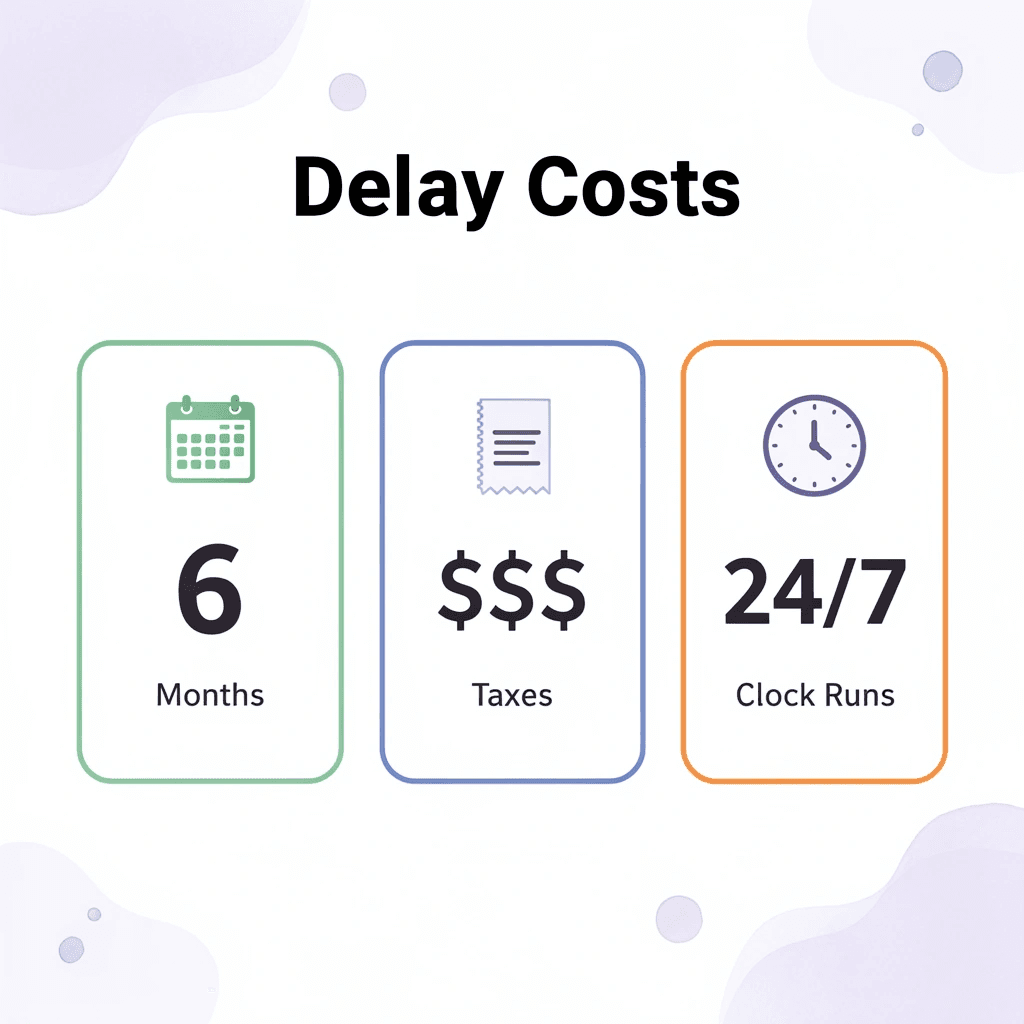
🎯 Key Point: Filing delays cost money - every month you wait adds unnecessary fees and taxes to your dissolution costs.
"Most states measure what you owe from the date you officially file paperwork, not from when you stopped working on the business." — Business dissolution timing requirements
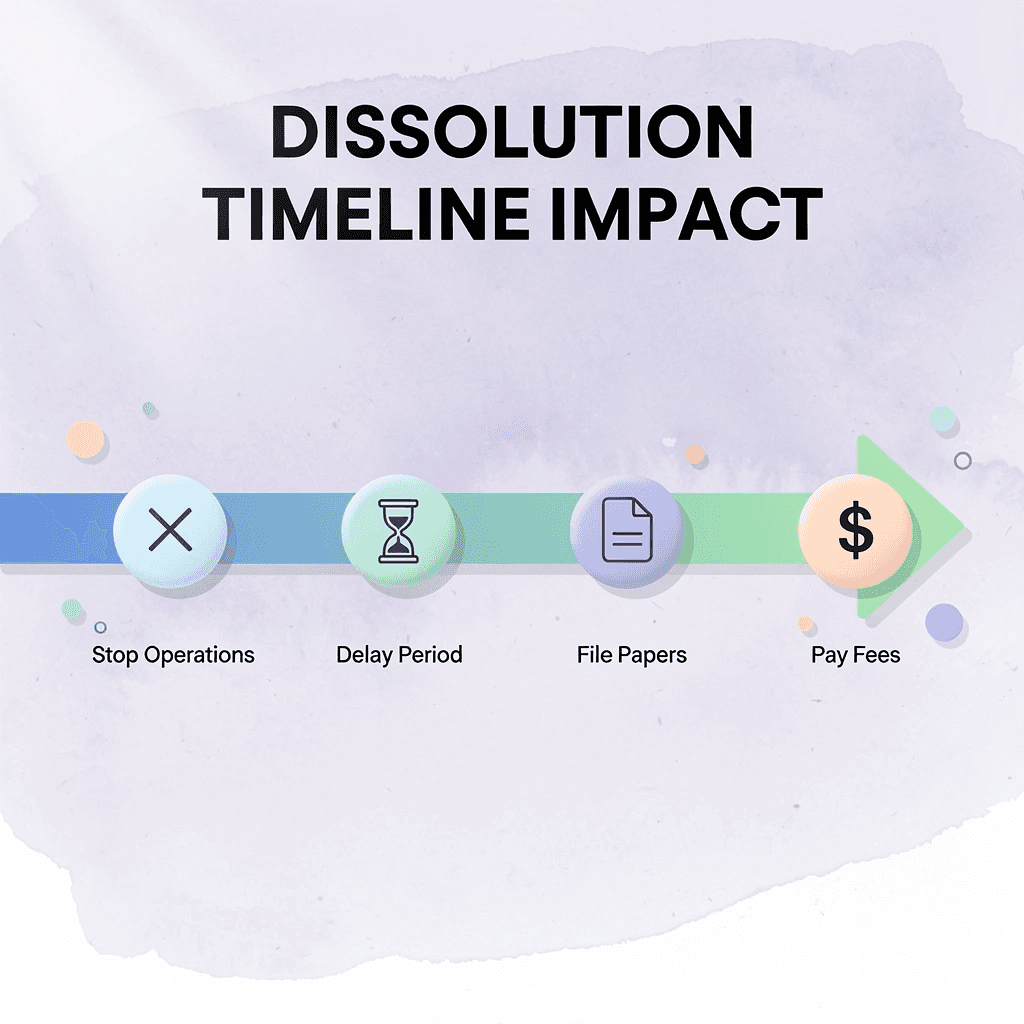
If you stopped making money in March but don't file the paperwork to close your business until September, you still have to pay six months of franchise taxes, yearly reports, and registered agent fees. Costs accumulate even after you stop working.
⚠️ Warning: Don't assume your business obligations pause when you stop operations - the clock keeps ticking until you officially dissolve.
What triggers the requirement for an LLC dissolution notice?
An LLC typically requires a notice of dissolution when members vote to close under the operating agreement's terms, or when a triggering event occurs, such as a member's death or withdrawal in single-member structures. Some states allow administrative dissolution if you miss too many annual filings, but that differs from voluntary closure.
Administrative dissolution leaves you exposed to penalties and doesn't fully clear your obligations. Founders who neglect filings and assume the entity will fade away often discover years later thousands in accumulated penalties, a damaged business credit profile, and unresolved personal liability exposure.
Dissolution requires action; silence does not trigger it.
When corporations and nonprofits face different thresholds
Corporations require board and shareholder approval before filing articles of dissolution, tying the requirement to formal governance milestones rather than operational ones. Nonprofits face stricter rules because of asset distribution restrictions and IRS reporting obligations.
If your nonprofit holds restricted funds or donor-advised assets, you cannot simply file paperwork and walk away. You need state attorney general approval in many jurisdictions, plus a plan for transferring remaining assets to another qualified 501(c)(3).
What steps remain after operations stop?
Most founders closing a business underestimate how many steps remain after operations stop. You still have contracts to cancel, vendors to notify, final tax returns to file, and state agencies to update. Our Starcycle platform transforms that overwhelming checklist into a structured shutdown plan, compressing months of administrative cleanup into a clear timeline with defined milestones.
What happens when you get the sequence wrong?
But knowing when to file is only half the equation. The bigger risk is getting the sequence wrong.
Related Reading
- IRS Closing A Business
- Involuntary Dissolution Of Llc
- How To Wind Down A Company
- How To Liquidate A Company
- How To Dissolve A Nonprofit
- Irs Cancel Ein
- Notice Of Dissolution
The Biggest Mistakes Businesses Make During Dissolution
Getting the sequence wrong happens when founders settle obligations in the wrong order, creating cascading problems. The most damaging version is distributing remaining funds to owners before paying off creditor claims or tax liabilities. Once money leaves the business account, recovering it to satisfy legitimate obligations becomes legally complicated and personally expensive. State dissolution statutes typically require debt settlement before asset distribution because reversing that order would expose everyone involved to greater liability.

💡 Tip: Always follow the proper payment hierarchy: secured debts first, then unsecured creditors, tax obligations, and finally owner distributions. This sequence protects you from personal liability claims.
"Reversing the payment order during dissolution exposes business owners to extended personal liability that can persist long after the business officially closes." — Business Law Review, 2023
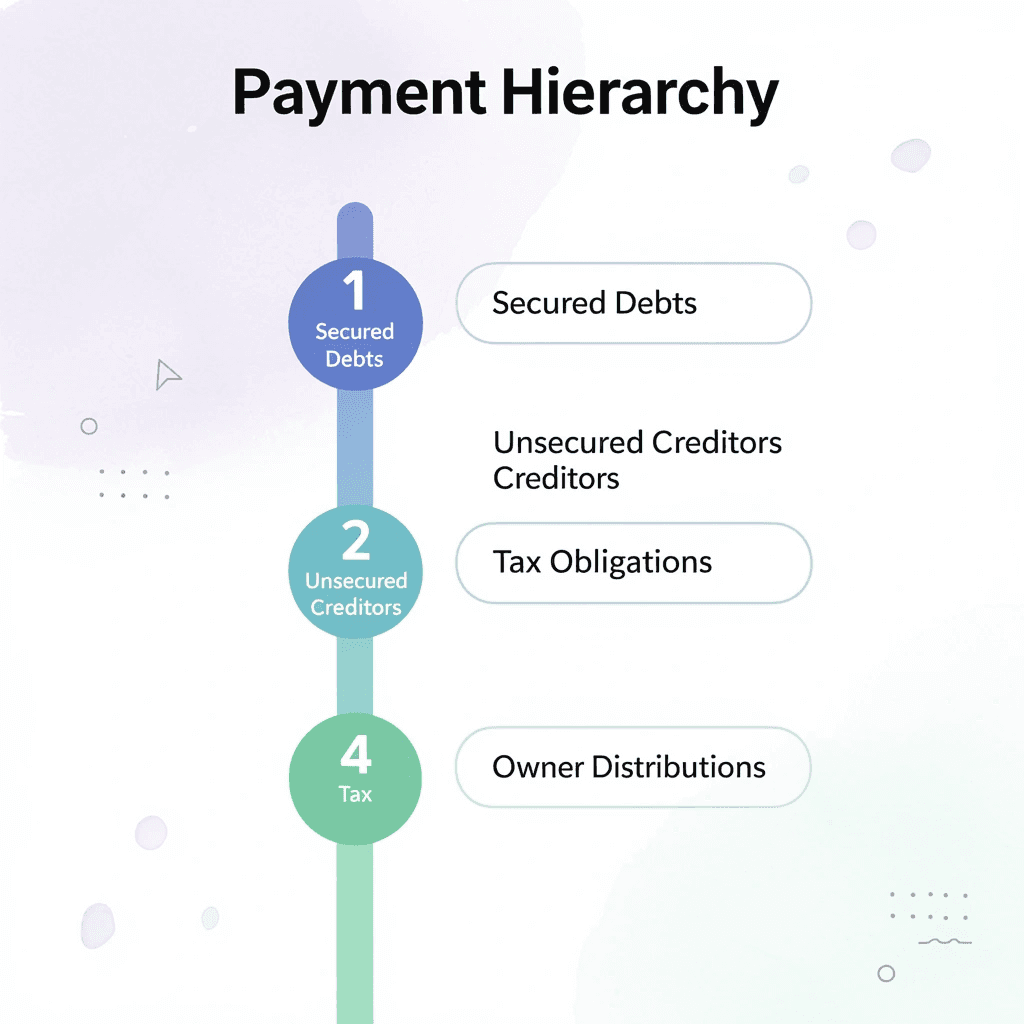
Payment Priority | Risk Level | Consequences of Error |
|---|---|---|
Secured Debts | Critical | Asset seizure, personal guarantees |
Tax Liabilities | High | Personal liability, penalties |
Unsecured Creditors | Medium | Legal claims, credit damage |
Owner Distributions | Low | Clawback requirements |

⚠️ Warning: Once you've made improper distributions, creditors can pursue both the business and individual owners to recover funds, turning a simple closure into a complex legal battle.
Why do tax obligations continue after business operations stop?
Tax agencies don't care that your website is down or your office lease ended. Businesses must file final returns confirming they have ceased operations, even after all business activity has ceased. A company that generated its last dollar of revenue in March but doesn't file final payroll tax returns until October remains officially active for seven months, potentially accumulating penalties and interest.
Sales tax accounts, employer identification numbers, and state income tax registrations all need formal closure notices. Without them, the system assumes you're still operating and simply behind on payments.
What happens when founders assume closure without filing?
Founders often shut down their Shopify stores, cancel payment processors, and assume they're finished. Six months later, they received notices about unfiled quarterly returns for a business they thought ended months ago. The state interprets silence as non-compliance, not closure.
What happens when you fail to notify creditors properly?
Some states require you to formally notify creditors when closing a business. This establishes claim periods that limit how long vendors, lenders, or contractors can pursue collection. Without this step, claim windows remain open indefinitely.
A vendor who wasn't formally notified might show up two years later with a valid claim if proper dissolution procedures weren't followed. A notification creates legal finality, allowing founders to resolve known obligations within a defined timeframe rather than face surprise claims years later.
How does creditor notification help surface hidden liabilities?
Telling creditors about the business closing helps identify hidden debts early. When founders formally contact creditors, they document who they owe money to, how much, and on what terms. This prevents founders from believing everything is paid off, only to discover missed debts after distributing remaining funds.
What happens when you forget final state filings?
The company remains a legal entity until the state approves the dissolution paperwork. Founders who stop operating without filing articles of dissolution leave their business subject to annual report requirements, franchise taxes, and renewal fees. The state continues treating it as active and delinquent, even though the founders believe they've closed it.
How do filing mistakes compound over time?
This mistake compounds over time. A business that stopped operating in 2022 but never filed for dissolution might accumulate three years of unfiled annual reports, unpaid franchise taxes, and late penalties by 2025. Fixing that mess becomes significantly more expensive and time-consuming than filing proper dissolution documents originally would have been.
Why do business owners assume inactivity equals dissolution?
This happens constantly with side projects, failed startups, and small businesses that fade away without formal closure. Founders stop logging in, let domains expire, and move on to new ventures. But inactivity differs from official closure. The LLC or corporation continues to exist in state records, continues owing annual fees, and continues to create compliance obligations.
Months or years later, founders discover their "closed" business has accumulated thousands in penalties and administrative debt.
What emotional factors contribute to avoiding proper dissolution?
The emotional weight of closure contributes to this pattern. Filing dissolution paperwork forces founders to formally confront failure, which feels harder than walking away. But avoiding it creates worse problems than addressing it.
Platforms like Starcycle convert the overwhelming sense of "I need to deal with this eventually" into a concrete timeline with defined tasks, since finishing properly costs less than leaving things unresolved.
But knowing what mistakes to avoid doesn't prepare you for how the process feels when you're in the middle of it.
Why Business Closures Become Emotionally Difficult for Founders
When a business stops making money, the legal entity stays active, but the emotional attachment remains. Founders delay dissolution because closing formally means facing what the business represented: years of effort, identity, relationships, and ambition that feel unfinished. The paperwork isn't merely administrative; it's the moment the ending becomes undeniable.

🎯 Key Point: The gap between when a business becomes unprofitable and when founders officially close it can stretch for months or even years, driven entirely by emotional resistance rather than financial logic.
"The hardest part isn't admitting the business failed—it's accepting that this version of your vision won't come to life." — Common founder sentiment during closure decisions

⚠️ Warning: Delaying formal closure doesn't preserve the business—it often creates additional costs, ongoing liability, and prevents founders from moving forward with new opportunities.
Why do business owners avoid dissolving their LLCs?
According to Psychology Today, 70% of business owners have no formal exit plan. Many founders keep companies open because they believe the business might restart later or because closing it feels like admitting failure. The company may no longer operate, but emotionally, it still occupies mental space.
Founders describe checking old dashboards at odd hours, not because of new activity, but because the business still feels like theirs to watch over. Operations have ended, but administrative and emotional closure remain incomplete.
What makes the dissolution process feel overwhelming?
Administrative requirements make it easier to justify avoiding closure. Filing final tax returns, notifying creditors, closing accounts, and navigating state compliance processes feel overwhelming when founders face financial stress, career transitions, or burnout. The entity remains open indefinitely.
State notices and annual report reminders create recurring pressure to handle something emotionally heavy, generating low-level anxiety rather than closure.
Why does business closure feel like admitting failure?
Business culture often sees company closures as failures rather than changes, making formal dissolution feel like a public admission that founders want to avoid. In reality, dissolution is about being clear and organized, not defeat.
A formally closed business creates a clearer financial separation, reduces compliance exposure, eliminates unresolved obligations, and allows founders to stop carrying the administrative burden forward. Platforms like business closure convert the emotional barrier into a structured process, turning "I need to deal with this eventually" into a concrete timeline with defined tasks, because finishing properly costs less than leaving things unresolved.
What happens when you leave dissolution unfinished?
Closing a business completely helps you move past it, rather than leaving it unresolved in the background for years. Many founders tell themselves they'll handle it later once they have more time or emotional distance, but incomplete closures prolong the weight rather than relieve it.
The business stops functioning but never truly ends, creating a limbo that impedes progress. Knowing the process needs to happen and knowing how to execute it properly are entirely different challenges.
Start with Internal Authorization
Dissolution starts with formal approval inside the company. LLCs require member approval per the operating agreement or state law; corporations require board resolutions and shareholder approval. Maintain careful records of this approval, as state agencies and tax authorities need proof of proper authorization.
Settle Outstanding Obligations Before Filing
Pay off all the money you owe before filing paperwork to close your business with the state. This includes amounts owed to vendors, employee pay, unfinished contracts, loans, taxes, and other bills. According to the Internal Revenue Service, businesses closing permanently must file final federal tax returns and settle employment tax obligations before the closure is officially complete. Filing closure paperwork before paying these obligations will result in delays, penalties, and additional paperwork complications.
Notify Creditors and Stakeholders
Depending on state law and your business type, you may need to notify creditors, vendors, customers, employees, and other business partners of the closure. Formal notification establishes timelines for claims and reduces the risk of unresolved debts surfacing later. Skipping this step leaves you vulnerable to claims arising months or years after dissolution.
File State Dissolution Documents
File dissolution paperwork with the state (typically called Articles of Dissolution, Certificate of Dissolution, or Certificate of Termination depending on your location). This formally notifies the state that the business is ending. Skipping this step leaves inactive companies subject to annual report obligations, franchise taxes, state fees, and compliance notices. One founder formed an LLC and later received IRS notices because the entity remained legally active despite zero business activity.
What tax filings are required when dissolving a business?
Turn in your final federal and state tax returns and mark them as "final returns." Corporations must file IRS Form 966 when adopting a formal dissolution or liquidation plan. Businesses with employees need to file final payroll tax forms, issue final W-2s, close payroll accounts, and complete employment tax deposits.
How do you properly close business accounts and maintain records?
Close any remaining business accounts, including bank accounts, payment processors, licenses, permits, payroll accounts, state tax registrations, and business insurance policies. Maintain organized records of your closure, including approvals, state filings, tax returns, creditor notices, payroll records, and closure correspondence. The IRS recommends keeping business records for several years after closure, depending on the record type.
Doing these steps in the right order while managing the emotional weight and administrative complexity is where most closures stall.
Related Reading
- Liquidation Vs Bankruptcy
- Close Corporation Taxation
- Llc Termination Vs Dissolution
- Company Liquidation Process
- Startup Shutdown
- How Much Does It Cost To Close an LLC
- How To Tell Investors That You're Shutting Down
- How To Dissolve A Partnership With The Irs
- Dissolving In Europe
- Dissolving In Canada
How Starcycle Helps Founders Navigate Business Dissolution More Clearly
Closing down a business while feeling tired and stressed is challenging. Founders face money problems, burnout, unfinished paperwork, tax questions, and confusion about what needs to be filed or addressed. Most try to do the right thing, yet are overwhelmed by confusing advice and fragmented information.

🎯 Key Point: Business dissolution becomes exponentially more difficult when founders are already dealing with emotional exhaustion and financial pressure - the very conditions that often lead to closure in the first place.
"The majority of business closures happen during periods of high stress, when founders are least equipped to handle complex administrative and legal requirements." — Small Business Administration Research, 2023

💡 Tip: Starcycle provides a clear roadmap through the dissolution process, breaking down overwhelming tasks into manageable steps so founders can focus on what matters most during this challenging transition.
Why does structure matter more than speed when dissolving an LLC?
Dissolution problems stem from reactive, out-of-order handling rather than slow execution. One filing gets submitted while tax obligations remain unresolved; state paperwork gets delayed while business accounts stay open. When exhausted, assembling requirements from conflicting sources compounds the mental burden.
How can professional services help organize the dissolution process?
Starcycle organizes the closure steps based on the company's structure, operational status, and dissolution needs. The service breaks the process into separate categories: state administration, federal filings, and, where applicable, international obligations. This structured approach starts at $399, making professional dissolution guidance accessible without the thousands in legal fees that often keep founders stuck in limbo, according to Starcycle.
How does proper guidance resolve common dissolution problems?
This support directly addresses the most common dissolution failures. Confusion around requirements gets replaced with specific guidance tailored to your entity type. Incomplete closures become less likely with a clear roadmap showing which filings are required and when. Our Starcycle platform organizes all required steps in a structured timeline so nothing gets overlooked.
Ongoing compliance exposure decreases because you're not leaving administrative gaps that surface months later as penalty notices or unresolved state obligations.
What happens when you structure dissolution correctly from the beginning?
Instead of shutting down without a plan and later discovering unresolved state filings, tax notices, or annual compliance obligations, you handle the dissolution properly from the start. Starcycle helps you stay organized through the closure process, ensuring nothing falls through the cracks.
You avoid penalty traps and don't build up ongoing fees and franchise taxes for an inactive entity because closure happens in an organized way, not as a reaction to a problem. Our Starcycle platform keeps you on track with all the required steps, so you can close with confidence.
The emotional shift that makes moving forward possible
The goal is to help founders close one chapter cleanly and focus on what comes next without lingering administrative stress. Many founders delay closing because the process feels mentally draining, especially when they are burned out from keeping the business afloat. Breaking dissolution into manageable steps prevents the business from remaining unresolved indefinitely, accumulating penalties and anxiety with each state notice.
Knowing how to close properly is only half the equation; taking that first step is the other half.
Sign up to Make your Business Closure Process Easier
Taking the first step stops penalties from building up, state notices from arriving, and anxiety from growing. If you're ready to close your business the right way without spending weeks on state requirements or thousands on legal fees, Starcycle guides founders through dissolution with structured guidance, clear timelines, and transparent pricing starting at $399. You receive a customized action plan based on your entity type and operational status, plus support navigating creditor claims, tax filings, and state approvals that complicate most closures.
💡 Tip: Starting your dissolution process immediately prevents costly penalties and reduces closure complexity.
"Transparent pricing starting at $399 provides founders with structured guidance and clear timelines for business dissolution." — Starcycle, 2024

Finishing strong matters for compliance and your ability to move forward without legal baggage. Getting a quote takes minutes, and the clarity you gain from knowing what needs to happen is worth far more than the cost of delay.
🔑 Takeaway: The peace of mind from proper business closure far outweighs the minimal time investment required to get started.