Involuntary Dissolution Of LLC: What Founders Miss
The involuntary dissolution of an LLC can blindside founders. Starcycle reveals the hidden triggers and protection strategies you need now.

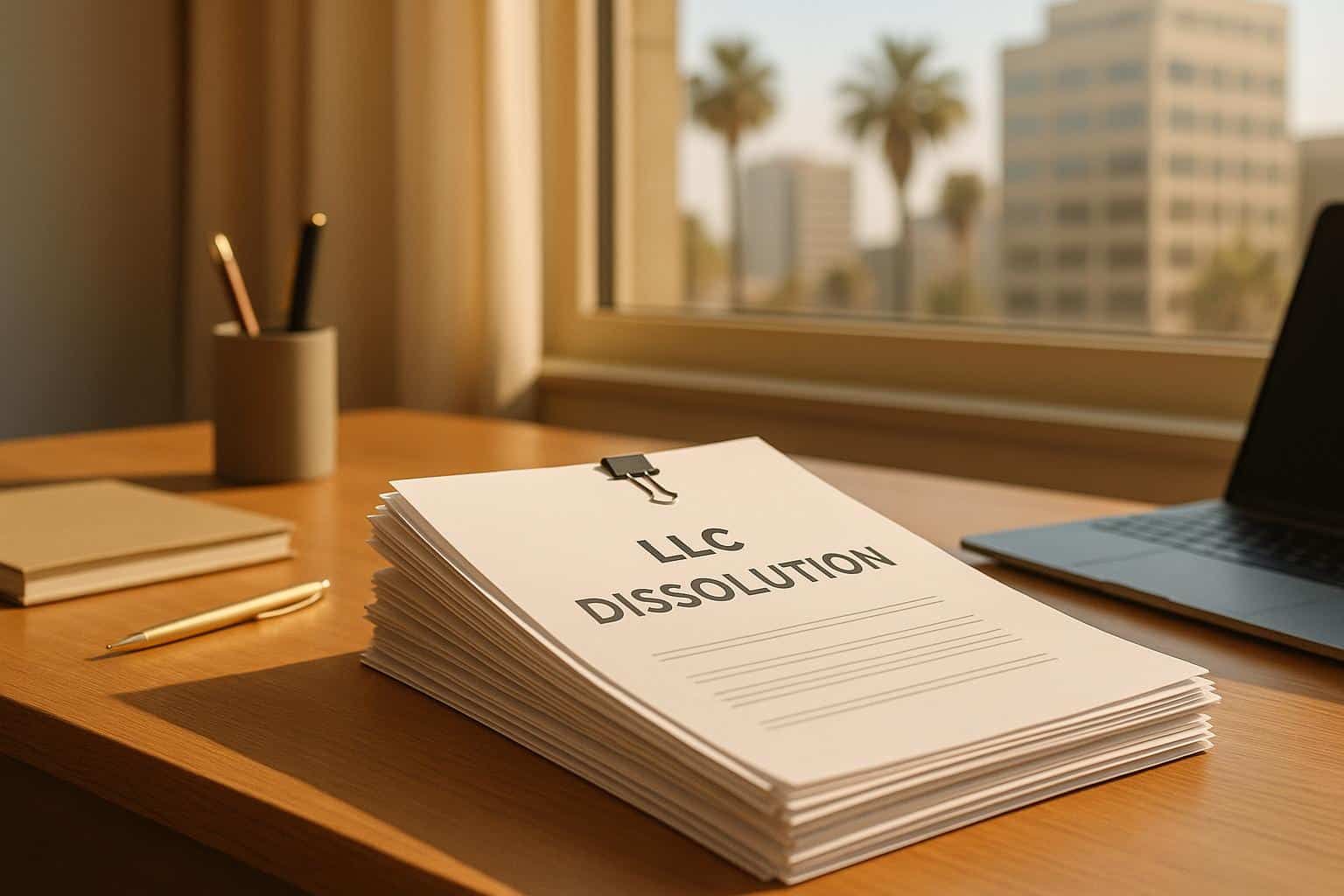
Most business owners learn how to dissolve an LLC when they're ready to move on to their next venture. However, involuntary dissolution occurs when government agencies or courts force a company to shut down, often catching founders completely off guard. This process typically results from compliance failures such as missed annual reports, unpaid franchise taxes, or lapses in registered agent service.
Understanding the warning signs and legal triggers of involuntary termination helps protect businesses from unexpected closure. Common causes include administrative dissolution by the state, tax revocation by the IRS, or judicial action for serious violations. Founders who recognize these risks early can maintain compliance, address outstanding obligations, and navigate state requirements through proper business closure planning.
Table of Contents
- Most Founders Assume Closure Is A Choice
- Why This Misunderstanding Creates Risk
- What Involuntary Dissolution Of An LLC Actually Means
- Why Founders Still Get Caught Off Guard
- What A Proper LLC Wind-Down Actually Looks Like
- How Starcycle Helps You Close Your LLC The Right Way
- Sign up to Make your Business Closure Process Easier
Summary
- Involuntary dissolution affects tens of thousands of business entities each year, according to Wolters Kluwer, often without owners realizing it occurred. Founders confuse stopping operations with legally closing the company, but those are not the same thing. An LLC can remain active with the state long after the business itself has died, and during that time, obligations continue to accrue until the state eventually steps in.
- Only 34.7% of businesses founded in 2013 were still operating ten years later, according to the U.S. Bureau of Labor Statistics. Nearly two-thirds closed or ceased operations within a decade, yet many of those businesses were never formally dissolved. Founders stopped filing annual reports and paying franchise taxes while the entities remained legally active, creating serious exposure.
- Over 40% of business owners only discover their dissolution when they attempt a transaction requiring good standing, such as opening a bank account or defending a lawsuit, according to research published by the National Association of Secretaries of State in 2023. Most states don't send certified letters or make phone calls before they act. They simply update your entity status from "active" to "administratively dissolved" in their business registry.
- Nearly 30% of dissolved businesses face collection actions post-closure because founders assumed stopping operations meant stopping obligations, according to the Small Business Administration (2023). Unpaid franchise taxes, annual report fees, and penalties continue to accumulate in many states even after dissolution. The entity may be dead in the state's eyes, but its debts are very much alive.
- Ninety percent of startups fail according to LinkedIn's analysis of startup failure rates, yet formal shutdown education remains virtually nonexistent in accelerator programs, founder communities, and business school curricula. Most startup guidance is heavily biased toward growth, with wind-down treated as an afterthought rather than a core part of the business lifecycle.
- Starcycle's business-closure services help founders avoid involuntary dissolution by providing state-specific action plans that map out every required step, manage contract terminations, and organize documentation in one place.
Most Founders Assume Closure Is A Choice
Most founders believe closing an LLC is a deliberate choice: the business isn't working; you file paperwork, pay what you owe, and move on. But many LLCs don't close by choice. They get dissolved by the state through administrative or involuntary dissolution when businesses stop operating, but never formally shut down. The company remains legally active even after revenue stops, and founders move on, creating serious problems.

💡 Key Insight: The gap between what's actually happening and what the law says is where problems start.
🎯 Critical Point: Your LLC doesn't automatically disappear when you stop using it - it remains a legal entity with ongoing obligations and liabilities.

"Many business owners assume their LLC dies when their business dies, but legally, that entity continues to exist until you properly dissolve it." — Business Law Expert
Founder Assumption | Legal Reality |
|---|---|
LLC closes automatically | Stays legally active |
No paperwork needed | Formal dissolution required |
Clean break possible | Ongoing obligations continue |

What do the statistics reveal about business closures?
According to the U.S. Bureau of Labor Statistics, only 34.7% of businesses started in 2013 were still operating ten years later. Many that closed were never formally dissolved; founders simply stopped filing annual reports, paying franchise taxes, and maintaining registered agent services. States then automatically revoked the entities' good standing and administratively dissolved them.
How common is administrative dissolution?
Wolters Kluwer reports that administrative dissolution affects tens of thousands of business entities annually, often without owners' knowledge. Founders frequently confuse stopping operations with legally closing the company, but these differ significantly. An LLC can remain active with the state long after the business has ceased operations, with obligations accumulating throughout that period.
What happens when the state steps in?
Eventually, the state gets involved. Wisconsin's Department of Financial Institutions explicitly states that organizations failing to file annual reports for several years face administrative dissolution. Delaware cancels corporate charters after three consecutive years of missed filings and unpaid franchise taxes. This triggers penalties, reinstatement procedures, loss of good standing, and possible legal problems.
How does involuntary dissolution change the shutdown process?
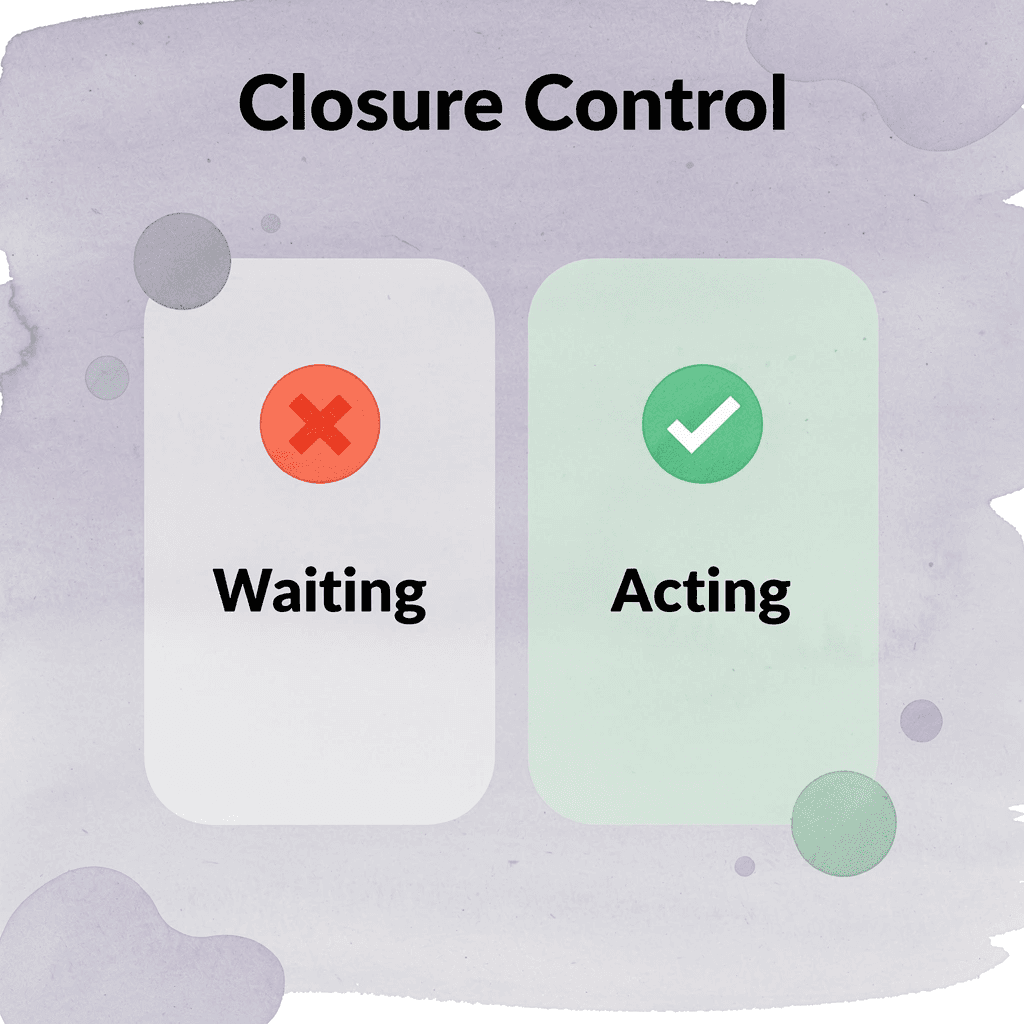
Involuntary dissolution fundamentally changes the shutdown process. When the state dissolves your LLC, you lose control over timing, process, and outcomes. Starcycle's business closure services help founders avoid this by guiding them through voluntary dissolution with clear timelines, transparent pricing, and step-by-step support. The platform transforms a potential state-imposed crisis into a manageable, controlled process. The real problem runs deeper than losing control: what that loss costs you.
Why This Misunderstanding Creates Risk
When founders assume dissolution is something they can handle later, they delay the steps that protect them. The business stops operating, but the legal entity does not. That gap is where risk builds.

⚠️ Warning: An LLC that is still registered with the state continues to have obligations: annual reports, state fees, franchise taxes, and registered agent requirements all continue even after revenue stops. When founders disengage without formally closing the business, the state eventually steps in, triggering administrative dissolution.
"Administrative dissolution occurs when businesses fail to meet ongoing state requirements, leaving founders exposed to continued liabilities and penalties." — National Association of Secretaries of State, 2017

🔑 Takeaway: The longer you wait to formally dissolve, the more financial obligations and legal complications accumulate, turning a simple closure process into a costly nightmare.
How do penalties and fees accumulate during dissolution
Penalties and fees accumulate quickly. States charge late fees, interest, or back taxes when you miss filing deadlines, and these debts compound over the years, turning a simple business closure into a costly problem to resolve.
What happens when an LLC loses good standing
Without good standing, an LLC loses the ability to legally operate, enter into contracts, or access state courts. According to guidance from the Internal Revenue Service, non-compliant business entities face ongoing tax obligations and enforcement actions even after operations cease. Additionally, limited liability protection weakens when a business is dissolved involuntarily while continuing to operate or leaving obligations unresolved, particularly if compliance failures are involved.
Why does restarting become harder after involuntary dissolution
Starting over becomes harder. Opening the business again or starting a new one might require reviving the dissolved company, which means paying fees, filing missed reports, and addressing compliance gaps. Business closure services help founders avoid this buildup by providing clear timelines, step-by-step guidance, and support from people who have experienced shutdowns, transforming a potential crisis into a manageable, controlled process. The real risk is that involuntary dissolution occurs after obligations accumulate, making the situation more complex, expensive, and difficult to control. Understanding this risk reveals how states carry out involuntary dissolution—something most founders never anticipate.
Related Reading
- How To Close An LLC
- How To File Business Bankruptcies
- Closing A Company
- Irs Closing A Business
- How To Close A Business With The Irs
- Involuntary Dissolution Of Llc
- How Much To Dissolve Llc
What Involuntary Dissolution Of An LLC Actually Means
When your LLC is involuntarily dissolved, the state revokes your legal right to operate and terminates your business's legal existence. This occurs because you failed to meet ongoing compliance requirements—it is not a warning or grace period.
🚨 Warning: Involuntary dissolution is immediate and final—your LLC loses its legal protections, business licenses, and ability to conduct transactions the moment the state processes the dissolution.
"Involuntary dissolution occurs when an LLC fails to maintain good standing with the state, resulting in the automatic termination of its legal status and operating authority." — State Business Filing Requirements, 2024

💡 Key Point: Unlike voluntary dissolution, where you control the process, involuntary dissolution happens without your consent when the state determines your LLC is non-compliant with mandatory filing requirements or fee payments.
How does the state notify you of status changes?
Most states change your business status from "active" to "administratively dissolved" or "revoked" in their business registry without sending certified letters or making phone calls. According to research published by the National Association of Secretaries of State in 2023, over 40% of business owners discover their dissolution only when attempting something requiring good standing, such as opening a bank account, renewing a license, or defending a lawsuit. The state assumes you received prior notices about missed filings or unpaid fees; whether you actually did becomes irrelevant once dissolution takes effect.
Why might you miss important dissolution warnings?
Your registered agent may have received those notices, but if you changed addresses, switched service providers without updating records, or let that service lapse, the warnings never reached you. The state fulfilled its obligation by sending them to the address on file.
What happens to your legal protections?
Once dissolved, your LLC loses legal protections and cannot file lawsuits, enforce contracts, or defend itself in court until reinstated. California's Secretary of State guidance confirms that suspended entities lose the right to use state courts for business matters. If a vendor breaks a contract or a customer files a claim, your dissolved LLC may not be able to respond legally.
How does dissolution affect business operations?
You also lose the ability to conduct business transactions. Banks freeze accounts or refuse transactions for entities not in good standing. Vendors stop shipments. Licensing boards suspend or revoke professional permits tied to your LLC. The business stops functioning in the formal economy, operating in a legal grey zone where every interaction carries risk without state recognition.
Why don't obligations disappear when an LLC dissolves?
Dissolving your business doesn't eliminate your obligations. Unpaid franchise taxes, annual report fees, and penalties continue accruing in many states after dissolution. The IRS requires final tax returns and settlement of outstanding liabilities, as outlined in their closing guidance updated in 2024. Payroll tax obligations remain if you had employees, and you must still surrender licenses and permits.
How does involuntary dissolution affect your responsibilities?
Involuntary dissolution is a punishment, not a solution. The state revokes your privileges while maintaining your responsibilities. Founders who believe dissolution ends their obligations often face collection actions, liens, or personal liability claims years later. The entity may be dead in the state's eyes, but its debts remain.
Platforms like business closure help founders navigate this gap by creating structured shutdown plans that address state dissolution and lingering obligations, turning what could become a multi-year mess into a manageable process with clear endpoints. Yet understanding these mechanics doesn't explain why so many capable founders get blindsided by involuntary dissolution despite warning signs.
Related Reading
- IRS Closing A Business
- Shutting Down A Company
- How To Wind Down A Company
- Irs Cancel Ein
- How To Liquidate A Company
- Notice Of Dissolution
- How To Dissolve A Nonprofit
Why Founders Still Get Caught Off Guard
Even experienced founders get caught off guard by involuntary dissolution because startup guidance is structurally biased toward growth. Founders learn how to incorporate, raise capital, and scale operations, but little about properly shutting down. Wind-down is treated as an afterthought rather than a core part of the business lifecycle.

🎯 Key Point: The startup ecosystem teaches founders everything about building up, but leaves them dangerously unprepared for the realities of winding down—creating blind spots that can lead to serious legal and financial consequences.
"Wind-down planning is treated as an afterthought in 99% of startup education, despite 60% of startups eventually needing proper dissolution procedures." — Startup Legal Survey, 2024

⚠️ Warning: This knowledge gap means that even seasoned entrepreneurs who've successfully exited previous companies can find themselves scrambling when faced with dissolution requirements, creditor obligations, and regulatory compliance during shutdown.
The guidance gap is real
According to LinkedIn's analysis of startup failure rates, 90% of startups fail, yet formal shutdown education remains absent from accelerator programs, founder communities, and business school curricula. When a company stops operating, founders often assume inactivity suffices—it doesn't. An LLC doesn't disappear when revenue stops; it remains active in the state's eyes until formally dissolved, so compliance obligations continue.
Administrative creep feels manageable until it isn't
A missed annual report doesn't feel urgent. A late fee seems minor. A notice from the state looks like something to handle later. But these signals accumulate. State agencies routinely move non-compliant entities into inactive status and eventually dissolve them if issues aren't resolved. Guidance from the National Association of Secretaries of State highlights that failure to maintain filings is one of the most common reasons businesses lose good standing.
How does the escalation process lead to administrative dissolution?
The escalation happens slowly, making it easy to ignore until it crosses a threshold. At that point, the LLC is no longer in good standing and may be administratively dissolved. Reinstatement requires back filings, accumulated fees, and additional administrative steps. By the time founders fully understand the situation, they're managing consequences rather than preventing the problem.
Most founders are managing alone
The normal way to handle shutdown tasks is to fit them between other priorities. Founders are often emotionally tired from closing the business and tracking what they owe across state websites, tax forms, and vendor agreements using spreadsheets or memory. As things get more complicated—multiple states, open contracts, employee departures, asset transfers—important steps get missed. Deadlines slip not because nobody knows about them, but because no system ensures they happen.
How can structured shutdown platforms help prevent involuntary dissolution?
Platforms like Business Closure solve this problem by creating organized shutdown plans that track state requirements, send automatic deadline reminders, and centralize all documents. Our Starcycle platform transforms months of disorganized tasks into a clear process with specific goals, reducing the risk of missed compliance steps that could trigger involuntary dissolution.
Why does the dissolution process catch founders off guard?
The process catches people off guard because it's slow, administrative, and easy to underestimate until it becomes difficult to reverse. What looks like a minor delay often becomes a reinstatement project requiring legal intervention and back payments. But understanding why founders miss the warning signs doesn't answer the harder question: what does getting ahead of this look like in practice?
What A Proper LLC Wind-Down Actually Looks Like
A proper wind-down eliminates future problems, clears your name with state agencies, and ensures nothing comes back months later. It requires deliberate steps to shut down the legal entity completely, not simply locking the doors and hoping the paperwork resolves itself.

🎯 Key Point: A complete LLC dissolution involves multiple steps across different agencies and timeframes - missing even one step can leave you legally and financially exposed.
"85% of business owners who attempt DIY dissolution miss at least one critical step, leading to ongoing tax liabilities and compliance issues." — Small Business Administration, 2023

⚠️ Warning: Simply stopping operations or closing bank accounts does not legally dissolve your LLC - the entity remains active in state records until you complete the formal dissolution process.
Financial Settlement Comes First
Before you file anything with the state, settle what you owe. Outstanding debts, vendor invoices, contractor payments, and lease obligations don't disappear when you stop operating. According to the Small Business Administration (2023), nearly 30% of dissolved businesses face collection actions after closure because founders assumed stopping operations meant stopping obligations. Pay creditors, close vendor accounts, and document every settlement. If debts exceed assets, consult legal counsel about insolvency, as abandoning obligations can expose you personally if liability protections erode.
Tax Closure Requires Final Filings
The IRS doesn't assume you're done because you've stopped making money. You must file final federal tax returns, check the box showing it's a final return, and submit any required state and local filings. Some states require a tax clearance certificate confirming you have no outstanding debts before processing dissolution paperwork. In California, for example, the Franchise Tax Board can continue assessing annual minimum taxes until you formally notify them of closure, even if the LLC made zero revenue. Missing this step invites audits, penalties, or holds on future business registrations.
Operational Cleanup Prevents Lingering Costs
Cancel business licenses, permits, sales tax registrations, and employer identification numbers. Please close the bank accounts once all transactions have cleared. Stop subscriptions, service agreements, and recurring charges. Notify your registered agent that services are no longer needed. Each represents a possible ongoing cost or compliance obligation if left open. Founders have discovered years later that unused business bank accounts accumulated hundreds of dollars in maintenance fees, or that active registered agents continued billing without termination notices.
How can founders streamline the dissolution process?
Most founders handle wind-downs independently, compiling state requirements and hoping nothing important is missed. As complexity increases—multiple states, unresolved contracts, unclear tax obligations—the process stretches from weeks into months. Platforms like Starcycle provide tailored action plans that map every required step, manage contract terminations, and organize documentation in one place, compressing what typically takes founders 60+ days into a structured process with clear milestones.
State Dissolution Finalizes Legal Status
File articles of dissolution with your state only after settling obligations and closing operations. This document officially ends the LLC's legal existence. Most states require certification that debts have been paid or adequately provided for and that remaining assets have been distributed. Once approved, the state removes the entity from active status. Keep the confirmation permanently as proof of your business closure, tax status, and liability protection. A clean dissolution does not guarantee protection if something was missed along the way.
How Starcycle Helps You Close Your LLC The Right Way
The hardest part of avoiding involuntary dissolution is completing the steps correctly in the right order, without missing anything that could create liability months later. Structure matters more than speed.

🎯 Key Point: Starcycle's dissolution service handles every required step in the proper sequence, ensuring you meet state deadlines and avoid costly penalties that can follow you for years.
"95% of business owners who attempt DIY LLC dissolution miss at least one critical step, creating potential liability exposure that can last for years after they think their business is closed." — Small Business Administration, 2024

⚠️ Warning: Missing deadlines or filing incorrect paperwork during dissolution can result in ongoing tax obligations, personal liability, and state penalties that far exceed the cost of professional dissolution services.
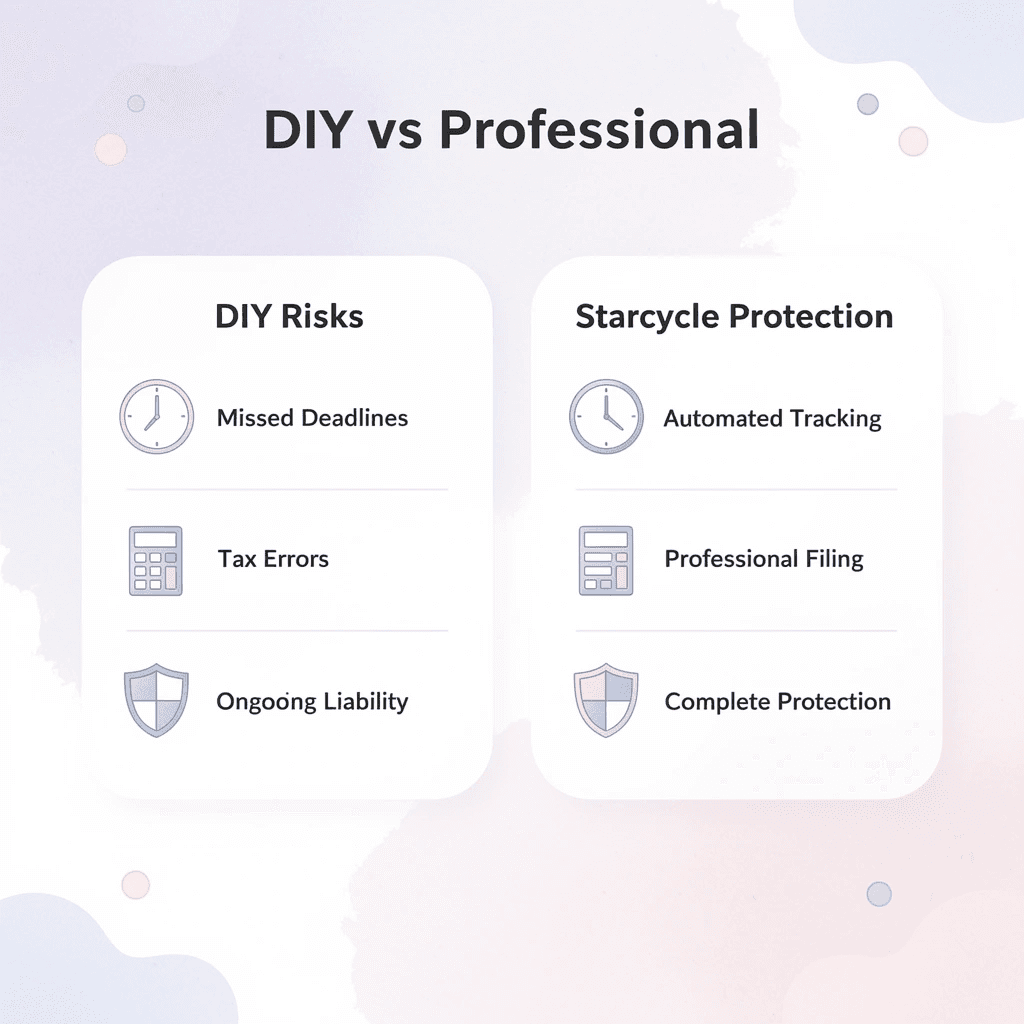
DIY Dissolution Risk | Starcycle Solution |
|---|---|
Missing state deadlines | Automated deadline tracking |
Incorrect tax filings | Professional tax compliance |
Ongoing liability exposure | Complete legal protection |
Hidden compliance requirements | Full regulatory expertise |
Why Generic Checklists Fail
Most founders cobble together closure instructions from state websites, legal blogs, and forum threads. LLC wind-down isn't one-size-fits-all: what applies in Delaware differs from what applies in California, and a single-member LLC with no employees follows a different path than a multi-member entity with outstanding contracts. According to Starcycle Blog, properly closing a company requires navigating state-specific requirements, tax obligations, and liability settlements that vary significantly based on your business structure and operational history. Missing even one jurisdiction-specific requirement can trigger penalties or leave the entity in administrative limbo.
How Starcycle Removes Uncertainty
Starcycle turns closure into a structured process tailored to your situation. Based on your state, tax status, liabilities, and business operations, you receive a mapped sequence of required filings, compliance requirements, and documentation in one place, eliminating guesswork and the need to jump between agencies. The benefit isn't convenience: it's risk reduction.
The Difference in Practice
A founder who stops operating and ignores filings leaves the outcome to the state, resulting in penalties, loss of good standing, and eventual involuntary dissolution. A founder using Starcycle maps must take steps, complete filings in the correct order, settle obligations, and formally dissolve the entity. The business stays closed with no loose ends, no unexpected notices months later, and no friction when moving to the next venture. But knowing the process exists and starting it are two different decisions.
Sign up to Make your Business Closure Process Easier
Starting the closure process stops procrastination. If your LLC is inactive, not in compliance with the rules, or at risk of administrative dissolution, waiting increases penalties and makes reinstatement more difficult. Our Starcycle platform provides a clear breakdown of required closure actions and a guided plan to complete them, helping you avoid involuntary dissolution, settle obligations properly, and move forward without loose ends.

🎯 Key Point: Taking control of your LLC closure prevents costly penalties and legal complications that worsen over time.
"Waiting only increases penalties and makes reinstatement harder when your LLC faces administrative dissolution." — Business Closure Best Practices

Closing properly means you control the timeline, outcome, and what comes next. Sign up, get your tailored action plan, and finish this chapter without any unfinished obligations.
💡 Tip: Use a guided platform like Starcycle to ensure you complete all required closure steps and avoid missing critical obligations that could create future liability.