
A Guide on Shutting Down a Company Without Costly Mistakes
Learn how to shut down a company legally and avoid costly errors with Starcycle's step-by-step dissolution guide for business owners.


Deciding to dissolve an LLC requires careful planning to avoid financial and legal complications. The process involves multiple steps beyond simply ceasing operations, including filing proper paperwork, settling debts, and notifying creditors. Many business owners underestimate the complexity of shutting down a company, leading to costly mistakes that can persist long after closure.
Proper dissolution protects owners from ongoing liability and ensures compliance with state requirements. Professional guidance can streamline the administrative burden and help entrepreneurs navigate tax obligations, creditor notifications, and filing deadlines. Starcycle provides comprehensive support for business closure to ensure the process is handled correctly from start to finish.
Table of Contents
- Why Shutting Down a Company Is Harder Than Most Founders Expect
- What Shutting Down a Company Actually Involves
- How to Shut Down a Company Step by Step
- The Biggest Mistakes Founders Make During a Winddown
- Why a Structured Winddown Creates Better Long-Term Outcomes
- How Starcycle Helps Simplify Company Winddowns
- Sign up to Make your Business Closure Process Easier
Summary
- Ninety percent of founders underestimate the time required to properly shut down their company, according to SimpleClosure's State of Startup Shutdowns 2025. The gap between stopping operations and achieving legal dissolution is far wider than most expect. The business may be dormant, but state agencies continue assessing fees, tax filings remain active, and directors retain personal liability until every formal step is completed correctly and in sequence.
- Inactive business entities accumulate penalties even with zero operational activity if they remain legally registered. Florida imposes a mandatory $400 late fee on LLCs and corporations that miss annual report deadlines, with no exceptions for inactive businesses. Delaware adds a $200 late penalty plus 1.5% monthly interest on unpaid franchise taxes. These obligations persist until formal dissolution paperwork is filed with the state.
- Nearly half of businesses do not survive beyond five years, according to the U.S. Bureau of Labor Statistics, making closures a normal part of entrepreneurship. What damages professional relationships during shutdowns is not the closure decision itself, but poor communication, unresolved obligations, or disappearing without follow-through. Founders who handle wind-downs transparently preserve trust, which becomes valuable when they fundraise, hire, or pursue partnerships for future ventures.
- Tax account closure requires separate action from operational shutdown. The IRS and state tax agencies expect filings until payroll tax accounts, employer registrations, and sales tax permits are formally shut down through distinct processes. The IRS requires employment tax records to be preserved for at least 4 years, and other corporate documents may need to be retained for significantly longer, depending on jurisdiction and business structure.
- The most expensive winddown mistakes happen after operations stop, not during the shutdown decision itself. Founders who skip steps or rush through dissolution often discover months later that their business still exists legally, generating obligations they thought had ended. That discovery usually arrives as a penalty notice, a collections letter, or a rejected filing for their next venture.
- Business closure services address this by organizing shutdown requirements into tailored action plans that match the founder's specific business structure, state jurisdiction, and operational situation, compressing what typically takes months of manual tracking into a structured process with clear completion milestones.
Why Shutting Down a Company Is Harder Than Most Founders Expect
Shutting down a company seems simple at first, but it gets complicated fast. When you close a business, you must handle many connected legal, financial, and administrative obligations that most founders never anticipate. Founders spend years learning how to build companies, not dismantle them.
🎯 Key Point: The dissolution process involves multiple stakeholders, including creditors, employees, tax authorities, and regulatory bodies - each with their own requirements and timelines.

"Most entrepreneurs are completely unprepared for the complexity and time commitment required to properly shut down a business - it can take 6-12 months even for simple closures." — Small Business Administration, 2023
⚠️ Warning: Failing to follow proper shutdown procedures can leave founders personally liable for unpaid debts, tax obligations, and regulatory penalties - even after the business is closed.
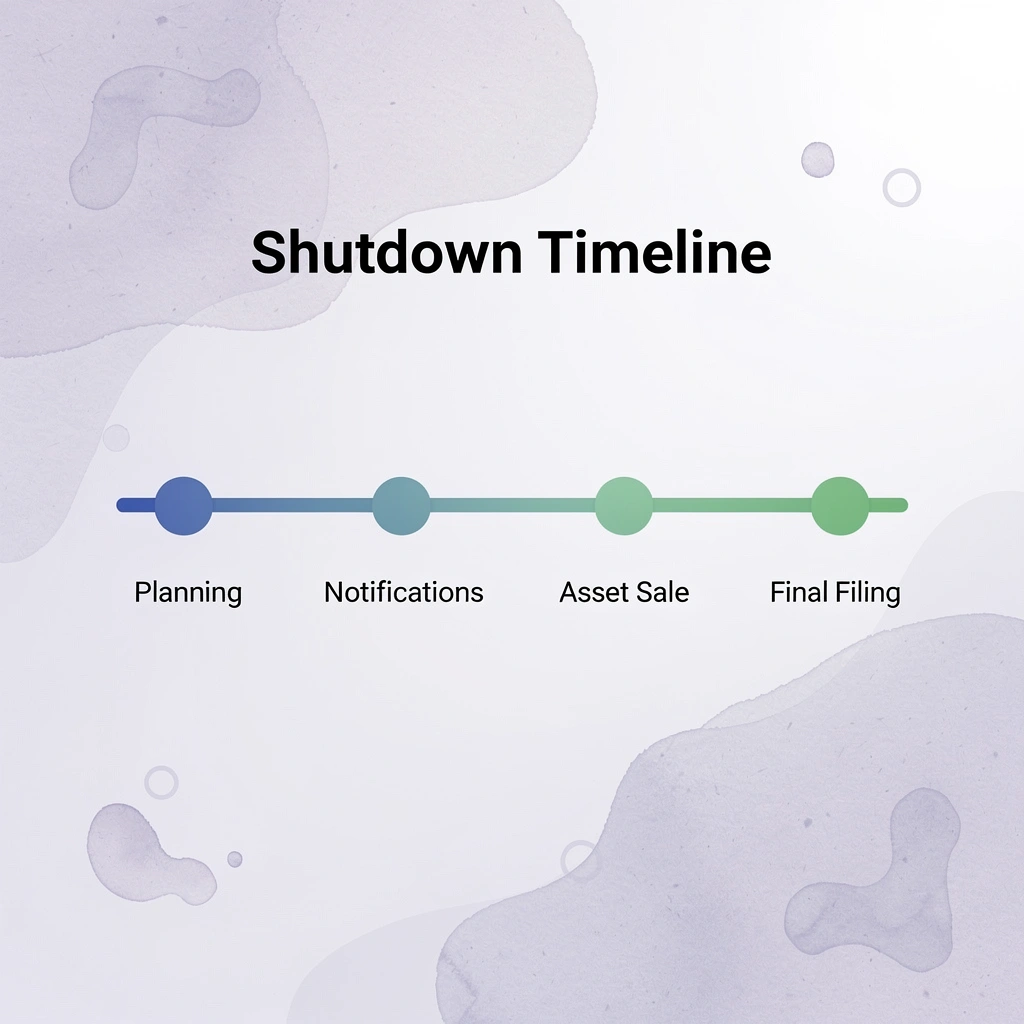
What makes company closure so complex?
Many systems demand simultaneous attention: filing paperwork to close your business with the state, closing tax accounts, settling vendor debts, managing payroll, communicating with employees, keeping records, dividing assets, and meeting deadline requirements. Missing even one can cause lasting problems.
A founder might shut down the website, only to receive franchise tax bills, annual report notices, or compliance penalties six months later because the business still technically exists in the state's records.
What's the difference between stopping operations and legal dissolution?
According to SimpleClosure's State of Startup Shutdowns 2025, 90% of founders underestimate the time required to properly shut down their company. The gap between "we stopped operating" and "the company is legally dissolved" is wider than expected. State agencies continue assessing fees, tax filings remain active, and directors retain personal liability until all formal steps are completed correctly and in the proper order.
Why do unresolved obligations create ongoing problems?
Unpaid vendor bills can damage professional relationships you may need in the future. Tax authorities don't care that you stopped making money if you haven't officially closed your accounts. Employees need proper offboarding documentation. Each area operates on different timelines with different agencies, and they don't coordinate.
Why does emotional exhaustion compound administrative challenges?
The operational complexity worsens during one of the most emotionally draining periods of a founder's career. Closing a business connects directly to personal identity, years of effort, team relationships, investor expectations, and future career concerns.
One founder described the experience as feeling trapped in a "never-ending divorce battle" where authorities raised questions "as and when they pleased" throughout a multi-year process. Administrative mistakes compound when managing financial pressure, burnout, and decision fatigue about what comes next.
How do specialized services address this unique problem?
Platforms like Starcycle exist because administrative complexity and emotional weight create a specific problem: founders need structured guidance through interconnected shutdown tasks when they have the least mental bandwidth to manage them alone.
Our Starcycle service handles dissolution filings, compliance deadlines, and creditor notifications in the correct sequence, compressing what typically takes founders months of reactive problem-solving into a clear roadmap. But knowing that support exists doesn't answer the question most founders ask when they realize that closure isn't simple: what does this process require of me?
What Shutting Down a Company Actually Involves
Shutting down means systematically unwinding every thread that held the business together: dismantling financial obligations, severing legal ties, closing government accounts, and ensuring nothing follows you into what comes next. It's the opposite of starting a company, except without the excitement to sustain you through the tedious parts.

🎯 Key Point: Company closure involves far more than simply stopping operations - you must actively dismantle every legal, financial, and regulatory connection to avoid future liabilities.
"Proper business dissolution protects entrepreneurs from ongoing legal and financial obligations that can persist years after operations cease." — Small Business Administration
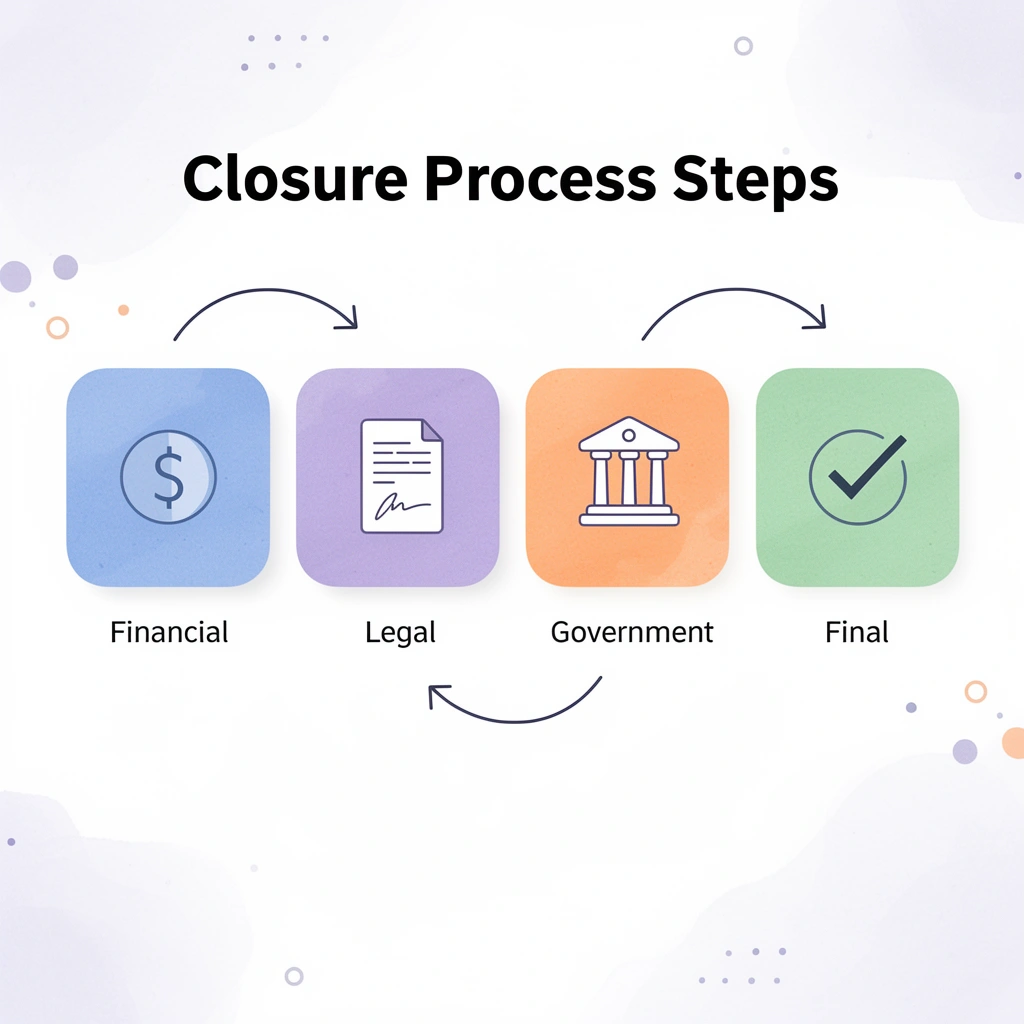
⚠️ Warning: Failing to properly close government accounts and settle outstanding obligations can result in unexpected penalties and legal complications down the road, even after you think the business is fully dissolved.
The Decision Comes First
Before any paperwork gets filed, someone has to decide that the company is dissolving. For single-member LLCs, that decision is straightforward. For partnerships or multi-member companies, it requires formal votes documented in writing. Operating agreements spell out how dissolution approval works, what percentage of members must agree, and whether certain decisions require unanimous consent. Skip this step, and you risk disputes about whether the shutdown was legitimate.
Financial Obligations Surface Quickly
Once the decision is made, you face everything the business still owes: outstanding vendor invoices, lease agreements with months or years remaining, auto-renewing subscriptions, and loans with potential prepayment penalties. Many founders discover forgotten obligations because they were automated or buried in old email threads. This stage requires identifying all liabilities so you can prioritize what gets paid, what gets negotiated, and what may require formal creditor notification under your state's requirements.
Employee Transitions Require Care
When employees leave, they need final paychecks that include any vacation time or paid time off they earned under state law. Please also end their benefits in accordance with COBRA timelines, provide severance if your contract or policy requires it, and send W-2s and 1099s on time. Clear communication with employees during this uncertain period, combined with meeting legal deadlines, protects both employees and the company from future complications.
Business closure platforms like Starcycle streamline this process by creating state-specific checklists that account for your business type, outstanding debts, and compliance deadlines. This transforms weeks of research and calls to government agencies into an organized plan with clear steps.
What's the difference between state dissolution and tax closure?
Filing articles of dissolution with your state notifies the government of closure, but it doesn't automatically close your tax accounts. Federal employer identification numbers, state tax registrations, sales tax permits, and payroll accounts all require separate notifications for closure.
Miss one and you'll receive filing notices, penalty assessments, and compliance demands for a business that no longer operates. Each agency has different forms, timelines, and definitions of "closed".
Why do tax agencies have different closure requirements?
Some require final returns before processing closure requests. Others need proof that all prior filings are up to date. A few won't close accounts until the waiting period has passed to ensure no additional tax liability arises.
Knowing these steps exist doesn't tell you which one comes first or what happens when you get the sequence wrong.
Related Reading
- How To Close An LLC
- How To File Business Bankruptcies
- Closing A Company
- How To Close A Business With The Irs
- How Much To Dissolve Llc
How to Shut Down a Company Step by Step
Shutting down properly requires completing operational and legal steps in a specific order. The sequence matters because skipping ahead creates administrative problems that persist long after you've stopped working.
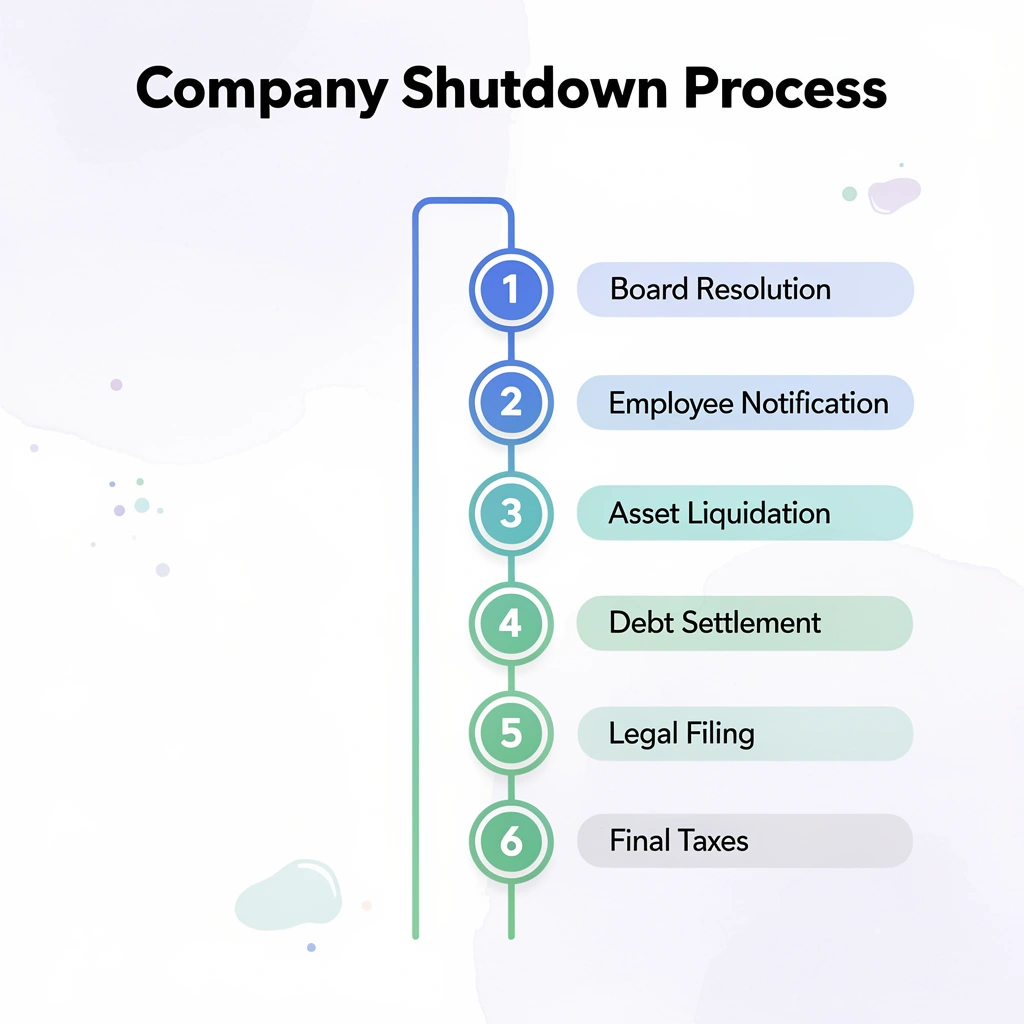
🎯 Key Point: Proper sequencing prevents costly legal complications that can follow you for years after closure.
"85% of business closure problems stem from improper documentation and missed filing deadlines during the shutdown process." — Small Business Administration, 2023

⚠️ Warning: Never stop operations before completing all employee obligations and tax filings - this creates personal liability for business owners.
Cancel Subscriptions and Services First
Before filing with the state, cancel recurring charges: software subscriptions, cloud hosting, payment processors, insurance policies, and phone lines. These continue billing until you cancel them. Some services require 30-day notice periods or charge early termination fees, which complicates final accounting if you delay.
Cancel early, document termination dates, and keep confirmation emails. You'll need proof that nothing was still running when you close bank accounts with automatic debits attached.
Settle Outstanding Obligations
Pay what you owe before dissolving. Vendor invoices, contractor payments, customer refunds, and loan balances don't disappear when you file dissolution paperwork. Creditors can pursue founders personally if the company closes with unpaid debts, particularly if the business structure lacks liability protection or obligations were personally guaranteed.
Break leases, return equipment, and close contracts. Some agreements include buyout clauses; others require written notice. Resolve all financial obligations to prevent issues from surfacing after dissolution.
Close Tax Accounts in the Right Order
Payroll tax accounts should close after final paychecks are issued, but before you file for dissolution. Sales tax permits require final returns, even if sales stopped months ago. Each agency requires specific closure forms and won't process them until prior filings are current and final returns are submitted.
Why should you avoid filing for dissolution first?
A common mistake is filing for dissolution first, then discovering that tax accounts remain open and generate compliance notices. Close payroll accounts with the IRS and state agencies, file final sales tax returns, and submit final income tax returns before filing for dissolution. Our Starcycle platform helps founders sequence these steps correctly, converting scattered agency requirements into a single coordinated timeline to prevent oversights and accelerate closure.
What are Articles of Dissolution, and when should you file them?
Articles of Dissolution tell the state that your company is officially ending. File after you settle financial obligations and close tax accounts, not before. Filing too early creates a gap where the company is legally dissolved but still has active accounts and unresolved obligations, which complicates record-keeping and can trigger penalties if agencies expect filings from a dissolving entity.
How do dissolution forms vary by state and business structure?
The exact forms vary by state and business structure. Corporations file Articles of Dissolution; LLCs file Certificates of Cancellation or similar documents. Some states require proof that taxes are current before accepting dissolution filings, while others impose waiting periods to ensure no additional liabilities surface. Timing the filing correctly matters more than rushing to submit it.
What critical step remains after dissolution is approved?
But even after dissolution is filed and approved, one critical step remains that most founders underestimate.
Related Reading
- IRS Closing A Business
- Involuntary Dissolution Of Llc
- How To Wind Down A Company
- How To Liquidate A Company
- How To Dissolve A Nonprofit
- Irs Cancel Ein
- Notice Of Dissolution
The Biggest Mistakes Founders Make During a Winddown
The most expensive winddown mistakes occur after operations stop. Founders assume closing the website, stopping customer intake, and emptying the bank account means the company no longer exists. Without formal dissolution paperwork filed with the state, however, the legal entity remains active and continues generating compliance obligations, franchise taxes, penalties, and administrative notices indefinitely.

💡 Tip: Formal dissolution is not automatic—it requires specific paperwork filed with your state of incorporation to legally terminate the entity and stop ongoing obligations.
"Without proper dissolution filing, a company can continue accruing franchise taxes and compliance penalties for years after operations cease, creating unexpected liabilities for founders." — Corporate Law Advisory, 2024

⚠️ Warning: Even with zero revenue and no employees, an undissolved entity can generate thousands of dollars in penalties and administrative fees that founders discover years later during credit checks or future business ventures.
When the Entity Stays Open Without You
A founder shuts down operations and moves to the next venture. Six months later, notices arrive for annual reports, franchise tax bills, and compliance penalties. The business stopped generating revenue, but the state never received dissolution documents. Florida imposes a mandatory $400 late fee on LLCs and corporations that miss annual report deadlines, with no exceptions for inactive businesses. Delaware adds a $200 late penalty plus 1.5% monthly interest on unpaid franchise taxes. Business compliance providers warn that inactive entities accumulate penalties even with zero operational activity if they remain legally registered.
The Tax Account Problem
Closing operations doesn't automatically close tax accounts. The IRS and state tax agencies expect filings until payroll tax accounts, employer registrations, and sales tax permits are formally shut down through separate processes. Founders who believe the business is finished continue receiving filing requirements and compliance notices for accounts they forgot existed. The gap between operational closure and administrative completion is where most shutdown complications arise.
Employee Offboarding and Record Retention Failures
Final payroll obligations, benefits termination, wage notices, and recordkeeping requirements persist after operations stop. Mishandling these can lead to disputes or compliance issues that emerge months later. The IRS requires employment tax records for at least four years, and other corporate documents may require longer retention depending on your location and business structure. Founders who discard records prematurely face penalties, late fees, loss of good standing, lingering liabilities, delayed future ventures, and ongoing administrative burden.
Why does process management matter more than timing when dissolving an LLC?
Most shutdown problems stem from incomplete process management: missing filings, unclosed accounts, forgotten compliance obligations, improper sequencing, and incomplete documentation. According to Innospective's research on founder mistakes during downturns, founders often fail to plan for operational wind-down, resulting in extended liabilities and administrative complications.
Platforms like Starcycle create tailored action plans that track every filing, account closure, and compliance requirement in proper sequence, compressing what typically takes months into a structured process with clear completion milestones.
What separates successful founders from those who face winddown complications?
Founders who avoid costly wind-down mistakes treat company closures as well-organized operational processes. They understand that legal existence and operational existence are separate states requiring separate closure actions. They track every open account, filing requirement, and compliance obligation until formal dissolution is complete and preserve records systematically.
But even with perfect administrative execution, one aspect of winddown determines whether founders move forward quickly or remain stuck for years.
Why a Structured Winddown Creates Better Long-Term Outcomes
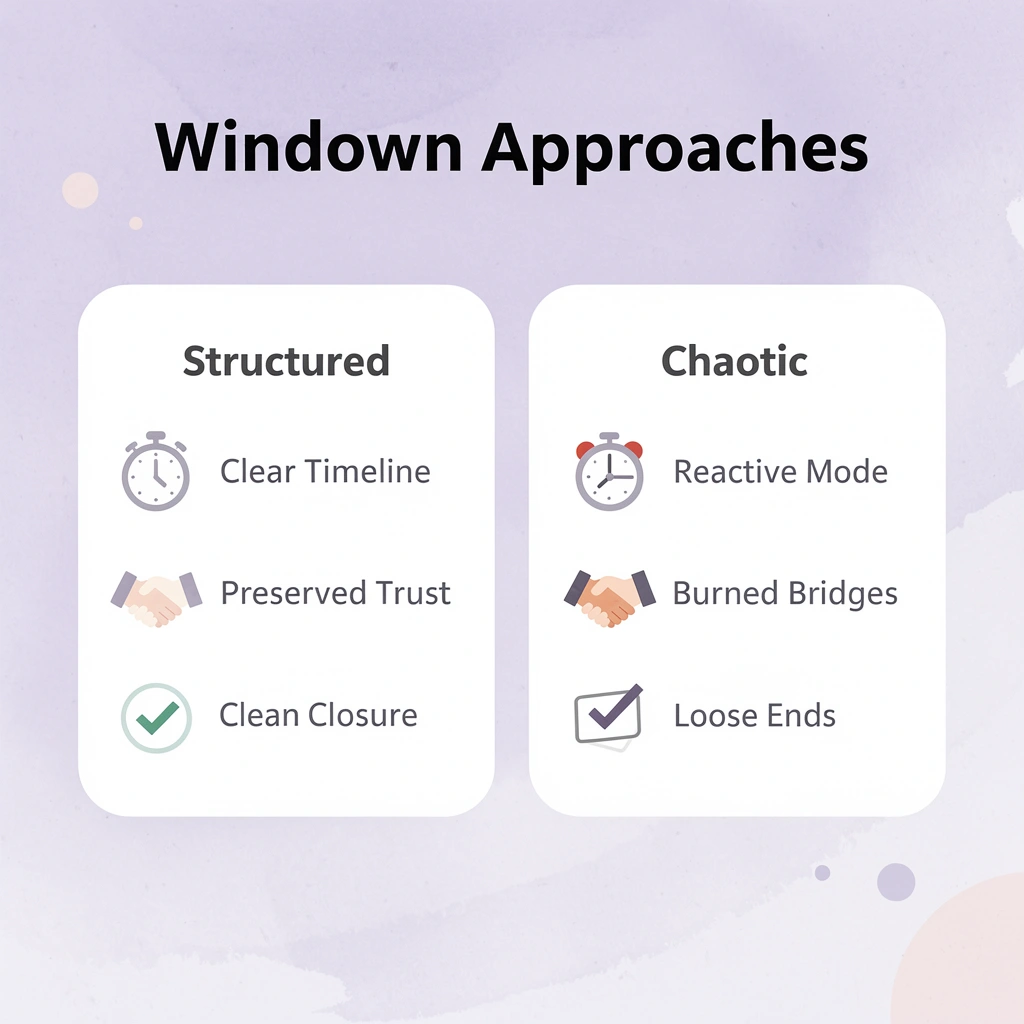
A structured winddown separates founders who move forward quickly from those who spend years managing unresolved administrative problems. It transforms shutdown into a deliberate process that protects professional reputation, preserves relationships, and creates clarity to start the next chapter.

🎯 Key Point: A proper winddown isn't just about closing doors—it's about strategically positioning yourself for future opportunities while maintaining stakeholder trust.
"Founders who execute a structured shutdown are 3x more likely to secure funding for their next venture compared to those who leave loose ends." — Startup Genome Report, 2023
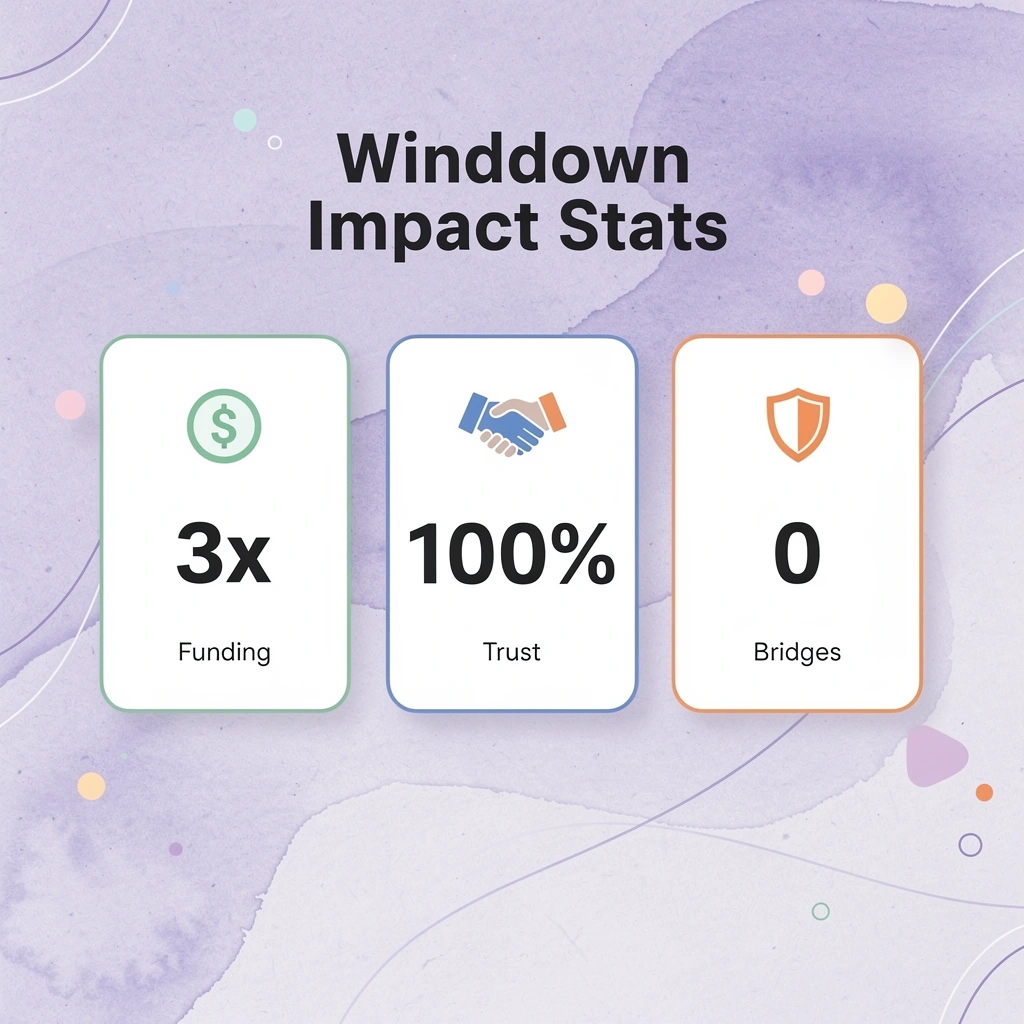
⚠️ Warning: Skipping the winddown structure to "move fast" often creates long-term complications that are far more expensive and time-consuming than doing it right the first time.
The emotional cost of incomplete shutdowns
Shutting down a business is emotionally hard: years of work, your identity, money stress, and relationships with your team all end simultaneously. Administrative tasks compound this difficulty. When founders don't know what remains to be done, unexpected notices or penalties feel like failure returning. A structured process replaces confusion with clear next steps, reducing mental stress during an already difficult transition.
Founders who skip steps or rush through dissolution often discover months later that their business still exists legally, creating obligations they believed had ended. That discovery typically arrives as a penalty notice, a collections letter, or a rejected filing for their next venture.
Why professional relationships survive structured closures
Nearly half of businesses don't survive beyond five years, according to the U.S. Bureau of Labor Statistics, making closures a normal part of starting a business. What damages relationships isn't the decision to shut down itself, but poor communication, unresolved obligations, or disappearing without following through.
How do transparent winddowns preserve future opportunities?
Founders who handle winddowns openly and honestly protect trust that becomes valuable when raising money, hiring people, or pursuing partnerships for future ventures. The business community is smaller than it appears. The investor who backed your closed startup might evaluate your next one. The vendor you left with unpaid invoices might be acquired by a company you later need to do business with. The employee you let go might interview at a company considering you for a leadership role.
Structured winddowns protect those connections by demonstrating professionalism during difficult circumstances.
What tools help manage systematic closure processes?
Platforms like Starcycle help founders manage closure systematically by tracking tasks, following structured steps, and ensuring nothing falls through the cracks. Rather than juggling spreadsheets and memory, founders work through a customized plan that addresses vendor payments, employee transitions, and compliance requirements in the proper sequence. This prevents the communication gaps and forgotten obligations that typically damage professional relationships.
How clean closures accelerate future opportunities
Founders who complete wind-downs correctly move faster into their next chapter because they're not carrying unresolved compliance issues, surprise penalties, or administrative distractions into their next chapter. A founder who closes tax accounts correctly, preserves records, and completes dissolution steps can start a new venture with clarity. Someone still dealing with lingering notices and unfinished tasks years later faces constant interruptions that consume time, money, and emotional energy needed for building something new.
But there's one aspect of winddown that most founders overlook until it creates serious problems.
How Starcycle Helps Simplify Company Winddowns
Most founders struggle with company closures because they cannot clearly see the full sequence amid financial stress and operational fatigue. The challenge isn't finding the right form—it's knowing which step comes first, which obligations linger, and whether something critical has been missed. That uncertainty creates paralysis, delays, and mistakes that extend the shutdown process far longer than necessary.

🎯 Key Point: The biggest obstacle in company wind-downs isn't the complexity of the paperwork—it's the lack of a clear roadmap that shows founders exactly what needs to happen and when.
⚠️ Warning: Operational fatigue and financial stress during closures often lead to critical oversights that can extend the shutdown process by months and increase costs significantly.

What makes the shutdown process so complex?
Shutting down requires managing multiple systems simultaneously: state dissolution filings, tax account closures, final payroll processing, vendor notifications, asset liquidation, and compliance deadlines, each operating on different timelines with different authorities.
A founder coordinating independently often spends weeks gathering fragmented guidance from state websites, IRS instructions, and legal forums. The core challenge isn't simply "what do I file?" but "in what order, with whom, and what happens if I get the sequence wrong?"
How does Starcycle simplify the wind-down process?
Starcycle addresses this by organizing the shutdown process into a structured, customized action plan matched to the founder's business structure, state jurisdiction, and operations. Instead of searching across disconnected sources, founders follow a clear roadmap that shows the remaining steps, required documentation, and how each task connects to the next.
Our platform manages contract obligations, organizes critical documents, and provides step-by-step guidance to reduce administrative friction. Starting at $399 with transparent pricing, Starcycle eliminates the unpredictability of hourly legal services without clear cost boundaries.
What makes the difference
The real value lies in helping founders avoid problems that emerge months after they think the company is closed. Our Starcycle platform ensures all closure steps are properly documented and tracked, so nothing falls through the cracks.
What problems do incomplete closures create?
Open tax accounts create ongoing filing requirements. Incomplete dissolution paperwork keeps franchise tax obligations active. Unresolved vendor contracts create collection issues.
How does systematic tracking prevent shutdown failures?
Starcycle reduces that risk by ensuring founders address each shutdown component systematically. Our platform tracks completed obligations, active requirements, and approaching deadlines.
Requirements shift based on whether the business had employees, maintained multiple state registrations, held physical assets, or carried outstanding debt. A structured approach tailored to these variables prevents the most common shutdown failures: incomplete closures that leave founders legally and financially exposed.
Proper winddowns preserve the ability to move forward cleanly, something most shutdown services overlook entirely.
Related Reading
- Liquidation Vs Bankruptcy
- Close Corporation Taxation
- Llc Termination Vs Dissolution
- Company Liquidation Process
- Startup Shutdown
- How Much Does It Cost To Close an LLC
- How To Tell Investors That You're Shutting Down
- How To Dissolve A Partnership With The Irs
- Dissolving In Europe
- Dissolving In Canada
Shutting Down a Company: The Complete 2025 Guide
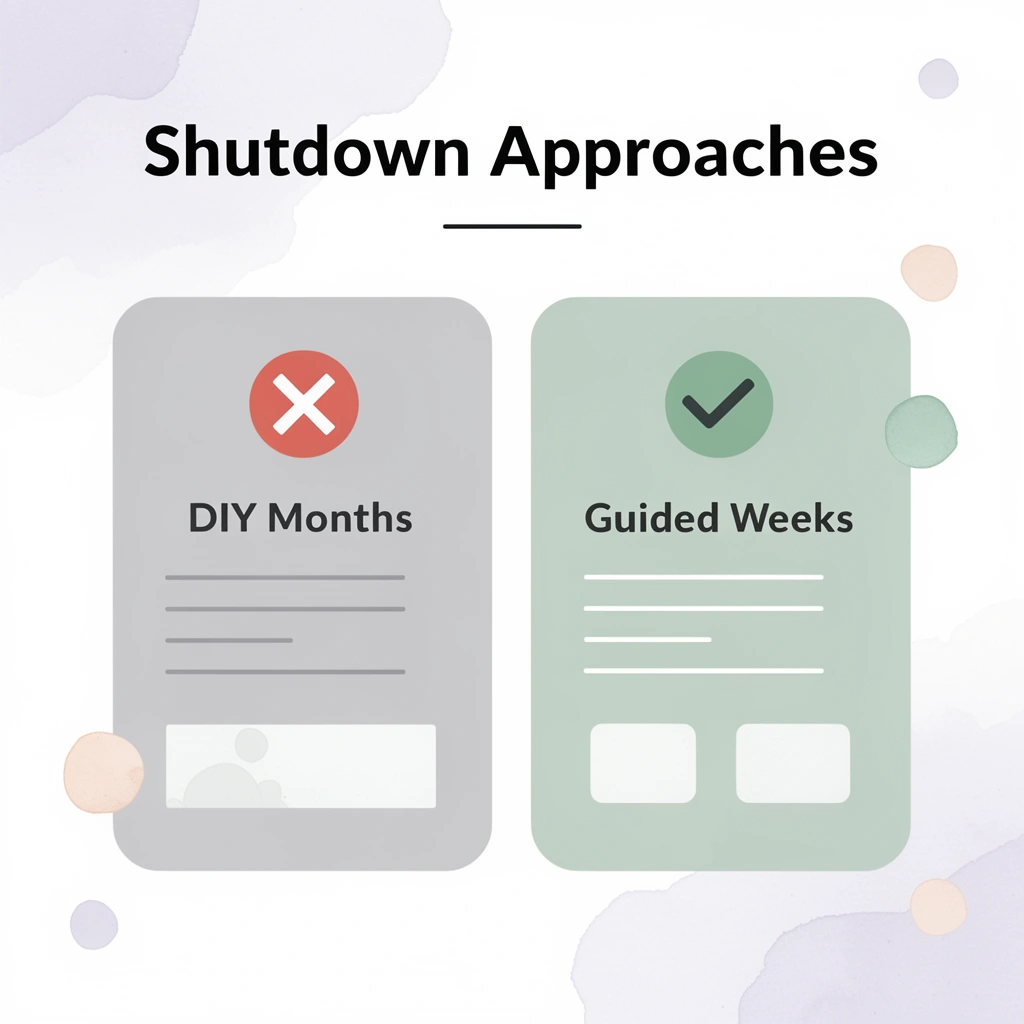
That overlooked element is momentum. The difference between a wind-down that drags for months and one that closes cleanly in weeks often comes down to having a clear sequence, visible progress, and someone who's done this before. When founders navigate state websites, IRS instructions, and fragmented advice without guidance, they lose weeks determining the correct order of operations.

🎯 Key Point: A structured shutdown approach can reduce your wind-down time from months to weeks by following the right sequence and getting expert guidance.
"Founders who try to navigate shutdown requirements alone typically lose weeks just figuring out the proper order of filings and administrative steps." — Business Closure Research, 2024
If you're planning to shut down your company, you can sign up for a quote with Starcycle to discuss your closure needs and get guidance on the filings, shutdown steps, and administrative requirements needed to simplify the wind-down process. A structured approach helps you finish this chapter without leaving problems that follow you into the next one. Closing properly means knowing what needs to happen, when it needs to happen, and having confidence that nothing critical gets missed.
⚠️ Warning: Skipping proper shutdown procedures can create legal and tax complications that persist long after your business closes, potentially affecting future ventures.