How To Dissolve a Nonprofit Without Legal or Tax Mistakes
Learn how to dissolve a nonprofit legally with Starcycle's step-by-step guide. Avoid costly tax mistakes and compliance issues.


Closing a nonprofit organization involves complex legal requirements that differ significantly from standard business dissolution. Board approvals, asset distribution protocols, state filings, and IRS notifications must all be handled correctly to avoid tax penalties and personal liability for board members. One misstep during the dissolution process can transform a straightforward closure into a costly legal nightmare. Understanding these specific requirements helps nonprofit leaders navigate the shutdown process while protecting themselves from future complications.
The paperwork, compliance requirements, and final tax filings involved in nonprofit dissolution can quickly become overwhelming for busy board members. From filing articles of dissolution and notifying creditors to distributing remaining assets and submitting final Form 990 returns, each step requires careful attention to detail. Expert guidance through this complex process ensures every legal obligation is met while protecting against future liability, making professional support invaluable for business closure.
Table of Contents
- Why Closing a Nonprofit Is More Complicated Than Most Founders Expect
- What It Actually Means To Dissolve a Nonprofit
- The Biggest Mistakes Nonprofits Make During Dissolution
- How To Dissolve a Nonprofit Step by Step
- Why Many Founders Delay Closing Inactive Nonprofits
- How Starcycle Helps Founders Close Nonprofits With More Clarity and Less Stress
- Sign up to Make your Business Closure Process Easier
Summary
- Nonprofit dissolution requires formal legal processes that extend far beyond simply stopping operations. According to IRS data from 2023, thousands of nonprofits lose their tax-exempt status annually, not because they intended to close, but because they failed to file required returns for three consecutive years while believing they were already dissolved. An organization that stops running programs but never files dissolution paperwork remains on state registries, accumulating annual filing requirements, renewal fees, and potential penalties while the board stays legally responsible.
- Asset distribution rules make nonprofit closures fundamentally different from business shutdowns. Unlike for-profit entities, which can distribute remaining assets to owners after paying debts, nonprofits must transfer any remaining assets and property to another qualified charitable organization. Restricted donations add another layer of complexity, as funds designated for specific purposes cannot simply be redirected or distributed to board members. The organization must identify another nonprofit capable of continuing that specific work, or potentially return funds to donors if grant agreements allow.
- Two-thirds of nonprofit organizations are struggling to stay afloat, according to Forbes, and many slip into operational paralysis without ever completing formal dissolution. This creates an administrative limbo where the nonprofit feels "closed" internally while remaining legally active externally, generating years of ongoing administrative exposure that founders discover only when attempting to start new organizations or when state collection agencies surface years later. The gap between operational shutdown and legal dissolution is where the most costly mistakes happen.
- Research on nonprofit financial stress found that 84% of nonprofit leaders spend more time worrying about finances than planning for the future, a pattern that intensifies during winddown when founders must navigate closure logistics while carrying the emotional weight of ending their mission. The emotional difficulty of acknowledging that a community need will go unmet or that volunteer efforts reached their limit often leads to delay, with founders putting off dissolution paperwork rather than confronting the finality of closure.
- Final IRS filings represent a separate compliance requirement from state dissolution paperwork. Most nonprofits must submit a final Form 990, Form 990-EZ, or Form 990-N, depending on organizational size, with additional schedules documenting asset distribution, remaining balances, and dissolution activities. The IRS does not automatically close accounts when organizations stop operating, and missing final returns can create ongoing compliance issues, penalties, and complications with future nonprofit work even after state dissolution is completed.
- Starcycle helps founders close nonprofits through structured guidance that organizes state filings, final tax returns, and contract cancellations into a clear roadmap, reducing the operational overwhelm that keeps many organizations stuck in administrative limbo for months or years after programs actually end.
Why Closing a Nonprofit Is More Complicated Than Most Founders Expect
Stopping operations isn't the same as dissolving a nonprofit. You can shut down programs, stop fundraising, and let staff go, but the organization still exists legally until you complete formal dissolution, creating ongoing obligations most founders don't anticipate.

🎯 Key Point: Simply ceasing activities doesn't eliminate your legal entity or compliance requirements – you remain responsible for annual filings, tax obligations, and regulatory compliance until formal dissolution is complete.
"Many nonprofit founders mistakenly believe that stopping operations automatically dissolves their organization, leaving them vulnerable to ongoing legal and financial obligations they never expected." — National Council of Nonprofits

⚠️ Warning: Even dormant nonprofits face penalties for missed IRS filings, state registration lapses, and board governance failures – costs that can accumulate for years after you think you've "closed" your organization.
What happens to nonprofit assets during dissolution?
Unlike for-profit businesses, nonprofits cannot simply distribute leftover money as they wish. State nonprofit laws and IRS requirements typically require that any excess funds and property be transferred to another qualified charitable organization.
This rule exists because nonprofit assets are legally connected to charitable purposes rather than private ownership. According to the Internal Revenue Service (2024), tax-exempt organizations must file annual tax returns until they officially cease operations, submitting final returns and dissolution reports.
What administrative requirements do founders typically underestimate?
Most founders expect to file one or two forms and move on. The reality involves state dissolution filings, final IRS Form 990 returns, board resolutions approving closure, creditor notifications, and asset transfer documentation. Each has specific timing requirements and compliance standards. Missing even one filing leaves the organization legally inactive, with penalties accumulating.
How do inactive nonprofits create ongoing compliance problems?
Inactive nonprofits often remain on state registries for years because founders assume stopping operations is sufficient. State agencies still require annual renewals, and the IRS continues to monitor required filings. Administrative fees accumulate. What seemed like a quiet ending becomes a compliance problem that surfaces later through notices, penalties, or complications when directors pursue new ventures.
Why does the emotional weight make dissolution harder?
Many nonprofits were built around deeply personal missions. Years of volunteer effort, community relationships, and donor trust don't disappear when funding dries up or leadership changes.
Closing feels heavy even when it's the right decision, and that emotional difficulty often leads to delay. Founders postpone dissolution paperwork because confronting it means admitting the mission couldn't continue in its current form.
How can founders get structured support through dissolution?
Platforms like Starcycle help founders close faster by organizing required documents, tracking filing deadlines, and providing step-by-step guidance tailored to nonprofit-specific needs.
Founders receive structured support that transforms an overwhelming process into manageable tasks with clear timelines, eliminating the need to navigate state regulations and federal tax codes independently.
Is closure really a failure?
Closure isn't failure. Funding conditions shift, leadership priorities change, programs complete their intended impact, or operational realities evolve. These are practical governance decisions, not reflections of inadequacy.
The real risk is leaving an inactive nonprofit unresolved, with administrative obligations continuing to accrue long after the mission ends. But knowing you need to dissolve and understanding what that requires are two different challenges.
What It Actually Means To Dissolve a Nonprofit
Dissolving a nonprofit means ending its legal existence through formal procedures with state and federal authorities. It differs from closing the office or stopping programs: the organization remains legally active with all compliance obligations and liabilities until dissolution is complete.

🎯 Key Point: Simply stopping operations doesn't end your nonprofit's legal obligations—only formal dissolution does.
"A nonprofit that stops operating without filing dissolution paperwork stays on state registries, building up annual filing requirements, renewal fees, and penalties." — Nonprofit Legal Guide, 2024
A nonprofit that stops operating without filing dissolution paperwork remains on state registries, accumulating annual filing requirements, renewal fees, and penalties. The board stays legally responsible, the tax-exempt status stays active, requiring annual returns, and obligations pile up silently.
⚠️ Warning: Board members remain personally liable for ongoing compliance failures even after operations cease until formal dissolution is filed.

What are the required legal steps for dissolution?
Dissolving a company requires board approval through a formal resolution, filing articles of dissolution with the state, submitting final tax returns to the IRS and state revenue departments, and notifying creditors in accordance with state law timelines. Requirements vary by state: some require a supermajority vote by the board, while others mandate approval by the members. Filing for state dissolution before resolving federal tax obligations can create complications.
What happens to accumulated assets during dissolution?
Most founders underestimate the actual challenge: what happens to accumulated assets. Remaining cash, unspent grants, equipment purchased with donor funds, intellectual property, and restricted donations must be transferred in accordance with charitable purpose restrictions. Unlike businesses that distribute remaining assets to owners, nonprofits must transfer assets to another qualified tax-exempt organization or use them for purposes consistent with the original mission, per IRS guidelines on exempt organization dissolution.
How do restricted funds affect dissolution timelines?
Restricted funds complicate closure further. If a donor gave money specifically for youth programs and the organization closes before spending it, that money cannot be used for general costs or given to board members. You must find another nonprofit that can continue that specific work, or you may have to return the funds to donors if the grant agreements allow it. This process significantly extends the time required to close the organization.
Communication and Stakeholder Management
Closing a nonprofit affects more people than most founders anticipate. Employees require notice periods and final paychecks, vendors have unpaid invoices, and grantmakers often require final reports after funding ends.
Donors who gave money recently may have questions about how their contributions were used. Volunteers who have spent time want to understand what happens next. Poor communication during this transition creates confusion that can carry over to board members and staff in future roles.
How can technology help manage dissolution logistics?
Platforms like Starcycle help founders manage shutdown logistics through customizable plans that track contract cancellation deadlines, organize dissolution documents, and prevent oversights during an emotionally difficult process.
What challenges do nonprofits actually face during dissolution?
But knowing the formal process exists and understanding where nonprofits actually stumble during dissolution are two different things.
Related Reading
- How To Close An LLC
- How To File Business Bankruptcies
- Closing A Company
- How To Close A Business With The Irs
- How Much To Dissolve Llc
The Biggest Mistakes Nonprofits Make During Dissolution
Many nonprofit closures become complicated because the dissolution process was handled informally or left incomplete. Founders assume that once programs stop and staff leave, the nonprofit no longer exists. That gap between operational shutdown and legal dissolution is where costly mistakes occur.

⚠️ Warning: Simply stopping operations does not legally dissolve your nonprofit. The organization remains legally active and subject to ongoing compliance requirements, tax obligations, and potential liability issues until formal dissolution is complete.
"85% of nonprofit dissolution complications arise from incomplete legal processes, with organizations facing average costs of $15,000-$25,000 to resolve post-closure issues." — National Council of Nonprofits, 2023

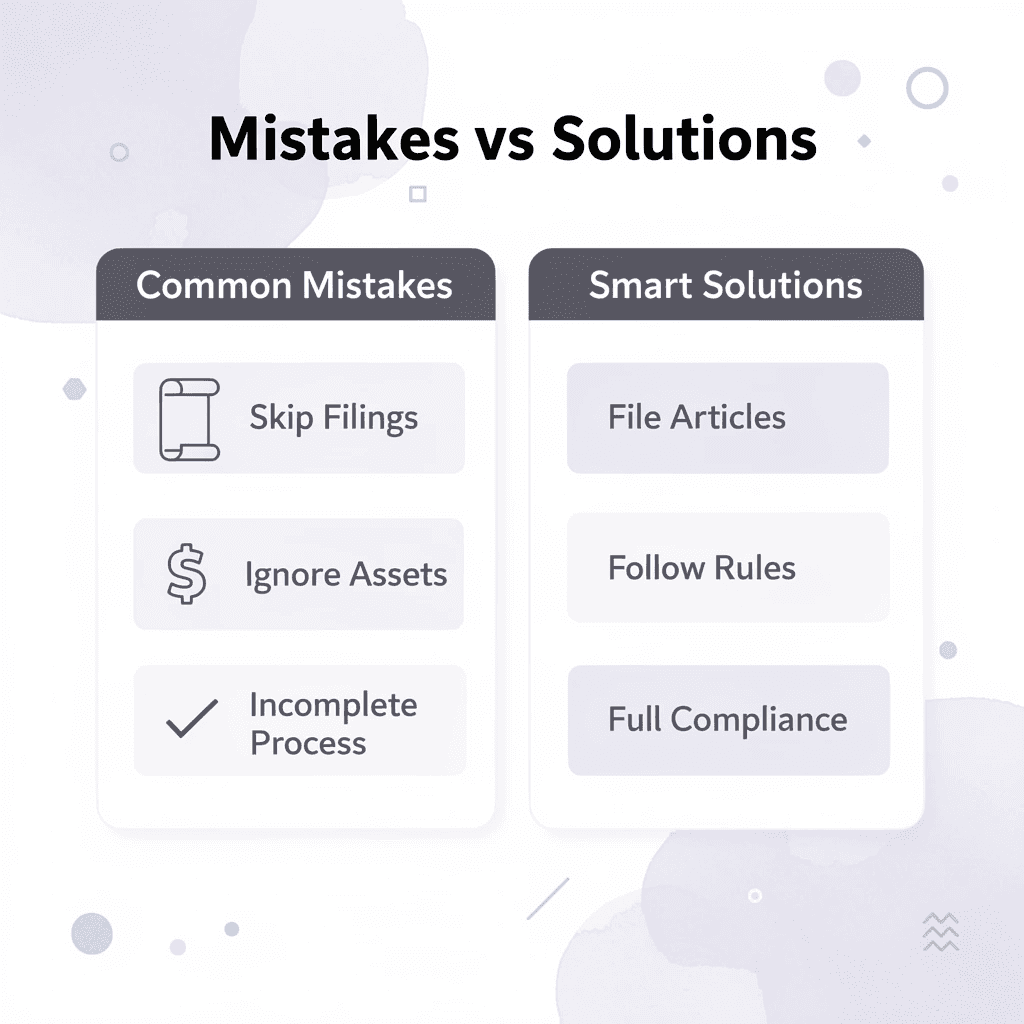
Common Dissolution Mistake | Potential Consequence | Prevention Strategy |
|---|---|---|
Skipping state filing requirements | Continued tax obligations, penalties | File Articles of Dissolution with the state |
Ignoring asset distribution rules | IRS penalties, legal challenges | Follow the cy pres doctrine for asset transfer |
Leaving contracts unresolved | Ongoing liability exposure | Terminate or transfer all agreements |
Missing final tax filings | $20/day penalties, loss of exemption | File Form 990 and state returns |
🔑 Takeaway: Proper dissolution requires systematic attention to legal requirements, financial obligations, and asset distribution. The formal process protects both the organization and its board members from future complications and ensures compliance with all regulatory requirements.
Stopping Operations Before Resolving Compliance Requirements
The most damaging mistake is stopping day-to-day activity before resolving legal and administrative obligations. An organization may halt programs, close its office, or pause fundraising while leaving unresolved state filing requirements, tax obligations, vendor contracts, payroll responsibilities, and grant reporting commitments. Once operations cease, administrative follow-through becomes exponentially harder because staff and leadership attention disappear simultaneously. The nonprofit becomes operationally inactive but remains legally active, accumulating penalties and notices that nobody monitors.
Forgetting Final IRS Filings
The Internal Revenue Service requires tax-exempt organizations to file a final Form 990 or related return showing termination. Failing to complete this final report creates ongoing compliance problems long after the nonprofit stops operating. Directors continue to receive IRS notices, filing reminders, penalty letters, and compliance messages, surprising founders who believed inactivity automatically ended their obligations. According to IRS data from 2023, thousands of nonprofits lose their tax-exempt status each year, not because they chose to close, but because they failed to file required returns for three consecutive years while believing they were already dissolved.
Mishandling Restricted Funds or Remaining Assets
Nonprofit assets cannot be shared freely like private business assets. Restricted donations, grant funds, and charitable assets carry legal responsibilities tied to nonprofit or public-benefit purposes. Misallocating remaining funds or failing to maintain records of how charitable assets are distributed may trigger regulatory or grantmaker scrutiny.
This becomes more complicated when organizations have restricted donations, outstanding grants, donor-imposed limits, physical property, intellectual property, or equipment purchased with grant funding.
How can technology streamline the dissolution process?
Most nonprofits handle closure through a patchwork of spreadsheets, email threads, and manual tracking. As deadlines multiply across state filings, IRS submissions, contract cancellations, and asset transfers, this approach breaks down quickly: important deadlines get buried, compliance steps fall through the cracks between departing staff, and the process stretches from weeks to months.
Platforms like Starcycle combine dissolution tasks with automated deadline tracking and step-by-step guidance, compressing what typically takes six months into a structured timeline while ensuring nothing critical gets missed.
What are the risks of ignoring state reporting obligations?
Many states require annual reports, charitable registration renewals, or nonprofit filings to remain in good standing even after operations cease until formal dissolution paperwork is submitted and accepted. A nonprofit may cease operations entirely but still incur state fees or administrative penalties if the dissolution paperwork is never formally completed.
This is especially common among organizations that become inactive gradually rather than through a structured winddown process. The nonprofit feels closed internally while remaining legally active externally, creating years of ongoing administrative exposure that founders discover only when attempting to start new organizations or when state collection agencies surface years later.
How can understanding these mistakes help prevent them?
To understand these mistakes, you need to know the right order that stops them from happening.
How To Dissolve a Nonprofit Step by Step
Dissolving a nonprofit requires completing a specific sequence of governance, financial, and legal actions across state and federal systems: board approval, debt resolution, proper asset distribution, state dissolution filings, final IRS tax returns, and closure of operational accounts. The sequence matters because skipping steps or completing them out of order creates delays, compliance gaps, and liability exposure that can follow founders for years.

🎯 Key Point: Treat dissolution as a structured project with clear milestones to avoid future legal complications and personal liability issues.
Organizations that close cleanly treat dissolution as a project with clear milestones, not as an emotional decision followed by administrative neglect. Systematic closure reduces the risk of discovering unresolved obligations months or years later.

"Skipping steps or completing them out of order creates delays, compliance gaps, and liability exposure that can follow founders for years."
⚠️ Warning: Administrative neglect during dissolution can result in ongoing compliance obligations and personal liability that persist long after you think the organization is closed.

Dissolution Step | System | Timeline |
|---|---|---|
Board Approval | Internal Governance | Week 1 |
Debt Resolution | Financial | Weeks 2-4 |
Asset Distribution | Legal/Financial | Weeks 3-6 |
State Filing | State Government | Week 6 |
Final Tax Returns | Federal (IRS) | Weeks 6-8 |
Account Closure | Operational | Week 8 |
Step 1: Obtain Board Approval and Document the Decision
Most state nonprofit laws require formal board approval before dissolution can proceed. This typically involves holding a board meeting, voting on a dissolution resolution in accordance with your bylaws, and recording the decision in the meeting minutes. Some states also require member approval if your nonprofit has voting members rather than a self-perpetuating board structure.
Why is proper documentation essential for dissolution?
This step establishes the legal right to dissolve and creates records that regulators may request. Without proper governance records, state agencies can reject or delay dissolution filings. Use this meeting to assign responsibilities, set timelines, and identify remaining financial or contractual obligations to resolve before filing.
Step 2: Resolve Debts and Outstanding Obligations
Before filing dissolution paperwork, settle or document how you'll handle outstanding liabilities: vendor payments, payroll obligations, lease agreements, open invoices, grant reporting requirements, and active contracts. Many founders underestimate the administrative cleanup required after programs end, particularly when restricted grants or donor funds impose reporting requirements that extend beyond operational closure.
Unresolved debts complicate dissolution because creditors can object to state filings or pursue the organization and potentially board members after submission. Some states require tax clearance or proof of debt resolution before approving dissolution. Closing financial obligations cleanly prevents liability or administrative burden from surfacing later.
Step 3: Distribute Remaining Nonprofit Assets Properly
Unlike private businesses, nonprofits cannot distribute remaining assets to founders, board members, or private parties. According to IRS regulations, charitable assets must continue serving exempt purposes that match your tax-exempt status.
What types of assets must transfer to qualified entities?
Any leftover money, equipment, intellectual property, program materials, and assets purchased with grant funds must be transferred to another qualified nonprofit or charitable organization.
How should you handle restricted funds and documentation?
Restricted funds require special attention because donors may have placed limits on how the money can be used, and those limits may still apply when the organization closes. Keep detailed records of how assets are moved, as the IRS and state regulators may review your handling in the final paperwork. Founders who improperly distribute assets could face personal liability, penalties, and future restrictions on their nonprofit work.
Step 4: File Dissolution Paperwork With the State
Once you obtain governance approvals and address major financial obligations, file formal dissolution documents with the state where you incorporated. Requirements vary by state but commonly include articles of dissolution, final state nonprofit reports, and sometimes attorney general notifications or tax clearance documentation. Some states require confirmation that you resolved debts and distributed assets appropriately before approving dissolution.
Why is a formal filing required for dissolution?
This filing officially ends your organization's legal existence at the state level. Stopping operations alone does not legally dissolve the organization; thousands of inactive nonprofits remain on state registries, accumulating penalties and compliance obligations years after founders thought they had closed. Formal state filings are required to end the legal entity.
How can you manage the administrative burden?
Many founders find the administrative steps tiring when they are emotionally ready to move on, but are faced with weeks of paperwork, account closures, and compliance tasks. Our Starcycle platform manages the shutdown process through customizable action plans, contract tracking, and step-by-step guidance that compress timelines and reduce the risk of missing critical steps.
Step 5: Submit Final IRS Filings
Federal tax closure requirements are separate from state dissolution filings. Most nonprofits must submit a final Form 990, Form 990-EZ, or Form 990-N, depending on the organization's size and filing history. The final return indicates the organization is ending and typically requires additional schedules documenting asset distribution, remaining balances, and dissolution activities.
Failing to submit final IRS filings creates continuing compliance issues even after state dissolution is completed. The IRS does not automatically close your account when you stop operating, and missing final returns can result in penalties, notices, and complications with future nonprofit work or personal tax matters.
Step 6: Close Accounts, Registrations, and Administrative Records
After you submit dissolution filings, close any remaining active accounts and registrations: bank accounts, state fundraising registrations, business licenses, insurance policies, payroll accounts, vendor accounts, and online fundraising platforms. Keep copies of important records (governance documents, financial statements, tax returns, dissolution filings) in case questions arise later about tax filings, asset transfers, or dissolution procedures.
Organizations that close successfully handle dissolution carefully and deliberately rather than emotionally. The goal is to close the organization clearly, legally, and completely so that ongoing compliance obligations do not create problems after closure.
Why Many Founders Delay Closing Inactive Nonprofits
Dissolution feels permanent in a way that dormancy does not. Founders who spent years building programs, recruiting volunteers, and cultivating donor relationships struggle to file paperwork that legally erases what they created. Instead, they let the organization drift into administrative limbo: programs pause indefinitely while the legal entity remains technically active.

💡 Tip: Remember that dissolution doesn't erase the impact you've made—it simply closes a legal chapter while preserving the legacy of your work.
"Administrative limbo creates more problems than solutions, leaving founders trapped between emotional attachment and practical necessity." — Nonprofit Legal Expert, 2024

⚠️ Warning: Keeping an inactive nonprofit in legal limbo can lead to ongoing compliance requirements, potential penalties, and unnecessary administrative burden that drains resources from future endeavors.
The Emotional Weight of Formal Closure
Nonprofits carry emotional weight that commercial businesses rarely do. Closing means admitting that community needs went unmet, volunteers were insufficient, or the funding model was unsustainable. Founders often see it as personal failure, even when circumstances changed beyond their control. Keeping the organization legally alive, though inactive, preserves the possibility of restarting it and delays acknowledging that the mission has ended.
The False Security of Inactivity
Many founders believe that stopping operations effectively closes their organization. They cease fundraising, end programs, and redirect their attention elsewhere while the nonprofit remains registered with the state and listed as tax-exempt with the IRS. Forbes reports that two-thirds of nonprofit organizations struggle to stay afloat, and many become trapped in operational paralysis without completing the formal dissolution process. This results in unfiled annual reports, missed compliance deadlines, and escalating administrative penalties that founders discover only when state agencies send enforcement notices years later.
When Complexity Becomes an Excuse
The dissolution process intimidates stressed founders. State filing requirements, final tax returns, creditor notifications, asset distribution rules, and board resolutions create a procedural maze that feels easier to avoid than navigate. Platforms like Starcycle help founders systematically navigate dissolution with tailored action plans and document organization, compressing what might take months into a structured timeline with clear next steps. Without that guidance, many founders delay the process indefinitely, hoping someone else will handle it or that the organization will resolve itself.
The Hidden Cost of Indefinite Delay
Leaving a nonprofit unresolved creates ongoing liability for directors and officers. State agencies continue to expect annual filings; the IRS still requires Form 990 submissions; and fundraising registration renewals keep arriving. Each missed deadline generates penalties, compliance warnings, and potential personal liability for board members who remain legally responsible for an organization they stopped managing years ago.
The longer the delay, the more complicated eventual dissolution becomes as accumulated obligations pile up and organizational records become harder to reconstruct.
How do delays impact tax-exempt status and compliance?
Understanding why founders delay does not make the delay less costly. The consequences extend beyond what most realize: automatic revocation of exemption, loss of tax-exempt status, and nonfiling penalties.
Related Reading
- IRS Closing A Business
- Involuntary Dissolution Of Llc
- How To Wind Down A Company
- How To Liquidate A Company
- How To Wind Down A Company
- How To Dissolve A Nonprofit
- Irs Cancel Ein
- Notice Of Dissolution
How Starcycle Helps Founders Close Nonprofits With More Clarity and Less Stress
For many nonprofit founders, the hardest part of closing down is not deciding to close, but figuring out how to close properly without missing something important.

🎯 Key Point: Starcycle eliminates the guesswork by providing a comprehensive roadmap that covers every critical step in the dissolution process.
"78% of nonprofit founders report feeling overwhelmed by the complexity of properly closing their organization." — Nonprofit Leadership Study, 2023

💡 Tip: With Starcycle's guidance, founders can navigate the legal requirements, asset distribution, and final reporting with complete confidence, knowing they haven't overlooked any crucial details.
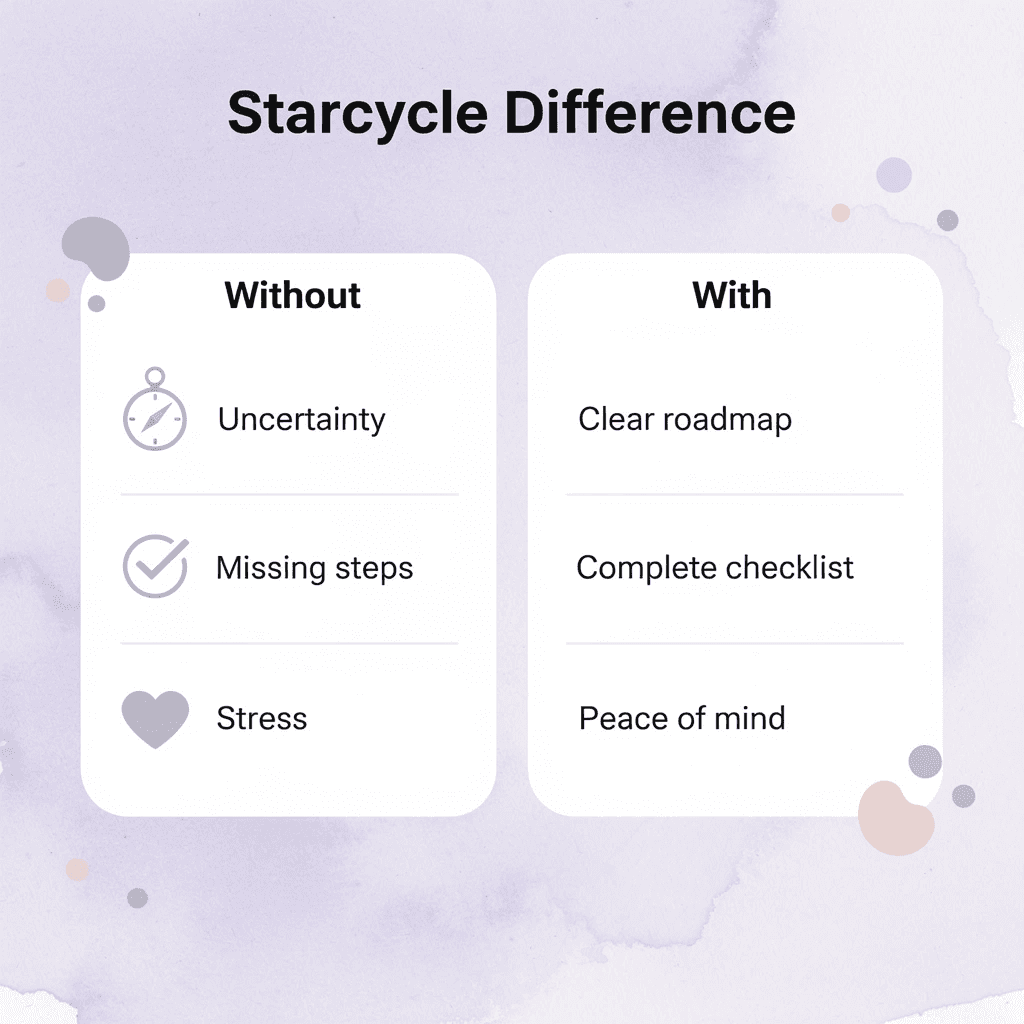
Without Starcycle | With Starcycle |
|---|---|
Uncertainty about legal steps | Clear roadmap for compliance |
Risk of missing requirements | Comprehensive checklist coverage |
Stress and confusion | Peace of mind and clarity |
Why do nonprofit leaders struggle during the dissolution process?
By year-end, leadership teams are emotionally exhausted and stretched thin. Programs slow down, staffing changes occur, and administrative responsibilities fall to a small group of people who manage legal filings, tax obligations, board coordination, and stakeholder communication.
Matt Gardner's research on nonprofit financial stress found that 84% of nonprofit leaders spend more time worrying about finances than planning for the future, a pattern that worsens during closure.
How does Starcycle simplify the nonprofit closure process?
Starcycle simplifies this process with structure, clarity, and operational guidance tailored to each organization's situation. Starting at $399 with no hidden fees, Starcycle helps founders close nonprofits and businesses with greater clarity and less overwhelm.
Why does dissolution feel so overwhelming?
The challenge rarely comes from one big mistake but from not finishing multiple smaller administrative tasks that pile up quickly. Founders struggle with questions like: Which filings still need to happen? In what order should the dissolution steps occur? Which accounts or registrations remain active? How should remaining obligations be handled? What documentation needs to be kept?
Without a structured process, important tasks fall through the cracks, leading to ongoing state notices, unresolved filings, compliance confusion, and lingering organizational obligations that extend months or years beyond founders' expectations. Starcycle helps organize and track dissolution tasks so nothing gets missed.
How can structured guidance reduce dissolution complexity?
Starcycle reduces that uncertainty by systematically organizing the closure process. Instead of relying on scattered research, spreadsheets, and fragmented administrative follow-up, founders can approach dissolution through a coordinated workflow based on their nonprofit's actual needs and operational status. This reduces the emotional burden that often accompanies nonprofit closure, where administrative complexity adds friction to a decision that may already carry personal weight.
Instead of shutting down operations informally and discovering unresolved filings, lingering registrations, or compliance issues months later, founders using Starcycle's structured guidance can organize the closure process systematically before problems escalate. This reduces the likelihood of incomplete winddowns while making dissolution feel more manageable both administratively and emotionally.
But knowing how the process works is only half the equation.
Sign up to Make your Business Closure Process Easier
Starcycle gives you a personalized quote and a clear view of what needs to happen: state filings, final tax returns, and contract cancellations. You can see the full scope before committing, which removes the guesswork that keeps founders stuck in administrative limbo.

🎯 Key Point: Starting with clarity means no surprises six months later when a renewal notice arrives for an entity you thought was closed. Our platform organizes the winddown requirements specific to your nonprofit's structure and state, so you're not piecing together advice from outdated blog posts or generic checklists that miss critical steps.
"When you know exactly what's left to do and have a system to track it, dissolution stops feeling overwhelming and starts feeling manageable." — Business Closure Best Practices

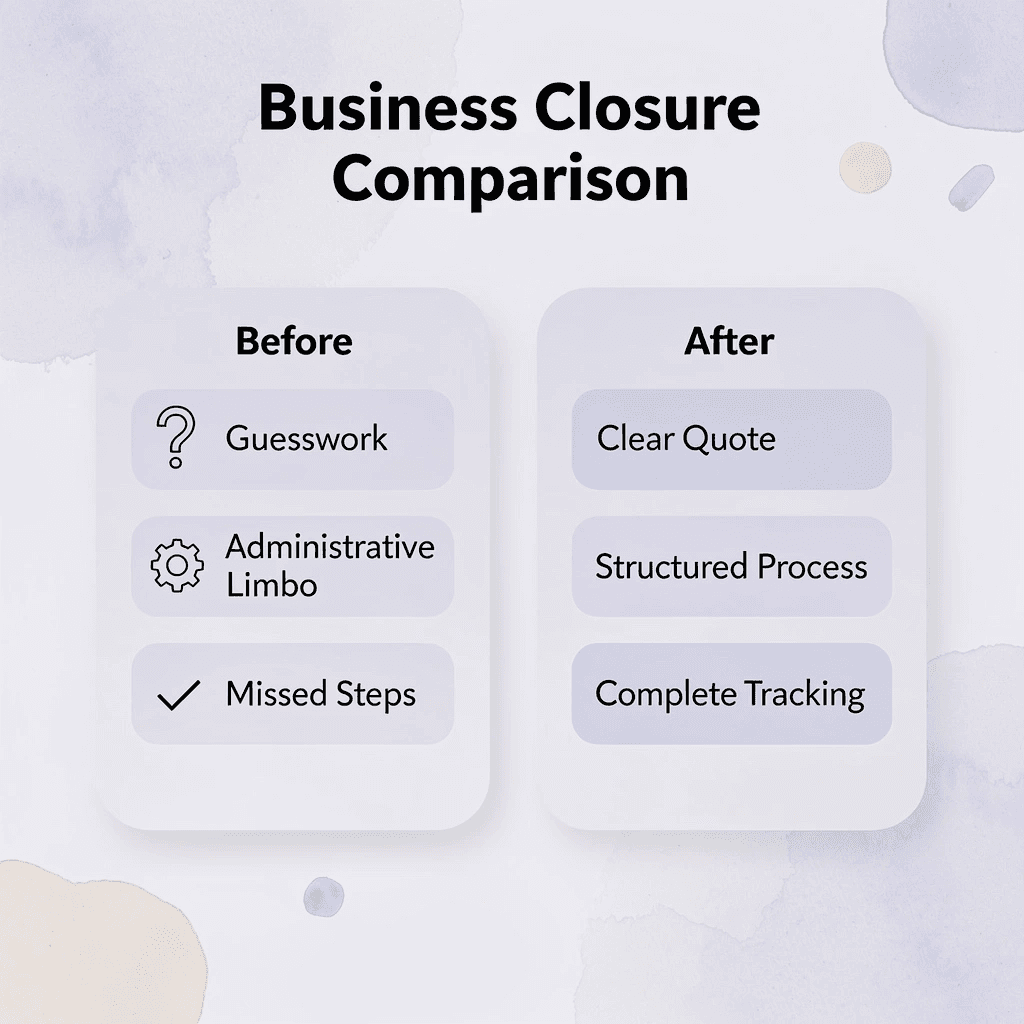
Before Starcycle | With Starcycle |
|---|---|
Guesswork and uncertainty | Personalized quote and clear roadmap |
Administrative limbo | Structured dissolution process |
Missed critical steps | Complete requirements tracking |
💡 Tip: Sign up with Starcycle to get your personalized quote and see the full dissolution roadmap for your nonprofit. You'll know exactly what it takes to close completely and have the structure to actually finish.