IRS Cancel EIN: What You Need To Do Before Closing Your Business
IRS Cancel EIN requirements explained by Starcycle. Learn the essential steps to properly close your business and avoid tax complications.


Closing an LLC involves more than filing dissolution paperwork with your state. Business owners must also cancel their Employer Identification Number with the IRS, settle final tax obligations, and complete several critical steps to avoid unexpected penalties. The EIN cancellation process requires specific timing and documentation that many entrepreneurs overlook.
Properly dissolving a company means ensuring no loose ends remain that could create future liabilities. From filing final tax returns to handling outstanding obligations, each step must be completed correctly to close your business account with the IRS. Professional guidance can streamline this complex process and provide peace of mind during business closure.
Table of Contents
- Why Closing an EIN Confuses So Many Business Owners
- Can You Actually Cancel an EIN With the IRS?
- The Step-by-Step Process To Close an IRS Business Account
- Why Business Closures Become Administratively Overwhelming
- Why Structured Winddown Support Matters More Than Founders Expect
- How Starcycle Helps Founders Close Businesses More Clearly
- Sign up to Make your Business Closure Process Easier
Summary
- The IRS does not cancel or delete Employer Identification Numbers once assigned to a business entity. The agency allows the closure of the IRS business account associated with the EIN, but the EIN itself remains permanently associated with the original entity. This distinction creates confusion for founders who assume shutting down operations automatically ends all federal tax obligations.
- Dissolving an LLC with the state does not automatically close federal IRS records or filing obligations. State dissolution and IRS account closure are separate processes managed by different agencies that don't communicate with each other. Founders often complete state paperwork and assume everything is finished, only to receive IRS notices months later because final federal tax filings were never submitted.
- Employment tax requirements continue after the last paycheck clears. According to IRS guidance on closing a business, final employment tax returns and wage reports remain due even after operations stop, including final Form 941 filings, W-2 distribution, and unemployment account closures. Founders who assume payroll ends when employees stop getting paid frequently discover they're delinquent on filings they didn't know existed.
- Business closure requires coordinating multiple systems across different timelines with overlapping deadlines. The IRS, state agencies, payroll processors, banks, and licensing boards all operate independently, each with its own forms and requirements. Missing one step in this sequence often stalls the entire closure process, leaving part of the business technically active and generating ongoing obligations.
- Research from LendingTree shows 22.1% of new US businesses close within a year, meaning thousands of founders navigate shutdown procedures monthly while processing the emotional weight of closure. Administrative complexity arises precisely when decision-making capacity is lowest, as founders simultaneously manage vendor notifications, stakeholder communication, and compliance requirements across disconnected government portals.
- Starcycle's business closure service addresses this coordination problem by organizing wind-down tasks into structured workflows that outline what needs to happen, in what order, and by what deadlines across all agencies.
Why Closing an EIN Confuses So Many Business Owners
Most founders think the EIN works like a subscription; they can cancel once the business stops making money. That logic fails because the IRS doesn't operate that way. An EIN isn't a service you stop using—it's a permanent identifier tied to a legal entity that filed taxes, hired employees, and opened accounts. Even after operations stop, those obligations don't disappear automatically. The business may feel closed to you, but administratively, it can remain active for months or years without proper shutdown steps.

🎯 Key Point: Your EIN remains active with the IRS until you complete the proper closure process, regardless of whether your business is actually operating.
"An EIN is a permanent identifier that doesn't disappear when business operations stop—it requires deliberate administrative action to properly close." — IRS Business Guidelines

⚠️ Warning: Failing to formally close your business can lead to ongoing tax obligations, penalty fees, and potential compliance issues that persist long after you think the business is done.
What's the difference between stopping operations and formal closure?
You stop taking payments, let the lease expire, and cancel the software stack. But the IRS still expects final tax returns. Your state still shows the entity as active. Payroll accounts remain open. Business licenses renew automatically. Annual report fees continue accumulating. Without formal dissolution paperwork filed with the state and final filings submitted to the IRS, your business exists in administrative limbo, creating obligations you may not know about.
Why do founders get surprised by ongoing obligations?
Founders often mistake IRS silence for approval. Six months later, a notice arrives about a missed filing deadline or outstanding debt. Or they launch a new business only to discover their old EIN remains linked to an active company, complicating registration. The issue stems from misaligned perspectives between businesses and government agencies.
Why does closing a business feel so scattered?
Closing a business requires navigating multiple disconnected systems. The IRS handles federal tax obligations, your state manages entity dissolution and business registrations, and county offices oversee local licenses. Banks, payroll providers, and vendor accounts each require separate closure requests with different forms, timelines, and requirements. No single process covers every agency and institution, so missing even one step can leave part of your business technically inactive.
How can you manage the overwhelming shutdown process?
When dealing with the emotional and financial weight of the shutdown, this fragmentation becomes overwhelming. You're taking apart a structure built piece by piece across multiple jurisdictions, then reverse-engineering that process without a clear map. Platforms like Starcycle help by creating tailored shutdown plans that track every required step across agencies, turning a scattered process into a single coordinated workflow. You gain clarity on what's closed and what still needs attention.
What happens to your EIN when you stop doing business?
But even with support, the main challenge remains: the IRS doesn't erase your EIN when you stop doing business.
Can You Actually Cancel an EIN With the IRS?
The IRS does not delete or permanently cancel an Employer Identification Number once assigned. Many founders mistakenly believe an EIN disappears when a business closes, but the IRS permanently connects that EIN with the business entity it was originally assigned to.

🚨 Warning: Once an EIN is issued, it becomes a permanent part of your business's tax history with the IRS. This means you cannot reuse, transfer, or reassign that EIN to a different business entity, even if your original business has been dissolved or closed.
💡 Key Point: Understanding EIN permanency is crucial for business owners who plan to start multiple ventures or restructure their existing business. The nine-digit identifier remains in the IRS database indefinitely, maintaining its connection to your original business structure and tax records.

What the IRS Actually Allows
According to IRS guidance, the agency neither reuses EINs nor removes them from its records. The IRS allows the closure of the business account associated with the EIN, though the EIN itself remains permanently assigned. A business account may be closed if the business has stopped operating, filed all required final tax returns, resolved outstanding tax obligations, and submitted a closure request to the IRS.
What happens when state dissolution doesn't sync with federal records?
Closing an LLC or corporation with the state does not automatically close federal IRS records or filing obligations. A founder closes an LLC with the state and assumes the business is fully closed, only to receive IRS notices months later because final federal tax filings were never submitted, and the IRS business account associated with the EIN was never formally closed. Operationally, the founder believed the business no longer existed; administratively, several steps toward closure remained incomplete.
How can founders avoid scattered closure processes?
Founders often assume that all closure systems automatically update each other when they do not. Platforms like Starcycle help by creating custom shutdown plans that track every required step across agencies, converting a scattered process into a single coordinated workflow.
What the IRS Requires for Account Closure
To request closure of the IRS business account, founders must ensure final federal tax returns have been filed, payroll tax obligations are resolved, outstanding balances are paid, business operations have stopped, and a formal closure request is submitted. The IRS requires the legal business name, EIN, business address, and reason for closure.
Knowing requirements differs from executing them without missing steps or triggering compliance issues.
Related Reading
- How To Close An LLC
- How To File Business Bankruptcies
- Closing A Company
- How To Close A Business With The Irs
- How Much To Dissolve Llc
The Step-by-Step Process To Close an IRS Business Account
Closing an IRS business account requires completing several administrative steps in proper order: filing final tax returns, resolving outstanding obligations, and formally requesting closure. Missing any step often results in notices months later or discovering the account was never fully closed.
🎯 Key Point: The IRS requires all three steps to be completed in sequence - skipping ahead to closure requests without resolving obligations will result in automatic rejection of your closure application.

"85% of business closure delays stem from incomplete final tax filings or unresolved outstanding balances that could have been addressed upfront." — IRS Business Operations Report, 2023
Step | Required Action | Timeline |
|---|---|---|
1 | File final tax returns | Within 4 months of closure |
2 | Resolve outstanding obligations | Before the closure request |
3 | Submit a formal closure request | After steps 1-2 are complete |
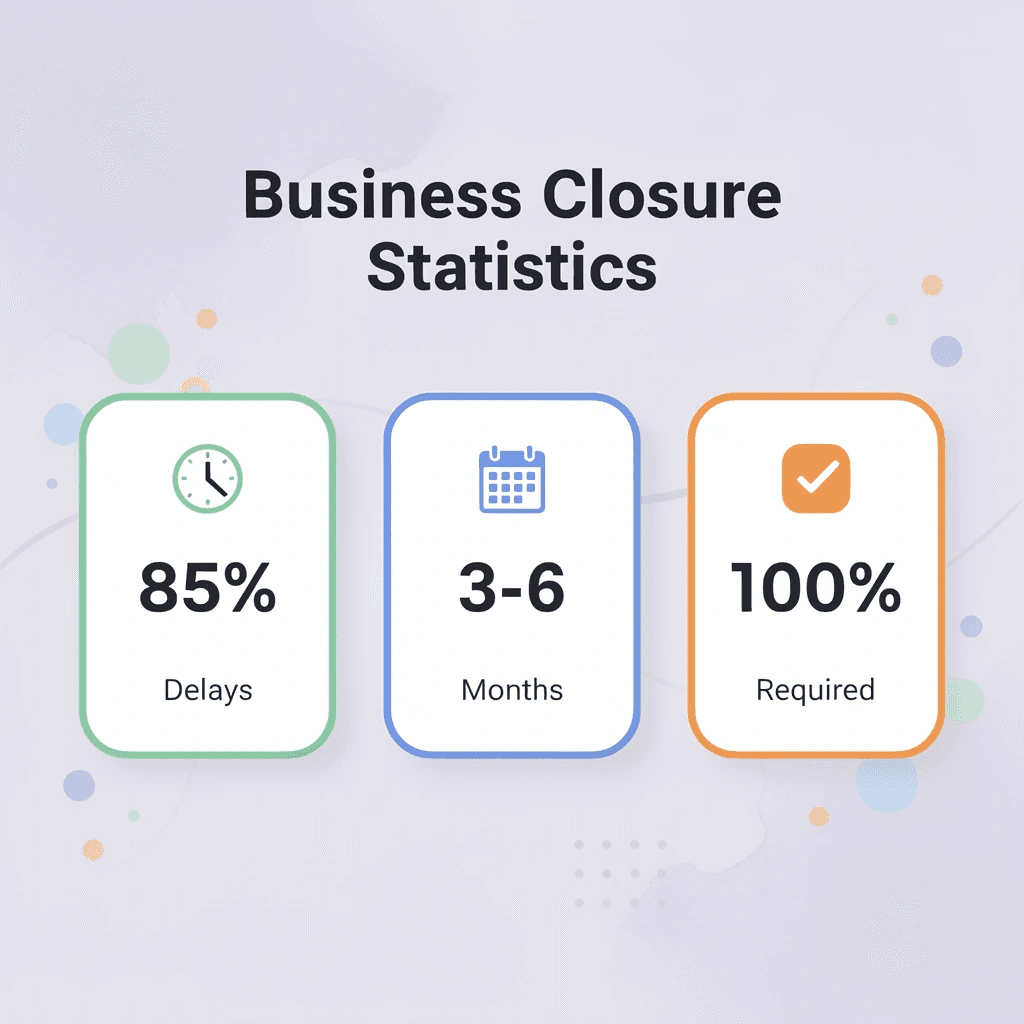
⚠️ Warning: Attempting to close your account with pending obligations or unfiled returns will trigger an automatic hold that can extend the process by 3-6 months and result in additional penalties.
Stop Operating Before Filing Final Returns
The business must shut down its operations first because tax filings depend on the business officially ceasing operations. This includes ending active transactions, finishing contracts, notifying stakeholders, and halting all new business. If you have employees, final payroll processing and employment tax filings must be completed by the shutdown date. The IRS considers a business active until all operations cease, so you cannot file final returns while processing ongoing transactions.
File Final Federal Tax Returns
When a business closes, owners must submit final federal tax returns showing that the business is closing. These returns include income tax returns, final employment tax returns if the business had employees, and other filings based on business structure. According to IRS Tax Tip 2022-122, you need to submit extra paperwork based on your business type and whether you had employees. Many business owners overlook payroll filings, stopping worker payments without realizing that tax obligations continue until they file the final paperwork.
Resolve Outstanding Balances and State Obligations
Before the IRS closes the business account, all outstanding tax obligations must be resolved. Unpaid payroll taxes, federal income tax balances, penalties, and unresolved filing issues will delay closure and continue to generate notices after operations stop.
State dissolution also matters because some states impose annual fees or reporting requirements until formal dissolution paperwork is completed, creating fragmented shutdown processes across multiple agencies.
How do operational shutdown and administrative closure differ?
Operational shutdown and administrative closure are two different processes. One founder halted all business activity only to receive IRS notices six months later because final payroll filings had never been submitted.
Platforms like Starcycle help founders navigate shutdown by organizing required filings, tracking obligations across agencies, and ensuring nothing gets missed.
Submit the EIN Closure Request
Once you complete the paperwork and meet all requirements, founders can formally request that the IRS close the business account connected to the EIN. The IRS requires the legal business name, EIN, business address, and reason for closing. A copy of the original EIN assignment notice is helpful but not required. The EIN remains permanently assigned and is never deleted or reused; however, the IRS closes the connected business account once all requirements are met.
Even after completing every step correctly, many founders face unexpected complications that turn straightforward closures into months-long administrative struggles.
Why Business Closures Become Administratively Overwhelming
Closing a business requires coordinating many separate systems: the IRS, state agencies, payroll processors, banks, and licensing boards. Closing your entity with the state doesn't notify the IRS, and stopping payroll doesn't automatically cancel your business licenses.
🎯 Key Point: Each agency operates independently - there's no central coordination between federal, state, and local requirements.

This fragmentation creates a complex sequencing puzzle. Final payroll filings depend on accurate wage reporting. State dissolution requires tax clearance certificates. Bank account closures need proper documentation showing the entity is legally dissolved. Miss one step, and the entire sequence stalls.
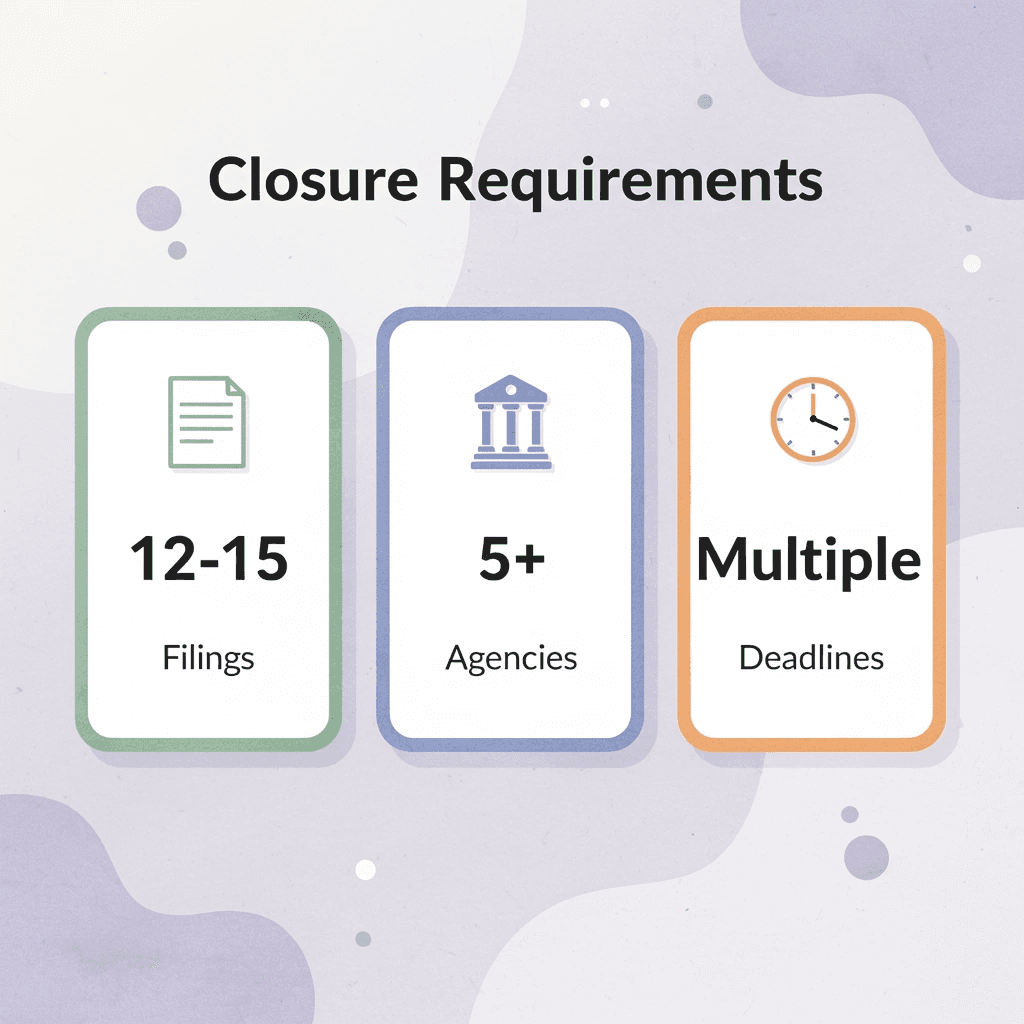
"Business owners face an average of 12-15 separate filing requirements across different agencies when closing their entity." — Small Business Administration, 2023

⚠️ Warning: The most common mistake is assuming that filing dissolution paperwork with your state automatically handles all closure requirements - it doesn't.
Agency/System | Required Action | Timing |
|---|---|---|
IRS | Final tax returns, payroll filings | Within deadlines |
State Revenue | Tax clearance certificate | Before dissolution |
Payroll Processor | Final wage reports, tax deposits | Immediate |
Banks | Account closure with documentation | After dissolution |
Licensing Boards | License cancellation | Varies by industry |
The emotional cost compounds the administrative burden
According to LendingTree research, 22.1% of new US businesses close within a year. Thousands of founders navigate shutdown procedures monthly while managing the emotional toll of closure, precisely when their decision-making capacity is lowest.
Founders track dissolution tasks across separate spreadsheets, email threads, and government portals while managing vendor notifications and stakeholder communication. One founder spent three weeks coordinating IRS filings, payroll shutdowns, lease terminations, and banking closures without visibility into task dependencies or penalty deadlines.
What employment tax obligations continue after stopping operations?
Employment tax requirements don't stop when you stop paying employees. According to IRS guidance on closing a business, final employment tax returns and wage reports remain due even after you shut down operations.
Final Form 941 filings, W-2 distribution, and unemployment account closures each have distinct timelines. Founders often discover months later that they've fallen behind on unexpected final filings.
How can founders manage the coordination challenges of LLC dissolution?
Platforms like Starcycle help founders plan connected tasks through custom action plans that track what needs to happen, in what order, and by which deadlines. Closure requires dozens of coordinated decisions about timing, sequencing, and documentation that must all happen correctly.
Even with perfect coordination, founders underestimate the operational support needed to complete the process.
Related Reading
- IRS Closing A Business
- Involuntary Dissolution Of Llc
- How To Wind Down A Company
- How To Liquidate A Company
- How To Dissolve A Nonprofit
- Irs Cancel Ein
- Notice Of Dissolution
Why Structured Winddown Support Matters More Than Founders Expect
Having a structured plan for closing a business reduces risk by clarifying the order of steps. You cannot close a business account before addressing payroll tax obligations, or dissolve the company before ensuring final vendor payments have cleared. These closure dependencies remain hidden until something fails, leaving you with penalties, delayed state approvals, or unresolved IRS notices. Starcycle manages these workflows by organizing all your closure tasks in one place, preventing oversights.
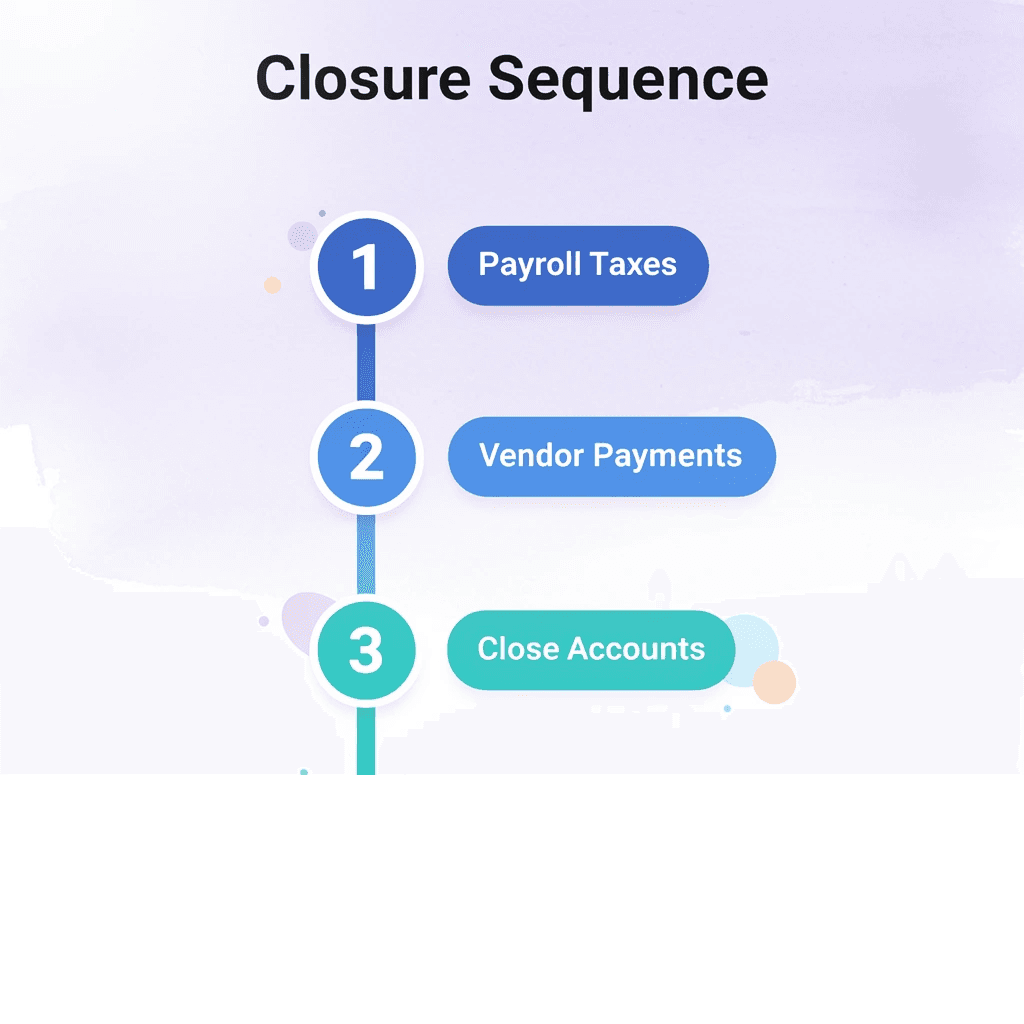
🎯 Key Point: Business closure involves critical dependencies that must be completed in the correct sequence to avoid costly penalties and regulatory complications.
"These closure dependencies are invisible until something breaks, and by then, you're dealing with penalties, delayed state approvals, or unresolved IRS notices."

⚠️ Warning: Attempting to close business accounts or dissolve your company before completing tax obligations and vendor payments can result in significant legal and financial complications that are much harder to resolve after the fact.
Centralized tracking prevents fragmented execution
When closure tasks span separate portals (state filing systems, IRS accounts, payroll platforms, banking dashboards, vendor invoices), founders quickly lose track. You might think payroll is closed because you stopped paying employees, but the IRS still expects quarterly 941 filings. You assume the state dissolved your LLC because you submitted paperwork, yet the annual report renewal triggered automatically before dissolution was processed. Multiple agencies operate on different timelines with overlapping deadlines that don't communicate with each other, complicating shutdowns. Starcycle consolidates these scattered tasks into one unified timeline, so you can see exactly what's due and when across all agencies.
Defined workflows reduce decision fatigue under pressure
Most founders manage winddowns while dealing with financial stress, team changes, and the emotional weight of closing a business. Structured workflows eliminate the need to figure out each step independently. Rather than searching through emails, state websites, and IRS publications to answer "What do I need to do today?", founders follow a clear sequence: complete final payroll, file employment tax returns, request tax clearance certificates, then close accounts in the correct order. Our Starcycle platform organizes these dependencies into customized action plans that show what needs to happen, when, and why, so founders spend less time researching and more time executing.
Faster coordination reduces lingering obligations
The longer shutdown tasks stay incomplete, the higher the risk of compliance notices, missed deadlines, and ongoing state filing requirements that create unnecessary fees. Organized closure systems keep the process moving steadily because task dependencies are mapped from the start. One founder might spend weeks tracking down which vendor accounts still have active subscriptions while determining whether the final tax return was marked correctly. Another follows a structured process in which contract cancellations, final filings, and account closures occur in coordinated stages, cutting total dissolution time by months.
Operational coordination matters more than paperwork accuracy
A successful business closure is a coordination problem, not merely a documentation problem. You can file every form correctly and still create delays if tasks occur out of order or obligations remain untracked across disconnected systems. When founders can see what depends on what, they make better decisions about timing and prioritization. When visibility breaks down, even small administrative tasks create cascading delays that extend the shutdown timeline. Starcycle helps by providing visibility into task dependencies and timelines during the closure process.
Structured processes only work if founders know which tasks apply to their specific situation, and that's where most generic shutdown advice falls apart.
How Starcycle Helps Founders Close Businesses More Clearly
Starcycle treats business closure as an operational coordination problem, not a paperwork checklist. Instead of forcing founders to navigate dissolution requirements independently across disconnected systems (IRS, state agencies, payroll processors, banks), our platform organizes the entire winddown into a structured workflow that sequences tasks in the order they need to occur.

🎯 Key Point: Traditional business closure forces entrepreneurs to juggle multiple agencies and complex requirements without clear guidance on sequencing or dependencies.
"Business dissolution involves coordinating with 5-8 different agencies and systems, creating a coordination nightmare for founders already dealing with the stress of closure." — Business Closure Research, 2024

💡 Best Practice: Our workflow-driven approach eliminates the guesswork by providing step-by-step coordination that ensures nothing falls through the cracks and deadlines are met in the correct order.
What challenges do founders face when coordinating shutdown tasks?
A founder closing an LLC must coordinate EIN closure, state dissolution filings, final payroll tax returns, vendor notifications, and operational winddown simultaneously while managing the emotional weight of ending something they built. Without a clear plan, these responsibilities spread across separate portals, email threads, and spreadsheets, leading to incomplete administrative follow-through.
Many founders successfully shut down operations but unintentionally leave unresolved tax filings, active state registrations that generate annual fees, or open bank accounts.
How does financial pressure affect the closure process?
According to Mercury's 2025 Startup Economics Report, 1,500 startup leaders reported that financial pressure compounds administrative challenges during the closure process. When founders face limited resources, unexpected legal fees, or missed filing deadlines, shutdown timelines are extended, and stress increases. Our Starcycle platform streamlines these administrative tasks, reducing the time and complexity of managing closure procedures.
How does Starcycle coordinate the dissolution process?
Starcycle treats shutdown as a coordinated operational transition rather than isolated paperwork tasks. A founder dissolving an LLC can organize EIN closure requests, final tax filings, dissolution paperwork, payroll shutdowns, and operational wind-down tasks within a single workflow, rather than manually tracking them across separate agency websites and vendor systems.
This prevents costly mistakes such as closing bank accounts before final tax payments clear or dissolving the entity before vendor obligations are resolved.
What does Starcycle cost, and how does pricing work?
Starcycle offers pricing starting at $399 with support tailored to your business needs, helping founders understand costs upfront rather than discovering unexpected expenses after administrative momentum has stalled.
Why is administrative fragmentation such a problem during dissolution?
The fragmentation becomes clearest when founders realize how many administrative threads they're holding. One founder described it: "I thought I just needed to file dissolution paperwork, but then realized I had open payroll accounts, an active EIN generating IRS notices, state tax clearance requirements I didn't know existed, and vendor contracts still auto-renewing. Every system had its own separate shutdown process."
Starcycle transforms disconnected tasks into a sequenced process that prevents compliance obligations from surfacing months later.
Related Reading
- Liquidation Vs Bankruptcy
- Close Corporation Taxation
- Llc Termination Vs Dissolution
- Company Liquidation Process
- Startup Shutdown
- How Much Does It Cost To Close an LLC
- How To Tell Investors That You're Shutting Down
- How To Dissolve A Partnership With The Irs
- Dissolving In Europe
- Dissolving In Canada
Sign up to Make your Business Closure Process Easier
Closing an IRS business account is rarely the bottleneck. The friction comes from coordinating everything else: state filings requiring clearance letters first, payroll processors awaiting final returns, and banks requesting dissolution certificates you haven't received yet. You complete one task only to discover three dependencies you missed, and the closure drags on for months while compliance obligations accumulate.

💡 Tip: The biggest winddown delays come from missing dependencies, not individual task complexity. Map out what each agency needs before you start filing.
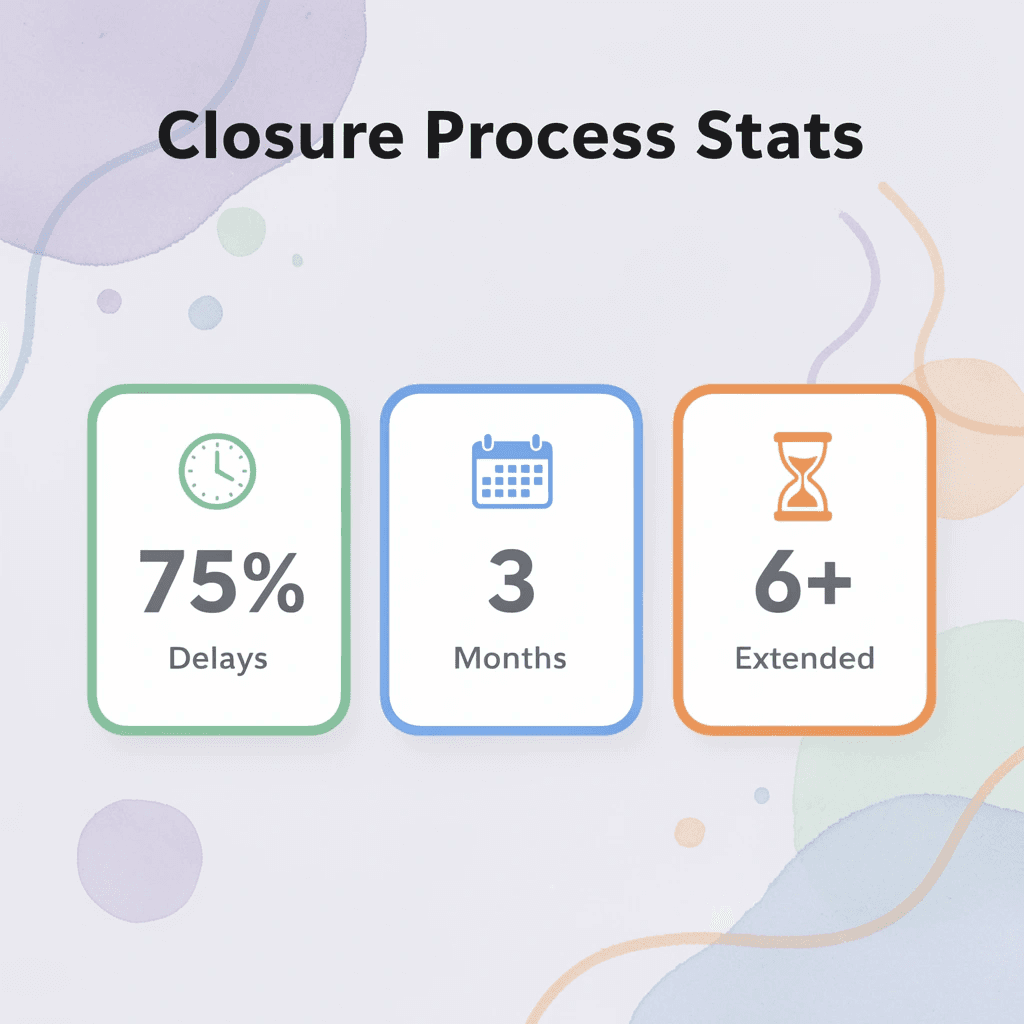
"75% of business closure delays stem from incomplete documentation and missed agency dependencies, turning what should be a 3-month process into 6+ months of back-and-forth." — Small Business Administration, 2023
Starcycle treats winddown as a sequencing problem, not a checklist. Our platform provides a tailored action plan showing task dependencies upfront, document storage for clearance letters and tax confirmations when agencies request them weeks later, and step-by-step guidance that adjusts as your situation changes. Founders move through closure faster, working from a structure rather than improvising across disconnected systems.
🔑 Takeaway: Professional closure management eliminates the guesswork and prevents costly delays that keep you legally liable for months longer than necessary.