
How To Dissolve an LLC in Indiana: A Step-by-Step Guide
Dissolve an LLC in Indiana the right way. Starcycle walks you through every required step to close legally and avoid penalties.


Closing an Indiana LLC involves more than simply stopping operations. Owners must follow specific legal steps, including settling outstanding debts, notifying creditors, and filing the correct paperwork with the state. Skipping any part of this process can leave personal liability on the table or create complications that outlast the business itself. Knowing how to dissolve an LLC in Indiana correctly is the difference between a clean exit and a costly one.
Starcycle helps LLC owners move through every stage of business closure with clarity, covering everything from canceling a registered agent to submitting Articles of Dissolution to the Indiana Secretary of State. The steps below lay out exactly what needs to happen and in what order.
Table of Contents
- Most Indiana LLCs Stay Active Longer Than Owners Expect
- Prepare Your Indiana LLC Before Filing for Dissolution
- Step-by-Step Process on How To Dissolve An LLC In Indiana
- The Small Details That Delay Indiana LLC Closures
- How Starcycle Helps Founders Dissolve an LLC in Indiana With Confidence
- Sign up to Make Your Business Closure Process Easier
- Frequently Asked Questions About Dissolving an LLC in Indiana
Summary
- Closing an LLC is a legal process, not just a business decision. Many Indiana LLC owners stop operating and assume the state will eventually recognize the business as closed. That assumption is incorrect. Until Articles of Dissolution are formally filed with the Indiana Secretary of State, the LLC remains a live legal entity subject to ongoing obligations, including biennial Business Entity Reports and state tax requirements, regardless of whether the company has earned any revenue.
- The scale of business closures in the coming decade is significant. More than half of the country's small-business owners are now over 55, and an estimated 6 million businesses will need new owners by 2035, according to the McKinsey Institute for Economic Mobility. Many of those businesses will not be sold. They will be closed, meaning millions of LLC owners will need to navigate formal dissolution procedures without a clear roadmap for what "legally closed" actually requires.
- Filing Articles of Dissolution is not the first step. It is closer to the fifth. Before any paperwork reaches the state, the LLC must complete a formal wind-up: member approval documented in writing, outstanding debts paid, creditor obligations resolved, and assets distributed only after all debts are settled. Distributing assets before satisfying creditors can expose members to personal liability, and skipping the documentation of member approval leaves the decision without legal standing if it is later questioned.
- Administrative gaps are where clean closures fall apart. Filing dissolution with the Indiana Secretary of State does not automatically close tax accounts with the Indiana Department of Revenue, cancel a Registered Retail Merchant Certificate, terminate a DBA registration, or remove the entity from active state registries. As of September 2025, Indiana tracked 703,513 active business entities, and each one is expected to remain current through its full life cycle, including wind-down. Missing a cancellation step means the entity stays visible and technically active in state records.
- Vendor contracts and software subscriptions are a common source of post-closure complications. More than 8,100 stores closed across the U.S. in 2025, up roughly 12% from 2024 according to Coresight Research, and behind every closure is a list of payment processors, service accounts, and auto-renewing vendor agreements that require deliberate cancellation. Businesses that fail to formally dissolve may continue accruing fees and obligations indefinitely, turning what felt like a finished chapter into ongoing liability.
- The founders who close without complications are not necessarily the most experienced. They are the ones who treated dissolution as a structured project with defined tasks, assigned ownership to each obligation, and confirmed completion before moving on, rather than relying on memory, scattered notes, or the assumption that filing one form closes everything.
- Starcycle business closure addresses the fragmentation that makes LLC dissolution harder than it needs to be, giving founders a structured action plan that tracks member approvals, outstanding obligations, filing deadlines, and document organization in one place.
Most Indiana LLCs Stay Active Longer Than Owners Expect
Many Indiana LLC owners stop operating their business and assume the paperwork takes care of itself. But the Indiana Secretary of State does not close an LLC because it went quiet. The business remains a legal entity with ongoing obligations, including the biennial Business Entity Report and any state tax requirements that continue to build up whether or not the company earned a single dollar.
"The Indiana Secretary of State does not automatically close an LLC that goes quiet — the business remains a legal entity with ongoing obligations that accumulate regardless of activity or revenue."
⚠️ Warning: Simply stopping operations is not the same as closing your LLC. Unfiled Business Entity Reports and unpaid state tax requirements can stack up silently, creating serious legal and financial consequences down the road.
💡 Tip: If your Indiana LLC is no longer active, take deliberate steps to formally dissolve the entity through the Indiana Secretary of State — don't assume silence equals closure.
LLC Status | Ongoing Obligation | Consequence of Ignoring |
|---|---|---|
Inactive but open | Biennial Business Entity Report | Administrative dissolution or penalties |
Inactive but open | State tax requirements | Accumulating tax debt |
Formally dissolved | None | Clean legal closure |

What happens when the emotional exit comes before the legal one?
The failure point is usually the gap between the owner's emotional exit and the legal exit. An owner decides the business is done, but that decision does not update state records. Until the Articles of Dissolution are filed with the Indiana Secretary of State, Business Services Division, the LLC remains alive in the eyes of Indiana law, able to incur liability, and subject to administrative dissolution if it misses required filings. Administrative dissolution can complicate future business formation, create unresolved tax exposure, and leave personal liability questions open depending on how the LLC was managed.
How large is the wave of LLC closures coming in the next decade?
This problem is larger than most people recognise. According to the McKinsey Institute for Economic Mobility, via Greater Lafayette Commerce, more than half of the country's small-business owners are now over 55, and an estimated 6 million businesses will need new owners by 2035. Many of those businesses will close rather than sell, leaving millions of LLC owners to navigate the dissolution process in the coming decade without clear guidance on what "closed" requires under state law.
Why does ignoring the process create more problems than it solves?
Most owners stop paying attention and hope the state eventually figures it out. This approach does not create a clean break; it creates a slow buildup of missed filings, unresolved creditor obligations, and open tax accounts that surface at the worst times. Platforms like Starcycle offer a structured alternative with tailored action plans, key date tracking, and document organization that guide founders through winding down, from canceling contracts and subscriptions to ensuring the right filings reach the right agencies on time.
What keeps LLCs legally alive after owners walk away?
The Indiana Business Flexibility Act requires voluntary dissolution to include member approval, formal wind-up of company affairs, and filing of Articles of Dissolution—none of which occur automatically. An LLC can also face judicial dissolution if member deadlock or unlawful conduct makes continued operation impractical, though that path involves court intervention and proves far more disruptive. Voluntary dissolution exists because it gives owners control, which matters when the alternative is the state making decisions for you.
What unfinished business does an inactive LLC quietly carry?
What most people underestimate is how much unfinished business an "inactive" LLC carries: unpaid creditors, open vendor contracts, unresolved state tax accounts, and a registered agent still on file. These loose threads do not disappear on their own. Addressing these details before filing is the difference between a closure that actually closes and one that merely changes shape. That gap between what owners assume is finished and what the state still considers open is where the real preparation work begins.
Prepare Your Indiana LLC Before Filing for Dissolution
Filing the Articles of Dissolution is not step one—it's closer to step five. Before any paperwork reaches the Indiana Secretary of State, your LLC needs to be wound up properly: members aligned, obligations inventoried, and loose ends resolved with intention rather than urgency.
"Before any paperwork reaches the Indiana Secretary of State, your LLC needs to be wound up properly — members aligned, obligations inventoried, and loose ends resolved with intention rather than urgency."
Pre-Dissolution Step | Why It Matters |
|---|---|
Member Alignment | Ensures all owners formally agree to dissolve |
Obligations Inventory | Identifies outstanding debts, contracts, and liabilities |
Loose Ends Resolution | Prevents legal exposure after dissolution is filed |
Articles of Dissolution Filing | The final official step with the Secretary of State |
💡 Tip: Treat dissolution like a checklist process, not a single event — skipping early steps can create serious legal and financial complications down the road.
⚠️ Warning: Submitting your Articles of Dissolution before your LLC is fully wound up can leave members personally exposed to unresolved obligations — always complete internal preparations first.

What does your operating agreement require before dissolving?
Your Operating Agreement is the first document to open, not the last. It explains the voting threshold needed to approve dissolution, how assets get distributed after creditors are paid, and the specific steps your members agreed to follow when closing. If that agreement requires a unanimous vote, a simple majority is insufficient. Following those procedures exactly keeps a dissolution clean and helps you avoid disputes later.
Why does documenting member approval matter?
Once members formally approve the decision, document it in the meeting minutes or in a signed member consent form in your company records. This paper trail serves as evidence that the decision was made properly, by the right people, with the right authority.
Wind up before you file
The critical difference between a dissolution that holds and one that unravels is the wind-up. Stop accepting new clients, contracts, or projects once dissolution is approved. Finish existing work, collect outstanding receivables, cancel recurring software subscriptions, close business bank accounts in the correct sequence, and notify all stakeholders: employees, vendors, landlords, lenders, and independent contractors. Each relationship carries financial or legal obligations requiring a clear ending.
What gets missed when you wind up without a checklist?
Most owners handle this by checking off obligations as they come up, but this approach overlooks critical items: vendor contracts with auto-renewal clauses, state tax accounts that were never formally closed, and business licenses that are still active in counties where operations stopped years ago. These are not rare edge cases; they are the norm. Our business closure platform addresses this directly, providing founders with a structured checklist of obligations, along with contract and subscription tracking, to ensure nothing gets missed.
Where does the real cost of an incomplete wind-up show up?
According to Northwest Registered Agent, the Articles of Dissolution carry a $30 filing fee in Indiana. Hidden costs arise from incomplete wind-up: creditor claims, state penalties for unfiled returns, or a registered agent receiving legal notices for a closed business. INBiz, the Indiana Secretary of State's portal, notes that Business Entity Reports are due every two years. An LLC dissolving mid-cycle without updating its reporting status can leave a compliance gap that follows the owner forward. Once the preparation work is done correctly, the filing itself becomes anticlimactic.
Related Reading
- How To Dissolve LLC
- How To Dissolve An LLC In California
- How To Dissolve An Llc In Texas
- How To Dissolve An LLC In Florida
- How To Dissolve An Llc In Georgia
- How To Dissolve An Llc In North Carolina
- How To Dissolve An Llc In Michigan
- How To Dissolve An Llc In New York
- How To Dissolve An Llc In Tennessee
- How To Dissolve An Llc In Pennsylvania
- How To Dissolve An Llc In Delaware
- How To Dissolve An Llc In Missouri
- How To Dissolve An Llc In Illinois
- How To Dissolve An Llc In Colorado
- How To Dissolve An Llc In Arizona
- How To Dissolve An Llc In Kentucky
- How To Dissolve An Llc In Indiana
- How To Dissolve An LLC In Arkansas
- How To Dissolve An LLC In Maine
- How To Dissolve An LLC In Massachusetts
- How To Dissolve An LLC In Montana
Step-by-Step Process on How To Dissolve An LLC In Indiana
Filing the Articles of Dissolution is simple once you get ready. Five steps take an Indiana LLC from an active business to legally closed.
"A properly dissolved LLC protects owners from future liability, unpaid taxes, and ongoing state fees — skipping even one step can leave your business legally exposed." — Indiana Business Filing Guidelines
Step | Action Required | Key Detail |
|---|---|---|
Step 1 | Vote to Dissolve | Members must formally agree to close |
Step 2 | Settle Debts & Obligations | Pay all outstanding liabilities first |
Step 3 | Notify Creditors | Written notice is strongly recommended |
Step 4 | File Articles of Dissolution | Submit to Indiana Secretary of State |
Step 5 | Close Tax Accounts | File final tax returns and cancel permits |
💡 Tip: Complete each step in order — skipping ahead, especially before settling debts, can expose members to personal liability.
⚠️ Warning: The Articles of Dissolution are not the first step — you must resolve all financial obligations before filing with the state.

Step 1: Approve the Dissolution
Start with your Operating Agreement to find the required vote, notification procedures, and paperwork requirements. If your agreement doesn't address dissolution, the Indiana Business Flexibility Act sets the default rules. Document the decision through formal meeting minutes or a signed member consent form, and retain those records with your company files. This documentation protects you if a creditor, tax authority, or future lender questions whether the dissolution followed proper procedures.
Step 2: Wind Up the LLC's Affairs
Collect money owed to you, pay creditors and vendors, resolve pending legal issues, and close or terminate contracts and leases. Distribute remaining money or property to members only after all debts are paid; distributing assets before settling debts can expose members to personal liability for unpaid obligations. Close business bank accounts, cancel recurring software subscriptions, and terminate insurance policies.
Step 3: File the Articles of Dissolution
File Articles of Dissolution (State Form 49465) with the Indiana Secretary of State's Business Services Division. The form requires the LLC's legal name, organization date, dissolution authorization date, principal office address, and signature of an authorized member or manager. According to Tailor Brands, filing online through INBiz costs $20 versus $30 by mail, with processing in about 24 hours. Dissolution takes effect when the Secretary of State files the Articles, unless a later effective date is specified under Indiana law. Platforms like Starcycle consolidate deadlines, required documents, and filing sequences into a single workflow, reducing friction that can turn a one-day task into a two-month delay.
Step 4: Close Your Tax Accounts
Filing the Articles does not close your tax accounts. File your final federal income tax return, all required Indiana state returns, and any final payroll or sales tax returns if applicable. Notify the Indiana Department of Revenue by submitting Form IT-966 and, when relevant, Form BC-100 to formally close your state business tax accounts. Skipping this step often results in unexpected notices months later.
Step 5: Cancel Licenses and Registrations
The Articles of Dissolution do not automatically cancel your business licenses, permits, or registrations. You must close your state and local business licenses, Registered Retail Merchant Certificate, assumed business name (DBA) registrations, professional licenses, and employer registrations with state agencies. Leaving these open invites renewal fees, compliance notices, and administrative complications. A clean dissolution requires every account, registration, and permit to be formally closed. The details within each step are where things go sideways.
The Small Details That Delay Indiana LLC Closures
Filing the Articles of Dissolution is straightforward, but delays stem from quieter obligations that don't resolve automatically.
"The most common LLC closure mistakes aren't the big filings — they're the small, overlooked obligations that keep a dissolved business legally alive long after the owner walks away." — Indiana Business Compliance Overview
⚠️ Warning: A visible filing isn't the only step that matters. The obligations you can't see are the ones that stall your closure.

The most common stopping point is thinking one filing closes everything. Dissolving your LLC with the Indiana Secretary of State is entirely separate from closing accounts with the Indiana Department of Revenue — and confusing the two is a critical mistake. You still need to:
Obligation | Where It's Handled |
|---|---|
File Articles of Dissolution | Indiana Secretary of State |
File final state tax returns | Indiana Department of Revenue |
Settle outstanding tax balances | Indiana Department of Revenue |
Close business tax accounts | Indiana Department of Revenue (separate process) |
Leave those accounts open, and you'll keep receiving compliance notices for a business you thought no longer existed.
💡 Tip: Treat your LLC closure as two parallel tracks — the Secretary of State track and the Department of Revenue track. Both must be completed before your business is truly closed.
🔑 Takeaway: Final tax returns, outstanding balances, and open tax accounts are the silent reasons Indiana LLC closures stall — resolve all three to fully dissolve your business.
Where the administrative gaps hide
The same pattern applies to licenses and registrations. A Registered Retail Merchant Certificate doesn't cancel itself when you file dissolution paperwork, nor does a DBA registration, professional license, or employer account with the Indiana Department of Workforce Development. Each requires its own cancellation request and confirmation. According to the Indiana Secretary of State's 2025 InBiz Legislative Council Report, there were 703,513 active business entities in Indiana as of September 2025. If you miss a cancellation step, your entity remains visible in that registry, still technically alive in the state's eyes.
What happens when recurring accounts go unaddressed?
Most founders track the big steps and lose the small ones. Subscription-based services, SaaS tools, insurance policies, and vendor contracts renew automatically. Software subscription billing to a defunct business bank account becomes problematic when overlooked. Coresight Research, via WDEF News 12, reported that more than 8,100 stores closed across the U.S. in 2025, up roughly 12% from 2024. Behind every closure lies a checklist of vendor agreements, payment processors, and service accounts requiring deliberate cancellation. Businesses that close cleanly treat that list as seriously as state filings.
Most founders handle this by building a mental checklist across email threads, calendar reminders, and sticky notes—a system that breaks down as the list grows beyond memory's capacity. Our Starcycle platform addresses this directly, offering contract and subscription management, key date tracking, and document organization in one place.
Which procedural details create real legal exposure?
Two procedural details create legal exposure, not administrative friction. First, distributing assets to members before satisfying creditor obligations exposes those members to personal claims. The correct sequence is debts first, distributions second, and this sequence must be documented. Second, member approval of the dissolution must be captured in writing: either as formal meeting minutes or a signed written consent. Without that record, the decision exists only in memory, and memory is not a legal document. The founders who close without complications aren't the ones who worked harder. They're the ones who treated the dissolution as a structured project with a real checklist, not a single form with a submission button.
How Starcycle Helps Founders Dissolve an LLC in Indiana With Confidence
Closing a business the right way means understanding all of your debts, open accounts, and when things are due before submitting anything to the state.

💡 Tip: Starcycle guides founders through every critical step — from identifying outstanding obligations to filing final paperwork — so nothing gets missed and your LLC dissolution goes smoothly from start to finish.
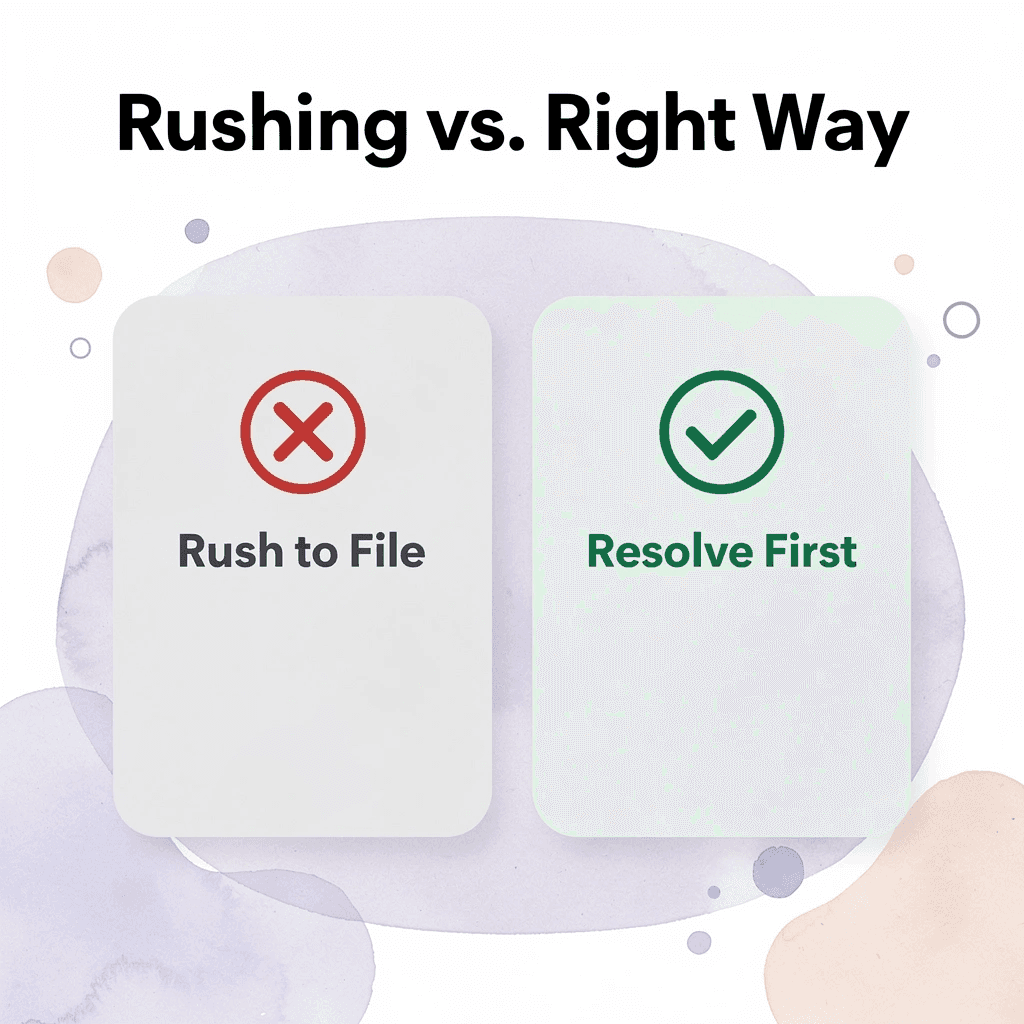
🎯 Key Point: The biggest mistake founders make is rushing to file with the state before resolving open accounts, pending debts, and tax obligations — a misstep that can lead to personal liability and costly delays.

"Closing an LLC isn't just about filing one form — it's about ensuring every financial and legal obligation is resolved before the state ever sees your paperwork." — Starcycle Business Dissolution Guide
Dissolution Step | Why It Matters |
|---|---|
Identify all outstanding debts | Prevents personal liability after closure |
Close open business accounts | Avoids unexpected charges post-dissolution |
Confirm tax filing deadlines | Ensures compliance with Indiana state requirements |
File Articles of Dissolution | Officially terminates your LLC's legal existence |
Why does managing dissolution with a checklist create gaps?
The problem is not a lack of knowledge about the process—most founders know they need to file something. Dissolution involves a dozen simultaneous tasks, and managing those with a spreadsheet or mental checklist creates gaps. According to the Starcycle Blog's 2025 review of business shutdown services, businesses that fail to formally dissolve may continue accruing fees and obligations indefinitely, creating ongoing liability for a company you believe is closed.
Most founders handle wind-up by pulling together notes from emails, operating agreements, and conversations with their accountants. This works for simple businesses, but when there are multiple members, outstanding vendor contracts, registered licenses across state agencies, or tax accounts needing formal closure, the informal approach breaks down. Tasks fall through. Deadlines get missed. The Indiana Secretary of State receives your Articles of Dissolution while your Indiana Department of Revenue account remains open, and months later you receive unexpected notices. Platforms like Starcycle address this fragmentation by providing founders a structured action plan that tracks member approvals, outstanding obligations, key filing dates, and document organization in one place.
How does real-time visibility lead to a cleaner LLC closure?
You feel confident about dissolution when you can see in real time what is done and what is not. That visibility separates a clean closure from one that lingers. According to Indiana's INBiz platform, businesses that fail to file required reports face administrative dissolution: the state can act against your entity whether or not you intend to close. A guided approach puts you in control of that timeline. The founders who closed without regret treated closure as a project with defined scope, assigned ownership to every task, and confirmed completion before moving on. That discipline must be built into the process itself, which is what a structured dissolution platform enables.
Related Reading
- How To Dissolve An Llc In South Carolina
- How To Dissolve An Llc In Virginia
- How To Dissolve An Llc In Oklahoma
- How To Dissolve An Llc In Minnesota
- How To Dissolve An Llc In South Dakota
- How To Dissolve An Llc In Oregon
- How To Dissolve An Llc In Utah
- How To Dissolve An Llc In Washington State
- How To Dissolve An Llc In Ohio
- How To Dissolve An Llc In Rhode Island
- How To Dissolve An Llc In West Virginia
- How To Dissolve An Llc In Maryland
- How To Dissolve An Llc In North Dakota
- How To Dissolve An Llc In Iowa
Sign up to Make Your Business Closure Process Easier
You have done the hard work. What remains is making sure it counts. Requesting a personalized quote from Starcycle gets you a first-session Indiana wind-down review that maps your outstanding closure tasks, flags potential filing gaps across the Indiana Secretary of State and Department of Revenue, and gives you a clear sequence for completing your LLC dissolution without loose ends.
"A structured wind-down review flags critical filing gaps before they become costly compliance problems — giving business owners a clear, step-by-step sequence to close with confidence." — Starcycle
💡 Tip: Don't leave your LLC dissolution to guesswork — a personalized wind-down review ensures every outstanding task is identified and sequenced correctly before you file.
🎯 Key Point: The Starcycle first-session review covers two critical agencies — the Indiana Secretary of State and the Indiana Department of Revenue — so no filing gap goes undetected.
What Starcycle Reviews | Why It Matters |
|---|---|
Outstanding closure tasks | Ensures nothing is missed before dissolution |
Indiana Secretary of State filings | Confirms official dissolution is properly filed |
Department of Revenue gaps | Prevents tax liability from lingering after closure |
Clear completion sequence | Gives you a step-by-step path to a clean close |

Frequently Asked Questions About Dissolving an LLC in Indiana
How long does it take to dissolve an LLC in Indiana?
The time it takes depends on how quickly you complete the wind-up process, including paying creditors, filing final tax returns, and canceling licenses and permits. Once you're ready to file, online filings with the Indiana Secretary of State are generally processed faster than paper filings submitted by mail.
How much does it cost to dissolve an LLC in Indiana?
The filing fee for the Articles of Dissolution is:
- $20 if you file online through INBiz.
- $30 if you file a paper form by mail.
These fees do not include any taxes owed or professional service fees you may incur during the dissolution process.
Can I dissolve an Indiana LLC online?
Yes. Indiana allows LLC owners to file the Articles of Dissolution online through the INBiz business portal. You may also file the form by mail with the Indiana Secretary of State, Business Services Division.
Do I have to pay taxes before dissolving my Indiana LLC?
Yes. Before dissolving your LLC, you should file all required federal and Indiana tax returns, pay any outstanding taxes, submit final payroll and sales tax filings if applicable, and close your business tax accounts with the Indiana Department of Revenue. Completing these steps helps prevent future tax notices and penalties.
What happens if I stop operating but never dissolve my Indiana LLC?
Simply stopping business operations does not legally end your LLC. The business remains active on the state's records until it is properly dissolved. You may still be responsible for filing required Business Entity Reports, maintaining a registered agent, and complying with other state requirements.
Can creditors still pursue a dissolved Indiana LLC?
Yes. Dissolving an LLC does not eliminate valid debts or liabilities. During the wind-up process, the LLC should pay or otherwise resolve creditor claims before distributing any remaining assets to members. Creditors may still pursue unpaid obligations as permitted by law.
Can I reinstate a dissolved Indiana LLC?
It depends on how the LLC was dissolved. If the LLC was administratively dissolved by the Indiana Secretary of State, you may be eligible to apply for reinstatement by correcting the reason for the dissolution and meeting the state's reinstatement requirements. If the LLC was voluntarily dissolved by filing the Articles of Dissolution, the dissolution is generally final, and you would typically need to form a new LLC if you want to operate again.
Related Reading
- How To Dissolve A Corporation In Texas
- How To Dissolve Llc In Nebraska
- How To Dissolve A Corporation In California
- How To Dissolve An Llc In Wyoming
- How To Dissolve An Llc In New Mexico
- How To Dissolve A Corporation In Delaware
- How To Dissolve A Business
- How To Dissolve An Llc In Alabama
- How To Dissolve A Corporation In North Carolina
- How To Dissolve A Corporation In Oregon
- How To Dissolve A Corporation In Nevada
- How To Dissolve A Corporation In Louisiana