
How To Dissolve An LLC In Virginia the Right Way: Steps and Cost
Dissolve an LLC in Virginia the right way with Starcycle. Step-by-step guide covering filing steps, fees, and deadlines.


Closing a Virginia LLC involves more than stopping operations. Owners must file the required paperwork with the Virginia State Corporation Commission, settle any outstanding debts, notify creditors, and resolve any remaining legal obligations. Knowing how to dissolve an LLC in Virginia the right way prevents costly complications after the fact.
Starcycle guides LLC owners through every stage of the process, from canceling a registered agent to filing Articles of Cancellation and meeting all state deadlines. For owners who want a clean, legally sound exit, Starcycle offers hands-on support for business closure.
Table of Contents
- Most Virginia LLCs Stay Active Longer Than Owners Expect
- Prepare Your Virginia LLC Before Filing for Dissolution
- Step-by-Step Process on How To Dissolve An LLC In Virginia
- The Small Details That Delay Virginia LLC Closures
- How Starcycle Helps Founders Dissolve an LLC in Virginia With Confidence
- Sign up to Make Your Business Closure Process Easier
- Frequently Asked Questions About Dissolving an LLC in Virginia
Summary
- Virginia LLCs remain legally active until formally dissolved with the State Corporation Commission, regardless of whether the business has stopped operating. Founders who close their bank accounts, shut down their websites, or simply stop working often assume the entity is gone. In reality, annual registration fees continue to accrue, tax filing obligations persist, and outstanding liabilities remain enforceable until Articles of Cancellation are properly filed.
- The sequence of dissolution steps matters as much as completing them. Virginia law requires member approval, a full wind-up of business affairs, debt settlement, asset distribution, and only then the filing of Articles of Cancellation. Filing out of order, such as submitting cancellation paperwork before resolving outstanding debts, does not erase those obligations. It simply means the entity closed without clearing them, which can create personal exposure depending on how the LLC was structured.
- The filing fee for Articles of Cancellation with the Virginia SCC is $25, making the paperwork itself the least expensive part of the process. The real costs come from the preparation that precedes it, including settling vendor contracts, closing tax accounts, issuing final payroll documents, and canceling recurring software subscriptions that auto-renew without notice. Each overlooked item extends the timeline and creates a paper trail suggesting the business never fully closed.
- Tax account closure is one of the most commonly missed steps in Virginia LLC dissolution. Filing the Articles of Cancellation does not automatically close a federal EIN account, a Virginia sales tax registration, or an employer withholding account. Those require separate final returns and written closure requests to both the IRS and the Virginia Department of Taxation, and failing to complete them can result in compliance notices long after the entity is gone.
- Documentation of the dissolution vote matters more than most founders anticipate. Under Section 13.1-1046, Virginia law defaults to unanimous written consent of all members when an Operating Agreement is silent on voting thresholds. Without signed meeting minutes or a written consent form on file, even a unanimous decision to dissolve becomes difficult to defend if a creditor or former member later challenges the process. According to Kaplan Collection Agency's 2025 small business statistics, 45% of small businesses fail within the first five years, making dissolution a routine outcome that warrants the same documentation discipline as formation.
- Auto-renewing subscriptions represent a recurring blind spot in the wind-up phase. Software licenses, domain registrations, hosting plans, and insurance policies all carry auto-renewal clauses that continue charging after a founder assumes the business is closed. A single missed cancellation can trigger a charge to an account under review, complicate final bank reconciliation, and create a transaction record that makes the LLC appear still active.
- Starcycle addresses this gap by giving Virginia founders a structured, sequenced action plan that tracks outstanding closure tasks, contract renewal dates, and filing deadlines in one place rather than across disconnected spreadsheets and browser tabs.
Most Virginia LLCs Stay Active Longer Than Owners Expect
Many business owners think their LLC closes when they stop operating, shut down their website, or close their bank account. In Virginia, this assumption can cause real problems. Your LLC continues to legally exist until you formally dissolve it with the Virginia State Corporation Commission (SCC), and your obligations keep running the whole time.
"Your LLC continues to legally exist until you formally dissolve it with the Virginia State Corporation Commission (SCC) — and your obligations keep running the whole time."
💡 Tip: Don't assume inactivity equals dissolution. In Virginia, walking away from your LLC without filing formal paperwork leaves you legally and financially exposed.
⚠️ Warning: Closing your bank account or website does not dissolve your Virginia LLC. The SCC still considers your business active — meaning annual fees, reporting requirements, and legal liability continue to accumulate.
What Owners Think Closes an LLC | Does It Actually Dissolve the LLC? |
|---|---|
Stopping business operations | ❌ No |
Closing the business bank account | ❌ No |
Shutting down the website | ❌ No |
Filing formal dissolution with the SCC | ✅ Yes |
🔑 Takeaway: The only way to end your LLC's legal existence in Virginia is through official dissolution with the Virginia State Corporation Commission — everything else is just assumption.
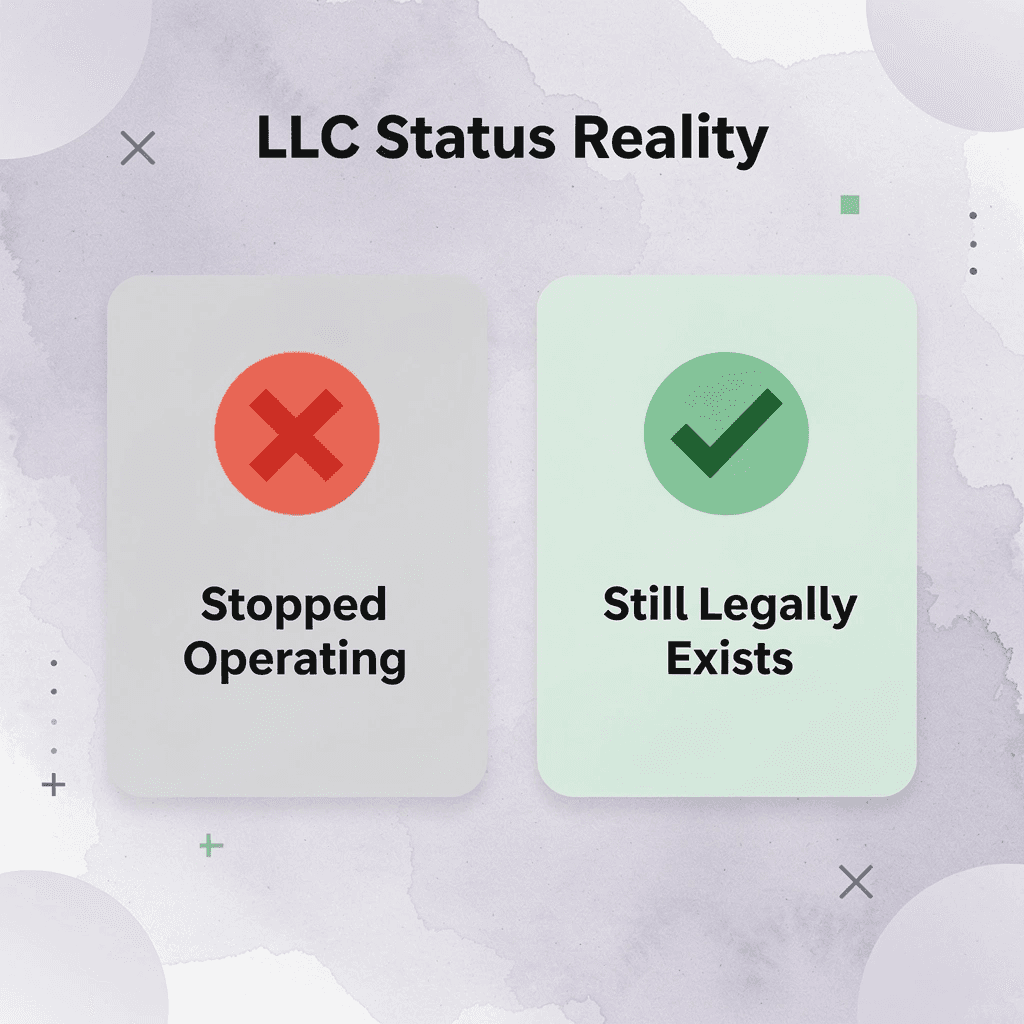
What happens when you walk away without formally dissolving?
The failure point is a gap between what you think is true and what the law actually says. The SCC's records still show your LLC as active, meaning annual registration requirements, potential tax filings, and outstanding liabilities continue. An LLC left in this limbo can accumulate fees, trigger administrative cancellation, or create complications if creditors or courts come looking later.
What keeps an LLC legally "alive" in Virginia?
Virginia law recognizes three ways to close a business: voluntary (members choose to close), administrative (the state closes it for missed filings or fees), and judicial (a court orders closure due to member disputes or unlawful conduct). Only voluntary closure lets you control when and how it happens.
Most founders close their businesses informally—shutting bank accounts, letting domains expire—without addressing the paperwork. According to BusinessRocket, the structural and legal details of a Virginia LLC require careful attention at every stage, including closure. Platforms like Starcycle offer organized action plans with date tracking and document organization to help you avoid missing steps during wind-down.
Why the sequence matters more than the paperwork itself
Dissolving a Virginia LLC requires a specific order: member approval, winding up business affairs, settling debts, distributing remaining assets, and filing Articles of Cancellation with the SCC. Skipping steps or reversing the order creates risk. Filing Articles before settling outstanding debts doesn't erase those obligations—it means you closed without clearing them, which can follow you personally depending on your LLC's structure. Our Starcycle platform helps ensure you complete these steps in the correct sequence, reducing personal liability risk. A properly dissolved LLC is a finished chapter, not a loose thread. Before filing any document with the SCC, you must complete specific internal preparations that most guides skip.
Prepare Your Virginia LLC Before Filing for Dissolution
Filing the Articles of Cancellation with the Virginia State Corporation Commission costs just $25. However, skipping the right preparation beforehand can result in serious legal problems, unpaid obligations, and disputes that come up months later.
"A filing fee as low as $25 can close your LLC on paper — but unresolved obligations and missed preparation steps can keep you legally exposed long after the paperwork is done."
⚠️ Warning: Don't let the low $25 filing fee fool you into rushing the process. Inadequate preparation before filing is one of the most common — and most costly — mistakes Virginia LLC owners make.
💡 Tip: Before submitting your Articles of Cancellation, make sure you've resolved all outstanding debts, notified creditors, and properly distributed remaining assets to avoid disputes that surface well after dissolution.
Preparation Step | Why It Matters |
|---|---|
Settle outstanding debts | Prevents personal liability after dissolution |
Notify creditors | Avoids legal disputes months later |
Distribute remaining assets | Ensures clean closure among members |
File final tax returns | Eliminates unpaid tax obligations |
Cancel licenses & permits | Stops ongoing fees and compliance issues |

Start with your Operating Agreement
Your Operating Agreement governs how your LLC makes decisions, including decisions regarding dissolution. It explains voting rules, member notice requirements, and asset distribution. Failing to follow these rules can spark disputes among members. Document the dissolution vote in the meeting minutes or in a signed consent form, and retain it permanently.
What needs to be resolved before you file
The failure point in most Virginia LLC dissolutions is not the paperwork—it's unresolved obligations that founders underestimate or delay. Before filing, address outstanding invoices, business debts, active contracts, lease agreements, business licenses, tax accounts, and recurring software subscriptions. Notify employees, vendors, lenders, and customers early enough that they can plan accordingly. Fulfilling final payroll obligations and formally closing business licenses and permits prevents compliance issues that can outlast the LLC itself.
How do you make sure nothing slips through during wind-up?
Most founders track this across sticky notes, email threads, and spreadsheets, which works until something slips. Our Starcycle platform offers tailored shutdown action plans, key date tracking, and contract and subscription management to ensure nothing gets missed during wind-up. The difference between a clean dissolution and a messy one often comes down to having a single place to track every open item.
Why should you stop taking on new obligations immediately?
The Virginia State Corporation Commission charges a $50 annual registration fee for active LLCs, so delaying dissolution incurs ongoing costs. Once you decide to dissolve, stop taking on new projects, contracts, or financial commitments. Focus on finishing existing work and settling open accounts.
How does settling obligations early protect you after dissolution?
Every debt paid, contract closed, and license surrendered before you submit your Articles of Cancellation prevents problems after dissolution. Virginia law allows creditors to make claims against a dissolved LLC under certain conditions, so settling obligations beforehand protects you once the entity is gone. Once you have worked through that checklist and documented internal approvals, you are ready to move forward.
Related Reading
- How To Dissolve An Llc In Michigan
- How To Dissolve An Llc In Colorado
- How To Dissolve An Llc In Wisconsin
- How To Dissolve An Llc In Arizona
- How To Dissolve An Llc In New Jersey
- How To Dissolve An Llc In Illinois
- How To Dissolve An Llc In Montana
- How To Dissolve An Llc In Kentucky
- How To Dissolve An Llc In Indiana
- How To Dissolve An Llc In North Carolina
- How To Dissolve An Llc In Georgia
- How To Dissolve An Llc In Florida
- How To Dissolve An Llc In Missouri
- How To Dissolve An Llc In Delaware
- How To Dissolve An Llc In New York
- How To Dissolve An Llc In Maine
- How To Dissolve An Llc In Texas
- How To Dissolve An Llc In Arkansas
- How To Dissolve An Llc In California
- How To Dissolve An Llc In Tennessee
- How To Dissolve An Llc In Connecticut
- How To Dissolve An Llc In Pennsylvania
- How To Dissolve An Llc In Massachusetts
Step-by-Step Process on How To Dissolve An LLC In Virginia
Dissolving a Virginia LLC follows a clear five-step sequence that must be completed in the correct order. Skipping steps or changing the sequence can create serious legal or tax problems that surface months — or even years — later.
"The order of dissolution steps is not optional — each phase legally depends on the one before it. Missteps can leave members personally exposed to lingering liabilities." — Business Dissolution Best Practices
Step | Action Required | Why It Matters |
|---|---|---|
Step 1 | Vote to Dissolve | Establishes legal authority to proceed |
Step 2 | Notify Creditors | Protects members from future claims |
Step 3 | Settle Debts & Obligations | Clears financial liability |
Step 4 | Distribute Remaining Assets | Ensures proper member payouts |
Step 5 | File Articles of Dissolution | Makes dissolution legally official |
💡 Tip: Follow the five-step sequence exactly as outlined — even one skipped step can trigger unexpected tax obligations or legal exposure for all LLC members.
⚠️ Warning: Changing the order of dissolution steps is one of the most common — and most costly — mistakes Virginia LLC owners make. Always complete creditor notification before distributing assets.

Step 1: Approve the Dissolution
Start with your Operating Agreement to determine the voting threshold for dissolution. If unspecified, Virginia law under § 13.1-1046 requires unanimous written consent from all members. Document the vote with written meeting minutes or signed written consent, record the date, and file it with your company records as proof of authority.
Step 2: Wind Up the LLC's Affairs
Approval allows the shutdown to happen; winding up executes it. This involves collecting money from customers, paying creditors in the correct order, resolving outstanding disputes, selling or distributing remaining assets, closing bank accounts, and canceling all business subscriptions.
Why do subscriptions become the biggest winding-up failure point?
The failure point is usually subscriptions: automatic renewals on software, cloud tools, and service platforms continue charging after founders assume everything is off, complicating final accounting.
How can you keep winding-up tasks organized in one place?
Most founders track winding-up work across spreadsheets, email threads, and calendar reminders. Platforms like Starcycle consolidate contract tracking, key date alerts, and subscription cancellation in one place, preventing quiet renewals while you focus on tax filings.
Step 3: File the Articles of Cancellation
After winding up is complete, file Form LLC1050 (Articles of Cancellation) with the Virginia State Corporation Commission. The form requires your LLC's legal name, SCC identification number, the effective date of your Certificate of Organization, and a signed statement confirming you have finished winding up. According to the Virginia State Corporation Commission, the filing fee is $100. You can file online through the SCC's Clerk's Information System, by mail to P.O. Box 1197, Richmond, VA 23218, or in person at 1300 E. Main Street. Northwest Registered Agent reports that online filings are processed in 1 to 2 business days.
Steps 4 and 5: Close Your Tax Accounts and Cancel Registrations
Filing the Articles of Cancellation ends your LLC's legal existence with the SCC, but it does not close tax accounts or cancel licenses. You must file final federal and Virginia state returns (marked as final), submit remaining payroll or sales tax filings, issue final W-2s and 1099s, and notify the Virginia Department of Taxation using Form R-3. You must also cancel local business licenses, trade name registrations, professional licenses, and permits. Skipping these steps creates notices and penalties months later. Even founders who follow every step correctly sometimes encounter unanticipated obstacles.
The Small Details That Delay Virginia LLC Closures
The problem rarely comes from the big filing. It comes from the dozen small things nobody put on a list.
"The most common dissolution delays aren't caused by the paperwork you submit: they're caused by the administrative loose ends nobody thought to close." — Virginia Business Filing Practitioners
⚠️ Warning: Don't assume a clean Articles of Cancellation filing means your work is done. The real obstacles hide in the details.

Most delays in Virginia LLC dissolution stem from overlooked administrative tasks outside the Articles of Cancellation: tax accounts left open, vendor subscriptions renewing, and active bank accounts weeks after operations cease. Each is minor on its own, but together they create a paper trail of obligations that makes the state, the IRS, and your bank think your LLC is still running.
Overlooked Task | Who It Affects | Risk Level |
|---|---|---|
Tax accounts left open | IRS & Virginia Tax Authority | 🔴 High |
Vendor subscriptions renewing | Business credit/bank accounts | 🟡 Medium |
Active bank accounts | Your bank & state records | 🔴 High |
💡 Tip: Create a closure checklist that goes beyond the state filing — include every account, subscription, and tax registration your LLC ever touched.
🎯 Key Point: It's not the major filings that stall your Virginia LLC closure — it's the small, forgotten obligations that signal to regulators and financial institutions that your business is still active.
Why does closing an LLC leave tax accounts open?
Filing the Articles of Cancellation does not close your federal EIN account, Virginia sales tax registration, or employer withholding account. Those require separate final returns and written closure requests with both the IRS and the Virginia Department of Taxation. According to the Virginia State Corporation Commission's Forms and Fees page, the $50 annual registration fee continues to accrue for any LLC still listed as active. An LLC that filed cancellation paperwork but left tax accounts open can still receive compliance notices.
How do missed subscriptions complicate the final closure process?
Most founders miss subscription cancellations the same way: software licenses, domain renewals, hosting plans, and insurance policies all have auto-renewal clauses. A single missed cancellation triggers a charge to a closed business account, complicating final bank reconciliation. The fix is a cancellation checklist reviewed before the filing date. Our business closure platform tracks active contracts and renewal dates in one place, so nothing slips through during SCC paperwork.
Why does an undocumented agreement create risk during dissolution?
The failure point is usually an informal agreement treated as sufficient record. Even when all members agree to dissolve, an unwritten vote poses a risk. If a creditor challenges the dissolution later or a former member disputes asset distribution, written consent or signed meeting minutes become the evidence that the decision was properly authorized. Without them, the agreement is real but unprovable.
Why does treating paperwork with discipline protect every member?
Kaplan Collection Agency's 2025 small business statistics report that 45% of small businesses fail within the first five years. Founders who close their businesses cleanly treat paperwork with the same care they gave to starting their business. One signed document, filed with your LLC records, closes the loop on authorization and protects everyone involved. Finishing the process completely enables the next chapter.
How Starcycle Helps Founders Dissolve an LLC in Virginia With Confidence
Closing a Virginia LLC the right way takes careful attention to legal, financial, and administrative tasks. Most founders manage this with spreadsheets and browser tabs, hoping they haven't forgotten anything — a risky approach when compliance gaps can follow you into future ventures. Our Starcycle platform helps organize these closure tasks in one place, reducing the risk of missed steps and ensuring a clean, confident exit.
💡 Tip: Don't rely on scattered browser tabs and manual checklists to close your LLC. A centralized closure platform like Starcycle dramatically reduces the chance of costly oversights that extend your timeline or create lingering liability.
"Most founders manage LLC dissolution with spreadsheets and browser tabs, hoping they haven't forgotten anything — but each missed step creates liability that follows them into their next venture." — Starcycle
Closure Approach | Risk Level | Common Outcome |
|---|---|---|
Spreadsheets & browser tabs | 🔴 High | Missed steps, extended timelines |
Manual checklists | 🟡 Medium | Inconsistent execution |
Starcycle platform | 🟢 Low | Organized, step-by-step closure |

When closure tasks are spread across different places, things inevitably get missed. A tax account stays open longer than it should. A final return gets filed without canceling state registration. The Articles of Cancellation go in before outstanding obligations are resolved. Each gap extends the timeline and creates liability that follows founders into their next venture. Starcycle centralizes your closure checklist so nothing falls through the cracks, giving you the confidence to close completely and move forward clean.
⚠️ Warning: Filing your Articles of Cancellation before resolving outstanding obligations is one of the most common — and most costly — mistakes founders make during LLC dissolution. Always clear debts and liabilities first.
🎯 Key Point: Starcycle's centralized platform keeps every legal, tax, and administrative closure task in one place, eliminating the coordination gaps that turn a straightforward dissolution into a months-long liability risk.
What does a structured dissolution action plan actually provide?
Starcycle provides a structured action plan that correctly sequences dissolution steps. Our platform helps founders track remaining tasks, organize required documents, and identify overlooked obligations such as unresolved contracts, final tax filings, and auto-renewing vendor accounts. Starcycle doesn't replace professional legal or tax advice, but it bridges the gap between knowing what needs to happen and completing it. Sequencing matters more than most people expect. Filing the Articles of Cancellation before paying off outstanding debts or closing tax accounts is one of the most common mistakes in Virginia LLC dissolution. According to the Virginia State Corporation Commission, the filing fee is $25. The real cost lies in the details that precede it.
Why does the order of dissolution steps matter legally?
Closing a business is like a project with a hard deadline where you cannot redo your work. You must close your EIN with the IRS, file final state returns with the Virginia Department of Taxation, balance your final bank account, and distribute remaining money or assets to owners. These steps must occur sequentially, and the order matters legally. Our guided framework clarifies that sequence so founders know exactly which step comes next.
How does closing an LLC cleanly set up your next venture?
Closing an LLC cleanly is an act of professional integrity. Founders who file the right paperwork, meet every obligation, and close every account move forward to their next chapter without unfinished business. That clarity becomes the foundation for the next venture.
Related Reading
- How To Dissolve An Llc In Rhode Island
- How To Dissolve An Llc In Ohio
- How To Dissolve An Llc In New Hampshire
- How To Dissolve An Llc In South Carolina
- How To Dissolve An Llc In Maryland
- How To Dissolve An Llc In Louisiana
- How To Dissolve An Llc In Minnesota
- How To Dissolve An Llc In Oklahoma
- How To Dissolve An Llc In Oregon
- How To Dissolve An Llc In Idaho
- How To Dissolve An Llc In Iowa
- How To Dissolve An Llc In West Virginia
- How To Dissolve An Llc In North Dakota
- How To Dissolve An Llc In Washington State
- How To Dissolve An Llc In North Carolina
- How To Dissolve An Llc In Vermont
- How To Dissolve An Llc In Utah
- How To Dissolve An Llc In Mississippi
- How To Dissolve An Llc In South Dakota
- How To Dissolve An Llc In Nevada
- How To Dissolve An Llc In Hawaii
Sign up to Make Your Business Closure Process Easier
Starcycle gives Virginia founders a first-session wind-down review that maps outstanding closure tasks, flags filing gaps, and builds a sequenced action plan before you submit your Articles of Cancellation. Built by founders who have been through this, our guidance is practical, not generic.
"A structured wind-down review maps outstanding closure tasks, flags filing gaps, and builds a sequenced action plan — so nothing falls through the cracks before your Articles of Cancellation are submitted."
💡 Tip: Don't submit your Articles of Cancellation before completing a full wind-down review — missing even one step can delay your dissolution or create unexpected liability.
What Starcycle Reviews | Why It Matters |
|---|---|
Outstanding closure tasks | Ensures nothing is missed before filing |
Filing gaps | Flags critical missing documents early |
Sequenced action plan | Tells you exactly what to do and when |
Articles of Cancellation readiness | Confirms you're fully prepared to submit |
⚠️ Warning: Generic dissolution advice often skips Virginia-specific requirements. Starcycle's guidance is built by founders who have navigated this process firsthand — not pulled from a one-size-fits-all template.

Get a personalized quote from Starcycle and enter your Virginia LLC dissolution with a complete picture of what needs to happen, in what order, and by when.
🎯 Key Point: Knowing the full sequence of your dissolution before you begin is the difference between a clean closure and a costly, drawn-out process.
✅ Best Practice: Use Starcycle's first-session review to get a personalized, step-by-step roadmap so your Virginia LLC dissolution is handled efficiently, completely, and with total confidence.
Frequently Asked Questions About Dissolving an LLC in Virginia
How long does it take to dissolve an LLC in Virginia?
The timeline depends on how quickly you complete the winding-up process and submit your Articles of Cancellation. Filing online through the Virginia State Corporation Commission (SCC) is generally the fastest option, whereas mailed filings typically take longer due to delivery and manual processing.
How much does it cost to dissolve an LLC in Virginia?
The Virginia State Corporation Commission charges a $25 filing fee to file the Articles of Cancellation, but you can pay up to $200 for expedited services. Keep in mind that you may also need to pay any outstanding annual registration fees, penalties, taxes, or other business obligations before your LLC can be properly closed.
Can I dissolve a Virginia LLC online?
Yes. The Virginia SCC allows LLCs to file their Articles of Cancellation online through its Clerk's Information System (CIS). You can also submit the form by mail or deliver it in person if you prefer.
Do I Have to Pay Taxes Before Dissolving My Virginia LLC?
Yes. Before closing your LLC, you should file all required final federal and Virginia tax returns, pay any taxes owed, and close any applicable tax accounts. If your business had employees or collected sales tax, you'll also need to complete your final payroll and sales tax filings before wrapping up the business.
What Happens if I Stop Operating but Never Dissolve My Virginia LLC?
Simply stopping business operations does not legally close your LLC. Until you formally dissolve it, your business may remain active in the state's records and continue to be responsible for annual registration fees and other legal or tax obligations. Failure to meet those requirements can result in penalties and, eventually, administrative cancellation by the SCC.
Can Creditors Still Pursue a Dissolved Virginia LLC?
Yes. Dissolving an LLC does not eliminate legitimate debts or legal obligations. Creditors may still pursue claims related to liabilities that existed before the LLC was dissolved. That's why it's important to pay or otherwise resolve known debts during the winding-up process before filing the Articles of Cancellation.
Can I Reinstate a Dissolved Virginia LLC?
If your LLC was administratively canceled by the Virginia State Corporation Commission, you may be able to reinstate it by filing the required reinstatement documents, paying the reinstatement fee, and satisfying any outstanding annual registration fees or penalties. If your LLC was voluntarily canceled through the Articles of Cancellation, reinstatement generally isn't available. Instead, you'll typically need to form a new LLC if you want to operate again.
Related Reading
- How To Dissolve A Corporation In California
- How To Dissolve A Corporation In Delaware
- How To Dissolve An Llc In New Mexico
- How To Dissolve An Llc In Wyoming
- How To Dissolve Llc In Alabama
- How To Dissolve A Corporation In North Carolina
- How To Dissolve A Business
- How To Dissolve A Corporation In Texas
- How To Dissolve An Llc In Nebraska
- How To Dissolve A Corporation In Oregon