
How to Dissolve a Corporation in Illinois (Step-by-Step Process)
Learn how to dissolve a corporation in Illinois with Starcycle's step-by-step guide. Get forms, fees, and legal requirements explained.


Closing a business in Illinois requires more than just locking the doors and walking away. Whether winding down operations due to retirement, financial challenges, or a career shift, understanding how to dissolve a corporation in Illinois protects owners from ongoing tax obligations, legal liabilities, and potential penalties. The formal process involves filing Articles of Dissolution with the Illinois Secretary of State, settling debts with creditors, and notifying the Illinois Department of Revenue. Missing these steps can leave business owners personally liable for corporate obligations.
Managing final tax returns, employee notifications, and state compliance requirements simultaneously creates overwhelming complexity for most business owners. Common mistakes during dissolution can result in ongoing tax obligations or personal liability. Starcycle simplifies this entire process by guiding owners through each stage of shutting down their corporation properly, ensuring compliance with all Illinois regulations while avoiding costly errors that plague many business closure situations.
Table of Contents
- Most Founders Get Dissolution Wrong
- What Actually Happens If You Close Incorrectly
- Why This Happens to Smart Founders
- The Correct Way to Dissolve a Corporation in Illinois: Step-by-Step
- What a Clean Dissolution Actually Looks Like
- How Starcycle Helps You Close Cleanly and Move Forward
- Sign up to Make your Business Closure Process Easier
Summary
- Most founders believe closing a company is a single administrative step, but Illinois law treats dissolution as a structured legal process governed by the Business Corporation Act of 1983. A corporation remains legally active until Articles of Dissolution are properly filed and accepted, which creates a gap between when founders stop operating and when the state recognizes the entity as closed. This misalignment leads to ongoing obligations that appear months later, often when founders have already moved on to new ventures.
- Informal closure triggers continued tax obligations even after operations stop. According to the IRS, businesses must file final returns and properly shut down tax accounts or authorities continue tracking the entity as active. In Illinois, missed annual reports generate late fees and penalties that accumulate over time, creating administrative complications that force founders to reopen a chapter they thought was finished.
- Research from the Bureau of Labor Statistics shows that 21.5% of startups fail in the first year, meaning thousands of Illinois founders face dissolution annually without realizing the shutdown process has its own legal lifecycle separate from operations. Smart founders underestimate how dissolution spans legal, administrative, and tax systems that operate independently, each with its own requirements and timing that must happen in the right sequence.
- Board and shareholder approval must be documented before filing anything with the state. Illinois law requires a two-thirds shareholder vote under Sections 12.10 and 12.15 of the Business Corporation Act, unless bylaws specify a different threshold. Filing Articles of Dissolution without proper authorization results in rejection from the Secretary of State, delaying closure and extending compliance obligations.
- Filing a state dissolution does not automatically close federal tax accounts. The IRS requires a final Form 1120 marked as final, plus a separate letter closing the Employer Identification Number. According to the IRS, failure to close tax accounts is one of the most common reasons dissolved entities continue receiving notices years after operations cease, because the system requires explicit termination rather than assuming closure.
- A 2023 report from the National Federation of Independent Business found that administrative errors and incomplete filings are among the top reasons small business closures extend beyond intended timelines, creating ongoing costs founders never anticipated. Starcycle addresses this by mapping dependencies across legal, tax, and state systems, turning fragmented checklists into structured workflows that ensure every Illinois requirement is met before filing for dissolution.
Most Founders Get Dissolution Wrong
Most founders believe closing a company is a simple administrative step. That belief is wrong.

🎯 Key Point: Company dissolution involves complex legal, financial, and regulatory requirements that can take months to complete properly.
"85% of founders underestimate the time and complexity required for proper business dissolution." — Small Business Administration, 2023

⚠️ Warning: Rushing through dissolution without proper procedures can leave you personally liable for unpaid debts, tax obligations, and regulatory penalties years after you think the business is closed.
What legal requirements govern an Illinois corporation's dissolution?
In Illinois, dissolving a corporation is a structured legal and tax process governed by the Business Corporation Act of 1983, 805 ILCS 5, Article 12. It outlines the requirements before and after filing for dissolution to ensure the dissolution is valid.
Why do founders treat dissolution as a single action?
Dissolution is often treated as a single action rather than as a coordinated process. Founders stop operating and assume the company is closed, delaying or skipping the formal steps that terminate the entity.
According to the Illinois Secretary of State, a corporation remains active until Articles of Dissolution are properly filed and accepted. Until then, the company exists in the state's eyes.
The gap nobody sees
From the founder's perspective, the business is done. From the state's perspective, the business remains active, accountable, and subject to ongoing rules. This gap creates unexpected obligations: annual reports, tax filings, and penalties that accumulate quietly.
Nothing fails immediately. Consequences appear later, often after the founder has moved on.
Why do thousands of Illinois founders face this problem annually?
Research from the Bureau of Labor Statistics shows that 21.5% of startups fail in the first year, affecting thousands of Illinois founders annually. Most don't realize that shutting down a business has its own legal lifecycle distinct from its operations.
What happens when founders figure it out as they go?
Most founders manage closing a business the way they handled everything else: they figure it out as they go. That approach backfires when closing. The state requires specific documentation in a specific order with specific deadlines. Miss one step, and the process stalls.
Platforms like Starcycle guide founders through each stage of shutting down their corporation, transforming a fragmented checklist into a structured workflow that ensures every Illinois requirement is satisfied without leaving personal liability gaps or missed filings.
Closing a company means formally ending the entity across legal, state, and tax systems. You may think the company is closed, but the state still sees it as active. This mismatch is where most founders get dissolution wrong.
What Actually Happens If You Close Incorrectly
When a corporation is dissolved informally or without following proper steps, problems can emerge later as notices, penalties, rejected filings, or compliance issues that resurface long after you believed the matter was closed. These post-dissolution complications create legal headaches and financial burdens extending far beyond your expected closure date.
⚠️ Warning: Improper dissolution can trigger state penalties, tax liabilities, and ongoing compliance requirements that persist long after you think your business is closed.

The most common outcomes follow a predictable pattern of escalating consequences that affect both your business entity and your personal finances.
"Informal dissolution without proper state filings can result in continued tax obligations and penalty assessments that accumulate over time." — Corporate Law Institute, 2024
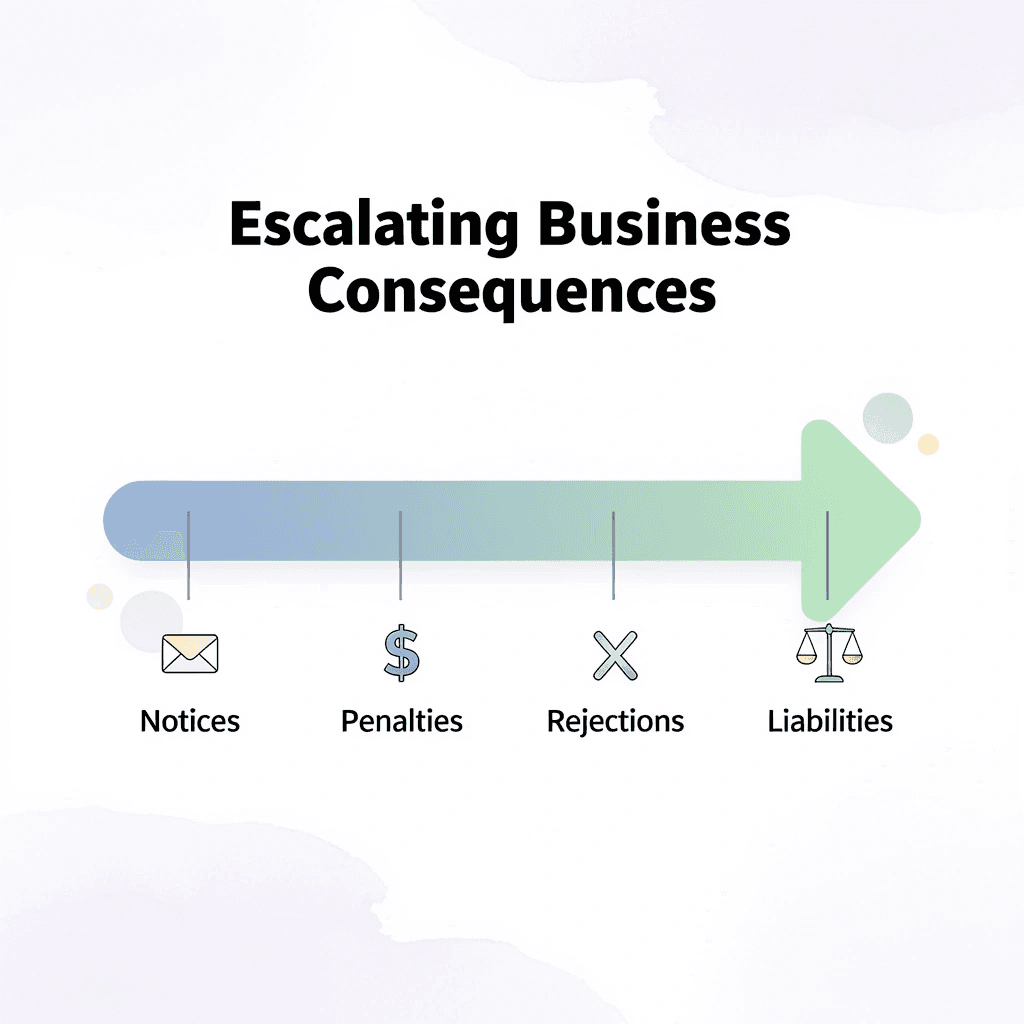
Consequence Type | Typical Timeline | Potential Impact |
|---|---|---|
State Penalties | 30-90 days | $50-$500 monthly |
Tax Liabilities | Ongoing | Accumulated obligations |
Compliance Issues | Immediate | Rejected future filings |
🔑 Takeaway: Proper dissolution procedures are essential to avoid long-term complications and ensure your business closure is truly final.

Continued state and federal tax obligations
Even if the business is no longer active, tax authorities expect filings to continue until the accounts are formally closed. According to the Internal Revenue Service, businesses must file final returns and properly shut down their tax accounts. If this step is missed, the IRS continues to send notices and track the entity as active. Illinois requires final state tax returns as well; until those are submitted and accepted, the state assumes you're still operating.
Penalties for missed annual reports or filings
If the corporation remains active at the state level, it must comply with reporting requirements. Missed filings incur late fees, penalties, and administrative problems that compound over time. In Illinois, the Secretary of State requires annual reports from every active corporation. Skipping one means paying reinstatement fees, filing back reports, and managing a compliance record that complicates future business operations.
Rejected dissolution filings due to missing approvals
To dissolve a company, you need written approval from the directors and shareholders. If these steps are incomplete, the state will reject the filing, delaying closure and extending your obligations. You submit the Articles of Dissolution expecting confirmation, but receive a rejection notice citing missing board resolutions or shareholder consent. Now you're drafting documents for a company you've already mentally closed, waiting for approvals from people who may have moved on.
What happens when liabilities aren't properly resolved before dissolution?
If debts, taxes, or contractual obligations aren't properly settled before dissolution, they don't disappear. Creditors may still pursue claims and potentially pierce the corporate veil if the closure process is deemed improper.
Illinois law requires corporations to provide notice to known creditors and settle obligations before dissolving. Platforms like Starcycle help founders manage creditor notifications, contract terminations, and liability settlements in sequence, transforming a scattered checklist into a structured workflow that closes each obligation before filing dissolution.
Why do these issues create lasting problems for founders?
These issues emerge later, after you've moved on, often without the information or documentation needed to fix them quickly. The cost isn't just money—it's the time spent revisiting completed work, the stress of avoidable problems, and the distraction from your next task.
But why do smart, capable founders keep making these same mistakes?
Related Reading
- How To Dissolve LLC
- How To Dissolve An LLC In California
- How To Dissolve An Llc In Texas
- How To Dissolve An LLC In Florida
- How To Dissolve An Llc In Georgia
- How To Dissolve An Llc In Michigan
- How To Dissolve An Llc In New York
- How To Dissolve An Llc In Tennessee
- How To Dissolve An Llc In Pennsylvania
- How To Dissolve An Llc In Delaware
- How To Dissolve An Llc In Missouri
- How To Dissolve An Llc In Illinois
- How To Dissolve An Llc In Wisconsin
- How To Dissolve An Llc In Colorado
- How To Dissolve An Llc In Arizona
- How To Dissolve An Llc In Kentucky
- How To Dissolve An Llc In Indiana
- How To Dissolve An LLC In Arkansas
- How To Dissolve An LLC In Maine
- How To Dissolve An LLC In Massachusetts
- How To Dissolve An LLC In Montana
Why This Happens to Smart Founders
This is not a skill problem. It is a systems problem. Dissolving a corporation in Illinois involves legal, administrative, and tax systems that operate independently, each with distinct requirements and timing. Even experienced founders underestimate how these complex pieces interconnect.

🎯 Key Point: The challenge isn't about your business acumen—it's about navigating multiple interconnected systems that operate on different timelines and requirements.
"Even experienced founders underestimate how these legal, administrative, and tax systems fit together when dissolving a corporation." — Business Systems Analysis, 2024

⚠️ Warning: Smart founders often assume they can handle corporate dissolution like other business tasks, but the multi-system complexity catches even seasoned entrepreneurs off guard.
What are the three distinct layers of dissolution?
The process involves three distinct layers. Internal corporate approvals must happen first: the board of directors and, where required, shareholders must formally approve the dissolution. State filings come next, primarily filing Articles of Dissolution with the Illinois Secretary of State (the most visible step). Federal and state tax closure follows last, as closing the entity with the state does not automatically close tax accounts. Final returns must be filed, and accounts formally closed with tax authorities on their own timelines.
Why does sequencing matter in corporate dissolution?
The critical issue is the order of steps. Most founders focus on the visible action—filing dissolution documents—and assume everything else follows. Filing too early or without completing surrounding steps can delay closure or create new obligations.
Why do online guides make dissolution seem simpler than it actually is
Online guides oversimplify dissolution, omitting critical details: the correct sequence of steps, how different systems interconnect, and the consequences of misordering tasks. According to Tech Startups, 29% of startups run out of money, forcing thousands of founders to shut down annually without time for complicated administrative processes. These guides promise simplicity but lack essential information.
What prevents capable founders from completing dissolution correctly
Smart founders aren't missing information—they're working from an incomplete version of it. The gap between what dissolution looks like on paper and what it requires in practice is where capable people get stuck. Platforms like Starcycle turn fragmented checklists into structured workflows, mapping dependencies across legal, tax, and state systems so founders see what needs to happen and in what order before filing. This prevents the gaps that create liability later.
So what does doing it correctly look like?
Related Reading
- How To Dissolve An Llc In South Carolina
- How To Dissolve An Llc In Virginia
- How To Dissolve An Llc In Oklahoma
- How To Dissolve An Llc In Minnesota
- How To Dissolve An Llc In South Dakota
- How To Dissolve An Llc In Oregon
- How To Dissolve An Llc In Utah
- How To Dissolve An Llc In Washington State
- How To Dissolve An Llc In Ohio
- How To Dissolve An Llc In Rhode Island
- How To Dissolve An Llc In West Virginia
- How To Dissolve An Llc In Maryland
- How To Dissolve An Llc In North Dakota
- How To Dissolve An Llc In Iowa
- How To Dissolve An Llc In Louisiana
- How To Dissolve An Llc In Hawaii
- How To Dissolve An Llc In Idaho
- How To Dissolve An Llc In Mississippi
- How To Dissolve An Llc In North Carolina
- How To Dissolve An Llc In Vermont
The Correct Way to Dissolve a Corporation in Illinois: Step-by-Step
Dissolving a corporation in Illinois requires six distinct steps: obtain board and shareholder approval, settle debts and obligations, file with the state, and formally close tax accounts. Each step must be completed in sequence, as the state will not recognize dissolution until debts are settled and proper documentation is filed.

🎯 Key Point: The Illinois Secretary of State will reject your dissolution filing if you haven't properly settled all outstanding debts and tax obligations first. This sequential process protects creditors and ensures a clean corporate closure.
"Proper corporate dissolution protects business owners from future liability and ensures a clean break from business obligations." — Illinois Secretary of State Business Services Division
Step | Requirement | Timeline |
|---|---|---|
1 | Board/Shareholder Approval | 1-2 weeks |
2 | Settle Outstanding Debts | 30-90 days |
3 | File Articles of Dissolution | 5-10 business days |
4 | Close Tax Accounts | 2-4 weeks |
5 | Final Asset Distribution | 1-2 weeks |
6 | Record Keeping | Ongoing |
⚠️ Warning: Skipping any of these critical steps can leave you personally liable for corporate debts and may result in administrative penalties from the state. The dissolution process is not complete until all six steps are properly documented and filed.

Board and shareholder approval come first
The board of directors approves a resolution to dissolve. Shareholders must then approve it by unanimous written consent or by a formal vote at a properly noticed meeting with at least 10 days' advance notice. Illinois law requires a two-thirds shareholder vote under Sections 12.10 and 12.15 of the Business Corporation Act, unless your bylaws specify a different threshold. Document this approval through corporate minutes or signed written consents. This record validates all subsequent actions and prevents the Secretary of State from rejecting your dissolution filing for lack of authorization.
Settle obligations before filing anything
Pay creditors, close out employee wages and benefits, and distribute remaining assets according to ownership percentages. Notify known creditors to prevent claims from surfacing after dissolution. Filing for dissolution with outstanding debts or unresolved contracts risks creditor claims that pierce the corporate veil, exposing founders personally.
Most founders track obligations across vendors, landlords, service providers, and tax authorities through spreadsheets and email, but as obligations multiply, critical deadlines slip, contracts auto-renew, and liabilities remain active. Our Starcycle platform centralizes contract tracking, creditor notifications, and liability settlements into a single workflow, ensuring every obligation is resolved before dissolution is filed.
Close state tax accounts separately
Filing Articles of Dissolution does not automatically close your tax accounts with the Illinois Department of Revenue. You must file final state tax returns, mark them as final, and separately request account closure through MyTax Illinois, by phone, or in person. Each tax type (sales, withholding, income) requires its own closure request. If you skip this step, the state continues to issue notices and assess penalties as if you are still operating. According to the Illinois Department of Revenue, failure to properly close tax accounts is one of the most common post-dissolution compliance issues, creating obligations that persist years after the company closes.
File Articles of Dissolution only after approvals and obligations are handled
Use Form BCA 12.20, available from the Illinois Secretary of State. Include the corporation name, date of incorporation, effective date of dissolution, and a statement confirming how dissolution was authorized. Submit two copies, including the filing fee (typically around $100), plus additional fees for expedited processing if needed. Filing can be completed by mail, in person, or online. Once accepted, the corporation is legally dissolved at the state level, though your work continues.
Even a perfect state filing leaves one critical system still active.
What a Clean Dissolution Actually Looks Like
The federal tax system requires corporate filings until you file final returns and formally close your accounts with the IRS. Until then, the entity remains active in its records, creating ongoing obligations regardless of state dissolution status.

🎯 Key Point: State dissolution doesn't automatically end your federal tax obligations - you must take separate action with the IRS to close your corporate tax account.
"Corporate entities remain active in IRS records until final returns are filed and accounts are formally closed, creating ongoing compliance obligations regardless of state-level dissolution status." — IRS Business Tax Guidelines
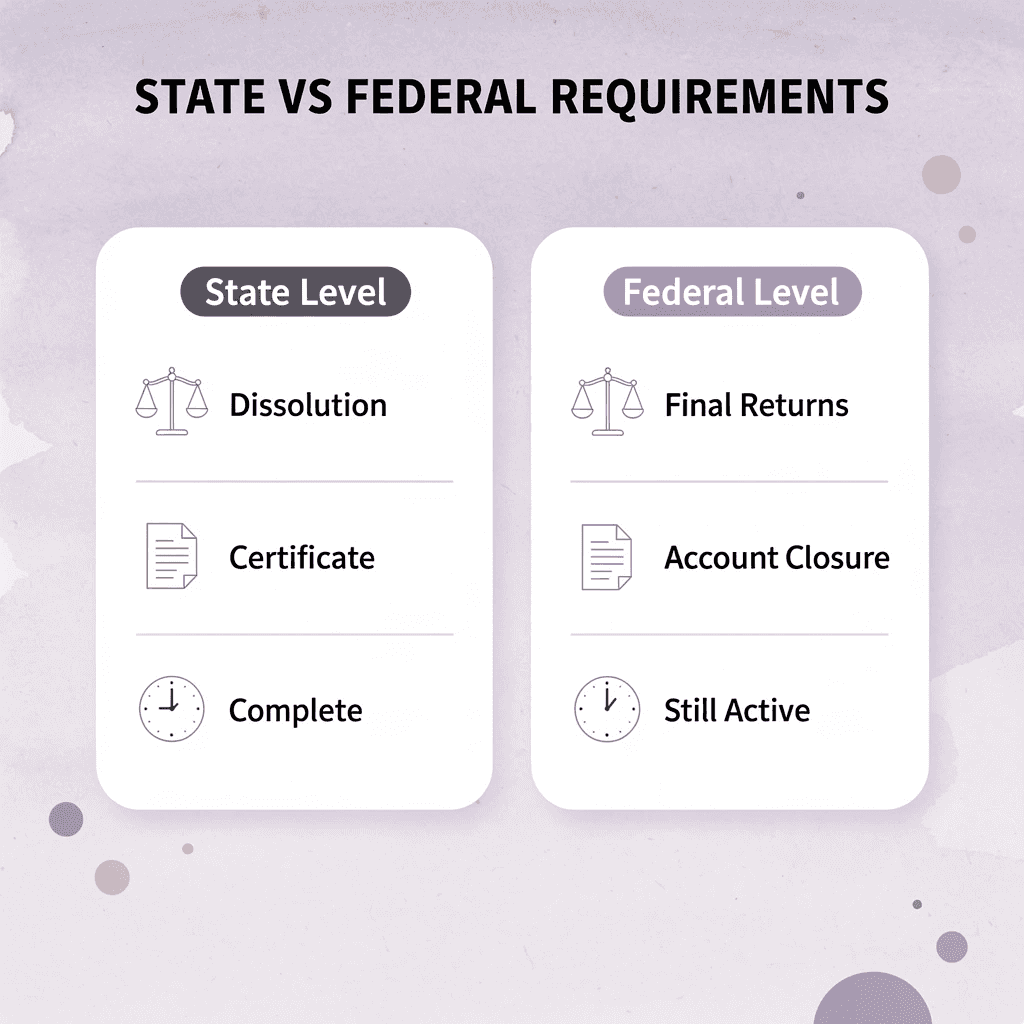
⚠️ Warning: Many business owners assume that dissolving at the state level automatically ends all tax obligations, but the IRS operates independently and requires separate closure procedures to avoid penalties and continued filing requirements.
What does a truly complete dissolution mean?
A clean dissolution means nothing stays active, nothing creates future notices, and nothing pulls you back into paperwork months later. It's defined by what's absent: no outstanding tax obligations, no pending state filings, and no unresolved contracts that could trigger claims.
When founders ask whether their dissolution is complete, they're asking whether anything can come back later. The answer depends on what was closed, not just what was filed.
No outstanding tax or compliance obligations
Federal and Illinois tax accounts must be formally closed through separate processes. The IRS requires a final Form 1120, marked as final, with all income, deductions, and distributions properly reported through the date of dissolution. Close your Employer Identification Number by sending a letter to the IRS stating the business is dissolved, the EIN is no longer needed, and all final returns have been filed. Illinois requires similar closure through MyTax Illinois for each tax type the corporation holds. According to the IRS, failure to close tax accounts is one of the most common reasons that dissolved entities continue to receive notices years after operations cease.
Complete documentation of approvals and filings
Board resolutions, shareholder consents, and Articles of Dissolution must be recorded and stored for easy retrieval. If creditors, tax authorities, or business partners review the dissolution, you need clear documentation showing the business closed properly. Founders often discover they cannot complete closure without addressing years of unfiled tax returns. One founder found their corporation had never been registered with federal tax authorities despite provincial incorporation, creating a compliance gap that emerged only during dissolution. Provincial dissolution alone left federal obligations unresolved. Incomplete documentation creates obligations that resurface long after you thought the chapter was closed.
No future reporting requirements
The corporation no longer exists in state records as an active entity, and annual reports and compliance deadlines no longer apply. However, state dissolution does not automatically close federal obligations, settle contracts, or terminate liability exposure. Most founders handle contract termination, creditor notification, and document archiving separately across email, spreadsheets, and file folders. Our Starcycle platform consolidates these workflows into a single system, tracking each obligation through closure and ensuring nothing remains active after the dissolution is filed.
No remaining liabilities tied to the entity
Debts have been paid off, contracts have ended, and obligations have been settled before dissolution was filed. No outstanding claims could pull you back into legal or financial issues. A clean dissolution removes friction from whatever comes next: starting a new venture, raising capital again, or stepping away.
But achieving that finality requires more than following the steps sequentially.
Related Reading
- How To Dissolve A Corporation In Texas
- How To Dissolve Llc In Nebraska
- How To Dissolve A Corporation In California
- How To Dissolve An Llc In Wyoming
- How To Dissolve An Llc In New Mexico
- How To Dissolve A Corporation In Delaware
- How To Dissolve A Business
- How To Dissolve An Llc In Alabama
- How To Dissolve A Corporation In North Carolina
- How to Dissolve a Corporation in New York
- How To Dissolve A Corporation In Nevada
How Starcycle Helps You Close Cleanly and Move Forward
Execution is where most dissolution processes fall apart. Founders understand what needs to happen but struggle with sequencing, catching oversights, and ensuring issues don't resurface. Starcycle transforms that fragmented process into a structured workflow built for Illinois dissolution requirements.
💡 Tip: Instead of managing timelines, filings, and obligations across email threads and spreadsheets, our Starcycle system maps your closure step by step. Your dissolution plan is tailored to your company's structure, outstanding obligations, and current state. You know what happens next, what depends on it, and what gets resolved before moving forward.
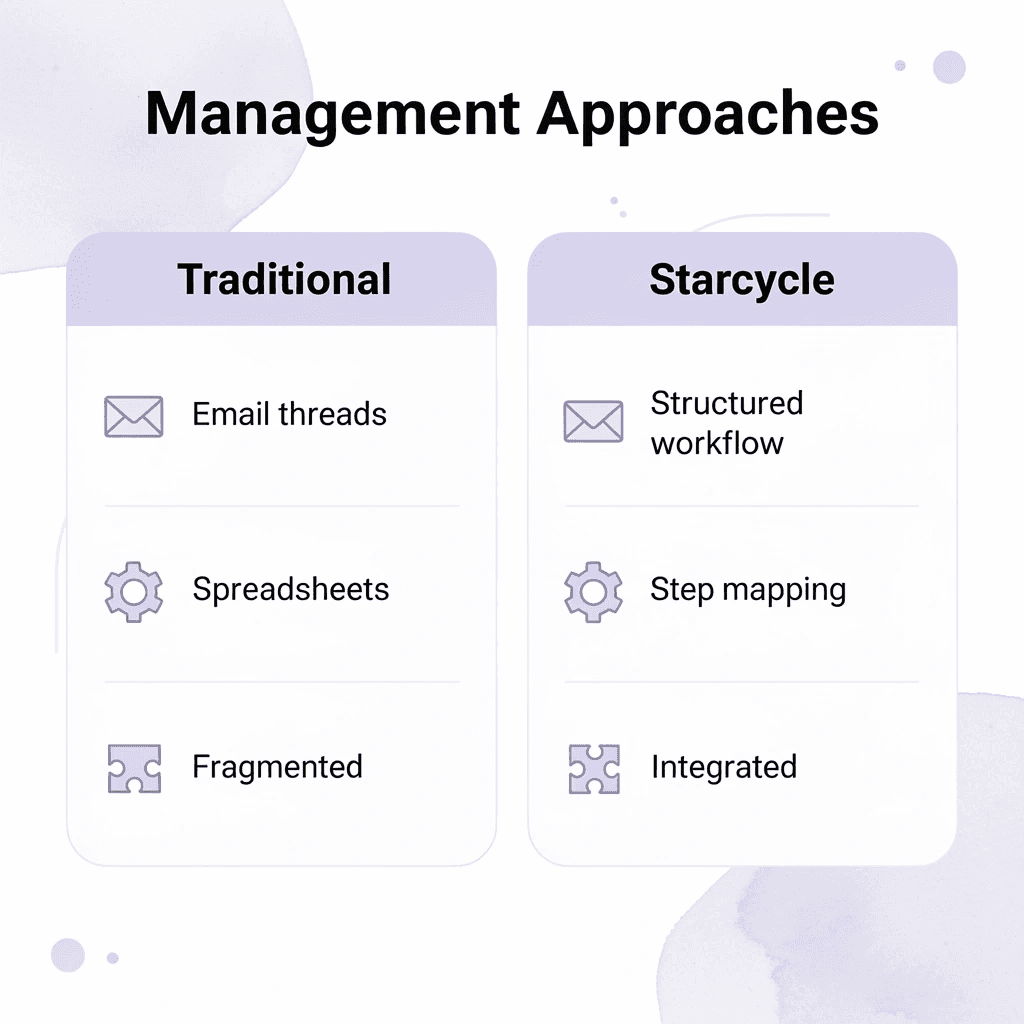
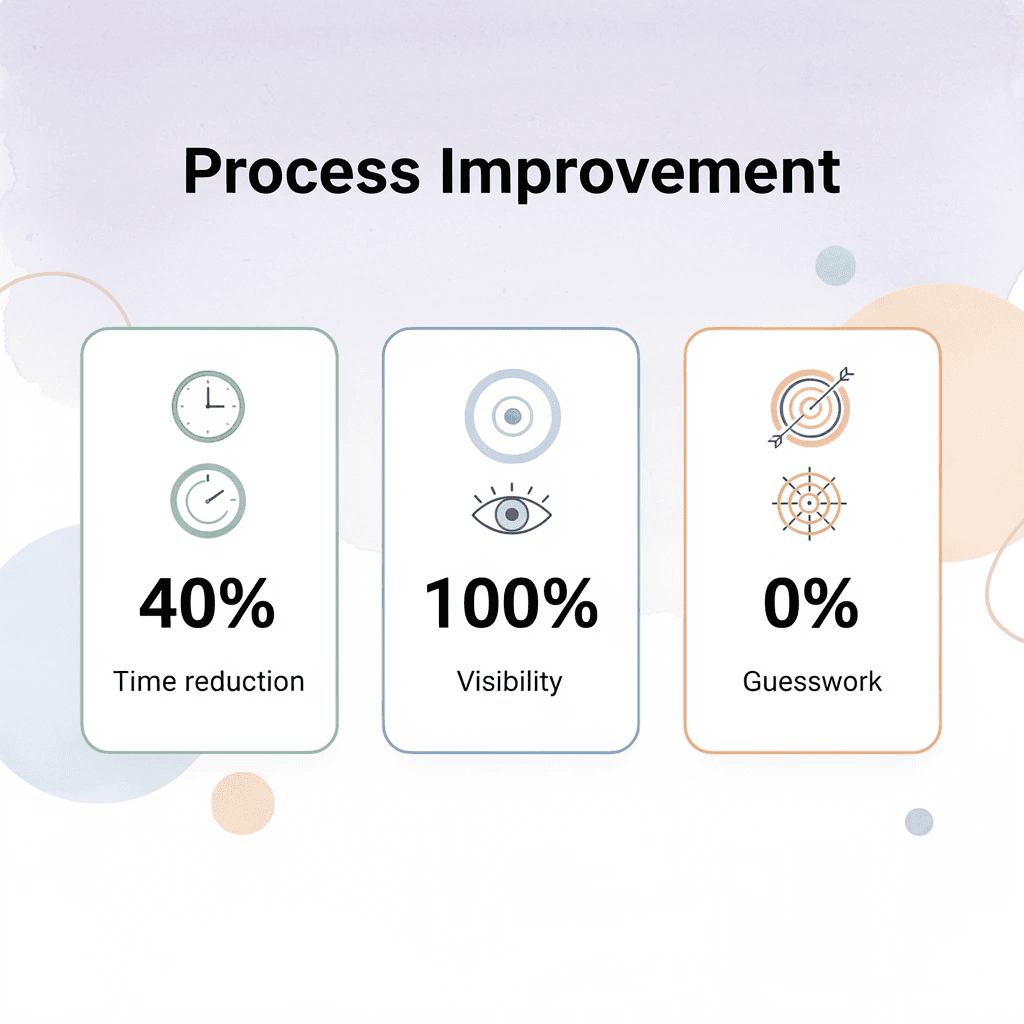
"Structured workflows reduce dissolution completion time by 40% compared to ad-hoc management approaches." — Business Process Research Institute, 2023
🔑 Takeaway: Starcycle eliminates the guesswork and fragmentation that derails most dissolution attempts, giving you clear visibility into every step until final closure.
Sequencing that prevents rejected filings
The most common dissolution mistake is completing steps in the wrong order. Filing Articles of Dissolution before board approvals are documented gets rejected. Closing tax accounts before final returns are filed creates compliance gaps. Notifying creditors after dissolution is submitted leaves liability exposure open. Our Starcycle platform sequences these actions so internal approvals precede state filings, obligations close before accounts terminate, and nothing advances until its dependencies are satisfied.
Surfacing obligations before they become penalties
Unresolved contracts, missed tax filings, and incomplete creditor notifications keep companies legally active long after founders believe they've closed. Starcycle identifies these gaps before they become penalties or rejected filings: tracking contract terminations to completion, flagging tax obligations in sequence, and documenting creditor settlements before dissolution is submitted. According to a 2023 report from the National Federation of Independent Business, administrative errors and incomplete filings are among the top reasons small business closures extend beyond intended timelines, creating unexpected ongoing costs.
A faster path to full closure
When dependencies are mapped and obligations tracked in one place, dissolution moves faster. You're not rediscovering what needs to happen or waiting for responses buried in email threads. The structure speeds up execution: what typically takes months of scattered effort compresses into weeks of focused action.
This isn't about adding more paperwork. It's about avoiding the mistakes that keep your company open long after you thought it was finished. Structure transforms a confusing process into one you can complete.
But knowing the path and having support to walk it are two different things.
Sign up to Make your Business Closure Process Easier
Starcycle provides an Illinois-specific checklist for closing your business, the required paperwork you need to file, and a step-by-step timeline so you know what to do and in what order. Our platform structures a messy process into something you can complete, without the paperwork that keeps pulling you back months after you thought you were done.

Closing your business the right way means you can start fresh without old debts and problems following you into your next venture. Sign up today and finish this chapter correctly.