
How to Dissolve a Corporation in Alabama (Step-by-Step Process)
How to dissolve a corporation in Alabama with Starcycle's step-by-step guide. Get forms, fees, and deadlines to close your business legally.


Closing a business in Alabama requires more than simply ceasing operations. Properly dissolving a corporation protects owners from ongoing tax liabilities, legal complications, and filing requirements that continue even after business activities end. The process involves filing articles of dissolution with the Secretary of State, settling outstanding debts, notifying creditors, and completing final tax returns with both state and federal agencies. Understanding these requirements helps business owners avoid costly mistakes that could create problems long after dissolution.
The dissolution process can feel overwhelming when navigating paperwork, compliance requirements, and state regulations independently. Each step must be completed correctly to ensure all legal obligations are met and the business entity is properly terminated. Professional guidance helps streamline this complex process and clarifies requirements that vary by business structure and circumstances, making business closure more manageable for business owners.
Table of Contents
- The Hidden Complexity of Closing a Corporation in Alabama
- Why Most Founders Get Dissolution Wrong
- What Proper Corporate Dissolution in Alabama Actually Requires
- Step-by-Step Process on How to Dissolve a Corporation in Alabama
- The Step Most Founders Skip (And Regret Later)
- How Starcycle Helps You Close Your Corporation with Clarity
- Sign up to Make your Business Closure Process Easier
Summary
- Alabama's corporate dissolution process requires coordination across multiple independent agencies that don't communicate automatically. The Alabama Secretary of State handles Articles of Dissolution, but the Alabama Department of Revenue must clear tax accounts separately through final returns and formal account closure. These systems operate independently, which means filing dissolution paperwork without completing tax clearance leaves the corporation legally active. According to Alabama's corporate compliance guidelines (2024), corporations that fail to file annual reports face penalties of $100 plus $10 for each month of delay, and those obligations continue until dissolution is legally complete across all agencies.
- Most corporations remain legally active long after operations stop because founders confuse inactivity with dissolution. When operations end but formal dissolution doesn't happen, annual reports stay due, and franchise taxes continue accruing. Research shows that 21.5% of startups fail in the first year, yet many of those entities remain legally registered for months or years afterward because founders never filed dissolution paperwork. The state tracks registration status, not revenue activity, so dormant corporations continue triggering compliance requirements until someone explicitly closes them through the required legal process.
- Tax account closure is the most commonly skipped dissolution step, and the consequences can appear months after founders believe everything is finished. A U.S. Bank study found that 82% of businesses fail due to cash flow problems, yet many of those entities remain legally active because founders never formally closed their tax obligations with state and federal agencies. The Alabama Department of Revenue expects final filings and full payment, even without requiring a formal tax clearance certificate. Post-dissolution liabilities follow the same pattern identified in a Mercury survey of 1,500 early-stage founders, where 66% reported expenses higher than expected, with costs arriving long after shutdown budgets were set.
- Creditor notification creates a legal claims window that protects corporations from future liability, but most founders skip this optional step. Alabama law allows corporations to notify known creditors directly and publish notice for unknown creditors, establishing a formal claims period. Creditors who don't file claims within that window lose their ability to pursue the dissolved corporation later. Without formal notice, founders rely on statutes of limitations that can run longer than expected, leaving the door open for claims to surface years after dissolution, when records are gone, and the business feels like ancient history.
- Director and shareholder approval must happen before any state filings, creating a governance bottleneck that delays dissolution before the formal process even starts. The board of directors votes to approve dissolution and documents the decision in corporate minutes, then shareholders vote according to thresholds set in the bylaws or Alabama's statutory default rules under Title 10A. This documented approval proves dissolution reflects ownership consent rather than unilateral abandonment. Without it, the Secretary of State rejects Articles of Dissolution filings, stalling the entire process before founders reach the first agency submission.
- Professional dissolution services start at $399, according to Starcycle's 2025 business shutdown analysis, representing a fraction of what founders pay in penalties and legal fees when they piece together the process independently and miss critical steps. Business closure services help corporations complete the coordinated sequence across disconnected agencies, compressing what typically takes months of reactive problem-solving into a structured process that addresses tax clearance, creditor notification, and state filings in the correct order before gaps create delays.
The Hidden Complexity of Closing a Corporation in Alabama
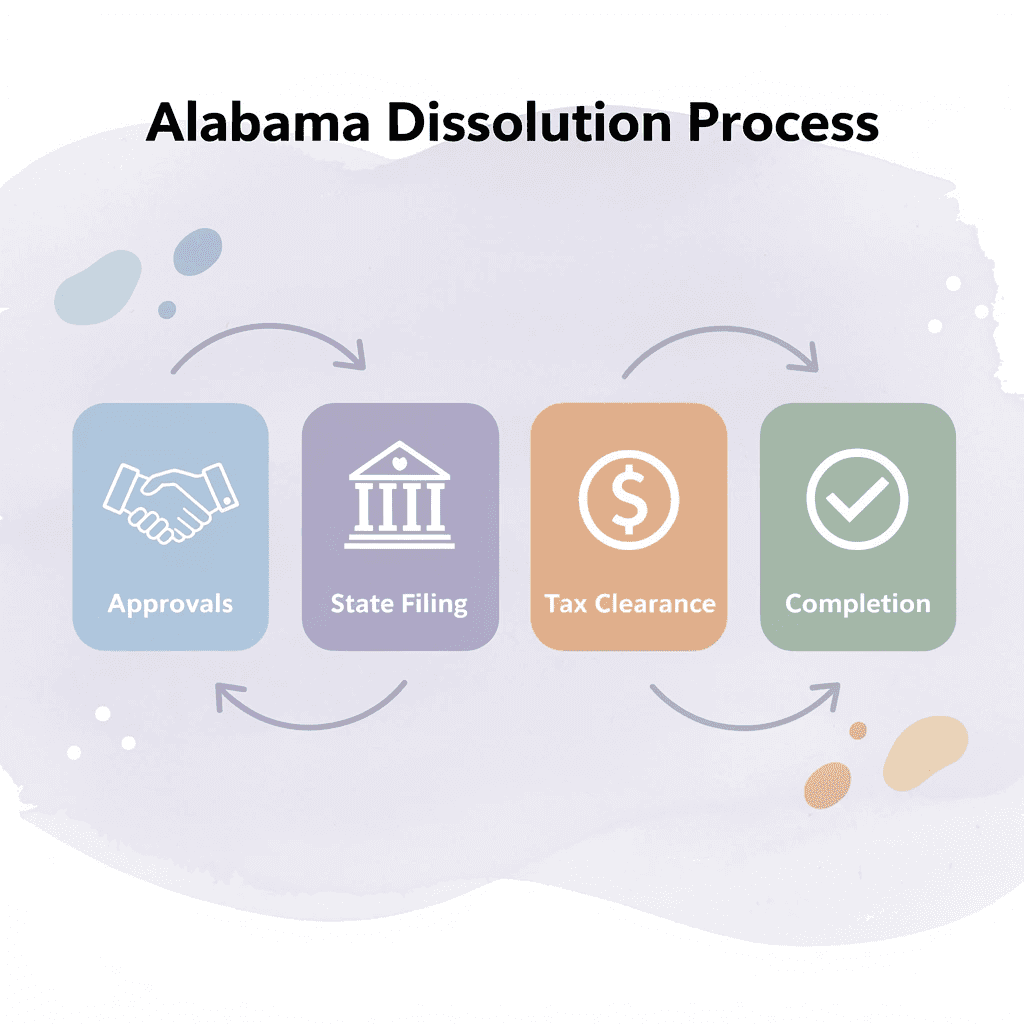
Dissolving a corporation in Alabama requires director and shareholder approvals, formal filings with the Alabama Secretary of State, and tax clearance from the Alabama Department of Revenue. Under the Alabama Business Corporation Law of 2019 (Code of Alabama Title 10A, Chapter 2A), dissolution is a multi-step wind-down process rather than a single filing.
🎯 Key Point: Many business owners underestimate the complexity of corporate dissolution in Alabama, assuming it's just one form when it actually involves multiple agencies and approval stages.
"Dissolution is a multi-step wind-down process, not a single filing." — Alabama Business Corporation Law of 2019, Code of Alabama Title 10A, Chapter 2A
⚠️ Warning: Skipping any required step in the dissolution process can leave your corporation legally active, potentially exposing you to ongoing tax obligations and compliance requirements even after you think the business is closed.
Why does the process span multiple agencies
The Alabama Secretary of State handles your Articles of Dissolution, but that filing alone doesn't close your business. The Alabama Department of Revenue must clear your tax accounts separately through final returns, outstanding liability resolution, and formal account-closure requests. These systems don't communicate automatically. If you file dissolution paperwork without tax clearance, the state still expects annual reports and franchise tax payments. According to Alabama's corporate compliance guidelines (2024), corporations that fail to file annual reports face penalties of $100 plus $10 for each month of delay, and those obligations continue until dissolution is legally complete.
What happens when steps get skipped
When founders assume dissolution is complete after submitting paperwork, they often discover months later that the corporation remains active. Tax notices continue arriving, annual report deadlines pass, and penalties accumulate quietly. Incomplete dissolution leaves the corporate entity legally alive, allowing creditors to pursue claims and directors to face liability for corporate obligations. Dissolution exists to settle debts and formally notify creditors, not to bypass them. If you close operations without following the legal process, you've stopped doing business but remain a corporation. Most founders piece together dissolution instructions from state websites, legal forums, and generic guides, only to encounter coordination problems as filings require corrections, tax accounts remain open, and missed steps surface weeks later. What seems manageable becomes months of backtracking and resubmissions. Our Starcycle business closure service provides structured guidance through each agency requirement, compressing this process into a clear sequence with built-in compliance checks.
The timeline problem nobody mentions
Alabama doesn't publish a standard dissolution timeline because the duration depends on completing each layer: director and shareholder approvals (days to weeks), Secretary of State processing (two to three weeks), and tax clearance (varies by filing history). If any step requires corrections, that phase restarts. The process isn't slow due to state inefficiency; rather, each agency works independently, and founders often lack clarity on the correct sequence. Most founders don't realize they've made a mistake until the state sends a notice months after they believed everything was complete.
Why Most Founders Get Dissolution Wrong
The mistake isn't ignorance—it's assumption. Founders believe that stopping operations ends the legal entity. They close the bank account, cancel the lease, and let the website expire, expecting the corporation to fade away. But Alabama law doesn't recognize inactivity as dissolution. The corporation remains legally alive, accumulating obligations, until you formally close it through the state's required process.

⚠️ Warning: Simply ceasing business operations does not dissolve your corporation. The legal entity continues to exist and can accumulate penalties, fees, and tax obligations even when dormant.
"A corporation remains legally alive and subject to ongoing obligations until formal dissolution is completed through the state's required process." — Alabama Secretary of State Guidelines

🔑 Takeaway: Formal dissolution is the only way to properly terminate your corporation's legal existence and protect yourself from future liabilities.
What compliance requirements continue when operations stop?
When operations stop but dissolution doesn't happen, the corporation remains registered with the Alabama Secretary of State, triggering ongoing compliance requirements. Annual reports are still due, and franchise taxes continue to accumulate. According to Alabama's corporate compliance guidelines, 21.5% of startups fail in the first year, yet many remain legally active for months or years because founders never file dissolution paperwork. The state tracks registration status, not revenue, so compliance obligations continue.
How do tax obligations persist after business closure?
Tax systems work the same way: the Alabama Department of Revenue and the IRS keep corporate accounts open until you officially close them. If you stop filing returns without requesting account closure, agencies assume you're behind on payments rather than dissolved. Notices arrive. Penalties accumulate. The corporation is dormant in your mind but remains active in state and federal databases.
Why do business owners skip the dissolution process?
Closing your business wasn't part of the plan when you started it. When you need to close, you think about what comes next—another business, a job, a change in direction—rather than the administrative cleanup required to properly shut down. The emotional toll of closing can make you want to leave quickly rather than spend weeks filing paperwork with different agencies.
What makes the dissolution process so fragmented?
The fragmentation makes it worse. Legal dissolution occurs through the Secretary of State, tax clearance through the Department of Revenue, and final employment filings with various offices. Each agency has separate forms, timelines, and requirements. Founders often miss steps because they don't know all the steps exist. Our Starcycle platform provides structured checklists that map each agency requirement in sequence, reducing what typically takes founders months of coordination into a clear, step-by-step process with built-in compliance verification.
The consequences show up later
Operations stop. Founders move on. Then six months later, a penalty notice arrives for an unfiled annual report, a tax lien appears because final returns were never submitted, or a creditor surfaces with a claim against the still-active corporation. Incomplete dissolution leaves the corporate veil intact: personal liability protections remain, but so do corporate obligations. You can't selectively keep the protections while ignoring the responsibilities. The real complexity isn't in any single filing.
Related Reading
- How To Dissolve LLC
- How To Dissolve An LLC In California
- How To Dissolve An Llc In Texas
- How To Dissolve An LLC In Florida
- How To Dissolve An Llc In Georgia
- How To Dissolve An Llc In Michigan
- How To Dissolve An Llc In New York
- How To Dissolve An Llc In Tennessee
- How To Dissolve An Llc In Pennsylvania
- How To Dissolve An Llc In Delaware
- How To Dissolve An Llc In Missouri
- How To Dissolve An Llc In Illinois
- How To Dissolve An Llc In Wisconsin
- How To Dissolve An Llc In Colorado
- How To Dissolve An Llc In Arizona
- How To Dissolve An Llc In Kentucky
- How To Dissolve An Llc In Indiana
- How To Dissolve An LLC In Arkansas
- How To Dissolve An LLC In Maine
- How To Dissolve An LLC In Massachusetts
- How To Dissolve An LLC In Montana
What Proper Corporate Dissolution in Alabama Actually Requires
Dissolution works like closing a house, not flipping a switch. You can't lock the door and assume the utilities, mortgage, and tax assessments stop on their own. Each system operates independently and requires its own formal closure. Alabama's process mirrors that structure. You're filing multiple documents and systematically shutting down every legal, financial, and administrative channel the corporation opened when first formed.
🎯 Key Point: Corporate dissolution requires multiple coordinated steps across different systems—there's no single "off switch" for your business entity.
"Proper dissolution protects business owners from ongoing liability and ensures clean separation from corporate obligations." — Alabama Secretary of State Business Division
⚠️ Warning: Skipping any part of the formal dissolution process can leave you personally liable for corporate debts and ongoing tax obligations even after the business closes.

Internal approval comes first
Before filing with the state, dissolution must be approved through your governance structure. The board of directors votes to approve dissolution, then shareholders vote according to thresholds in your bylaws or Alabama's statutory defaults under Title 10A. This ensures dissolution reflects the will of the owners, not a single founder's decision. Without documented approval, the Secretary of State will not accept your filing.
The formal filing requires tax clearance
Once internal approval is documented, file Articles of Dissolution with the Alabama Secretary of State. Alabama requires a Certificate of Clearance from the Alabama Department of Revenue, confirming all state tax obligations are satisfied: final returns filed, outstanding balances paid, and accounts closed. Without tax clearance, the Secretary of State won't finalize your dissolution. Since the two agencies don't coordinate automatically, you must bridge the gap between them.
Why isn't filing for dissolution enough to clear your debts?
Filing for dissolution doesn't erase liabilities. It initiates a formal wind-down process in which you must pay all debts and obligations before distributing the remaining assets to the owners. Creditors are paid first, contracts are resolved or transferred, and outstanding invoices, leases, and vendor agreements are settled. According to Alabama's corporate wind-down requirements (2024), dissolution is not a shield against creditors but a structured process for dealing with them. Distributing assets to shareholders while debts remain unpaid risks piercing the corporate veil and exposing directors to personal liability.
How can you avoid common delays and gaps in dissolution?
Most founders assume they can handle closing a business by following state instructions and checking boxes. That works until tax clearance gets delayed due to a prior return error, or a creditor surfaces after you thought everything was settled. Business closure platforms map out the entire sequence upfront, flagging dependencies between steps (such as tax clearance before state filing) and tracking which agencies require separate submissions, compressing what typically takes months into a coordinated process with fewer gaps.
Notifying creditors prevents future claims
Alabama law allows corporations to notify known creditors directly and publish a notice for unknown creditors, establishing a claims period. Creditors who don't file claims within that window lose their ability to pursue the dissolved corporation later. Skipping this step leaves the door open for claims to surface years after dissolution, when records are gone. Formal creditor notification creates a clean break; without it, you rely on the statute of limitations, which can stretch longer than most founders expect. But even after the state accepts your dissolution filing, the process isn't finished.
Related Reading
- How To Dissolve An Llc In South Carolina
- How To Dissolve An Llc In Virginia
- How To Dissolve An Llc In Oklahoma
- How To Dissolve An Llc In Minnesota
- How To Dissolve An Llc In South Dakota
- How To Dissolve An Llc In Oregon
- How To Dissolve An Llc In Utah
- How To Dissolve An Llc In Washington State
- How To Dissolve An Llc In Ohio
- How To Dissolve An Llc In Rhode Island
- How To Dissolve An Llc In West Virginia
- How To Dissolve An Llc In Maryland
- How To Dissolve An Llc In North Dakota
- How To Dissolve An Llc In Iowa
- How To Dissolve An Llc In Louisiana
- How To Dissolve An Llc In Hawaii
- How To Dissolve An Llc In Idaho
- How To Dissolve An Llc In Mississippi
- How To Dissolve An Llc In North Carolina
- How To Dissolve An Llc In Vermont
Step-by-Step Process on How to Dissolve a Corporation in Alabama
Dissolution follows a fixed sequence: authorize internally, wind down financially, close tax accounts, file with the Secretary of State, and dismantle remaining assets. Each step depends on the one before it, and skipping any step creates gaps that surface later as penalties, unresolved liabilities, or continued corporate obligations.
🎯 Key Point: The dissolution process is sequential - completing steps out of order or skipping requirements can result in ongoing legal obligations and financial penalties even after you think the corporation is closed.
"Each step depends on the one before it, and skipping any piece creates gaps that surface later as penalties, unresolved liabilities, or continued corporate obligations." — Alabama Corporate Dissolution Requirements

Dissolution Step | Key Requirement | Consequence of Skipping |
|---|---|---|
Internal Authorization | Board/shareholder approval | Invalid dissolution process |
Financial Wind Down | Pay debts, distribute assets | Personal liability for directors |
Close Tax Accounts | Final returns, clearance certificates | Ongoing tax obligations |
Secretary of State Filing | Articles of Dissolution | Corporation remains active |
Asset Dismantling | Transfer/liquidate remaining property | Unclaimed property issues |
⚠️ Warning: Many business owners assume filing Articles of Dissolution alone completes the process, but unfinished steps can leave you personally liable for corporate debts and ongoing tax obligations years later.

Authorize the Dissolution
The board votes first, adopting a dissolution resolution and recording it in corporate minutes with the intended effective date. If no board exists, incorporators can approve instead. Shareholders vote next if your bylaws require it, typically by majority or supermajority. Documented approval is essential: without it, the Secretary of State rejects your filing. This proves dissolution reflects ownership consent, not unilateral abandonment.
Wind Up Operations
Take care of what your business owes before filing with the state. This includes selling assets, ending contracts, canceling licenses and DBAs, paying employees and vendors, and notifying the IRS and Alabama Department of Revenue. Pay off debts first. If you distribute assets to shareholders while creditors remain unpaid, you could be personally liable for those debts.
File Final Tax Returns
Mark federal corporate income and payroll tax returns as final. Ensure all Alabama Department of Revenue filings are current and pay any outstanding liabilities. Alabama doesn't issue a formal tax clearance certificate before dissolution, but unpaid or unfiled taxes create liability that survives corporate closure. The state assumes your tax accounts remain open until you explicitly close them, and silence is interpreted as delinquency rather than dissolution. Business closure platforms like Starcycle streamline coordination by mapping tax-closure steps alongside state filings, flagging dependencies before delays occur, and tracking which agencies require separate submissions, so nothing is missed in the handoff between systems.
Prepare and File Articles of Dissolution
Fill out Alabama's official Domestic Business Corporation Articles of Dissolution form, including the corporation's legal name, formation date, effective dissolution date, and authorization confirmation. Send two copies with a self-addressed stamped envelope and a $100 filing fee to the Alabama Secretary of State, P.O. Box 5616, Montgomery, AL 36103. Processing takes two to three weeks, and the dissolution becomes effective on the filing date. You have 120 days to rescind the dissolution; after that, it becomes permanent.
Close Accounts and Retain Records
Close down business bank accounts, credit cards, merchant services, and insurance policies. End registered agent services and state-level registrations. Filing for dissolution doesn't automatically shut down financial accounts or cancel obligations; each requires separate closure. Keep corporate records, tax returns, and dissolution documents for several years, as creditor claims and tax audits can emerge long after dissolution. The corporation may feel finished, but legal residue remains active in databases until you dismantle every piece. One step in this sequence that founders consistently underestimate, with consequences appearing years later.
The Step Most Founders Skip (And Regret Later)
The biggest problems with closing a business occur after you file the paperwork. Once the Articles of Dissolution are submitted, it feels like you're finished, but legally and financially, that's only part of the process. The business stops operating, and paperwork is filed, yet significant work remains.

🎯 Key Point: Filing dissolution paperwork is just the beginning of the business closure process, not the end. Many founders assume they're legally protected once they submit their Articles of Dissolution, but this leaves them vulnerable to ongoing liabilities and compliance issues.
"The majority of business closure complications arise from incomplete dissolution processes, where founders believe filing paperwork equals full legal protection." — Business Law Institute, 2023
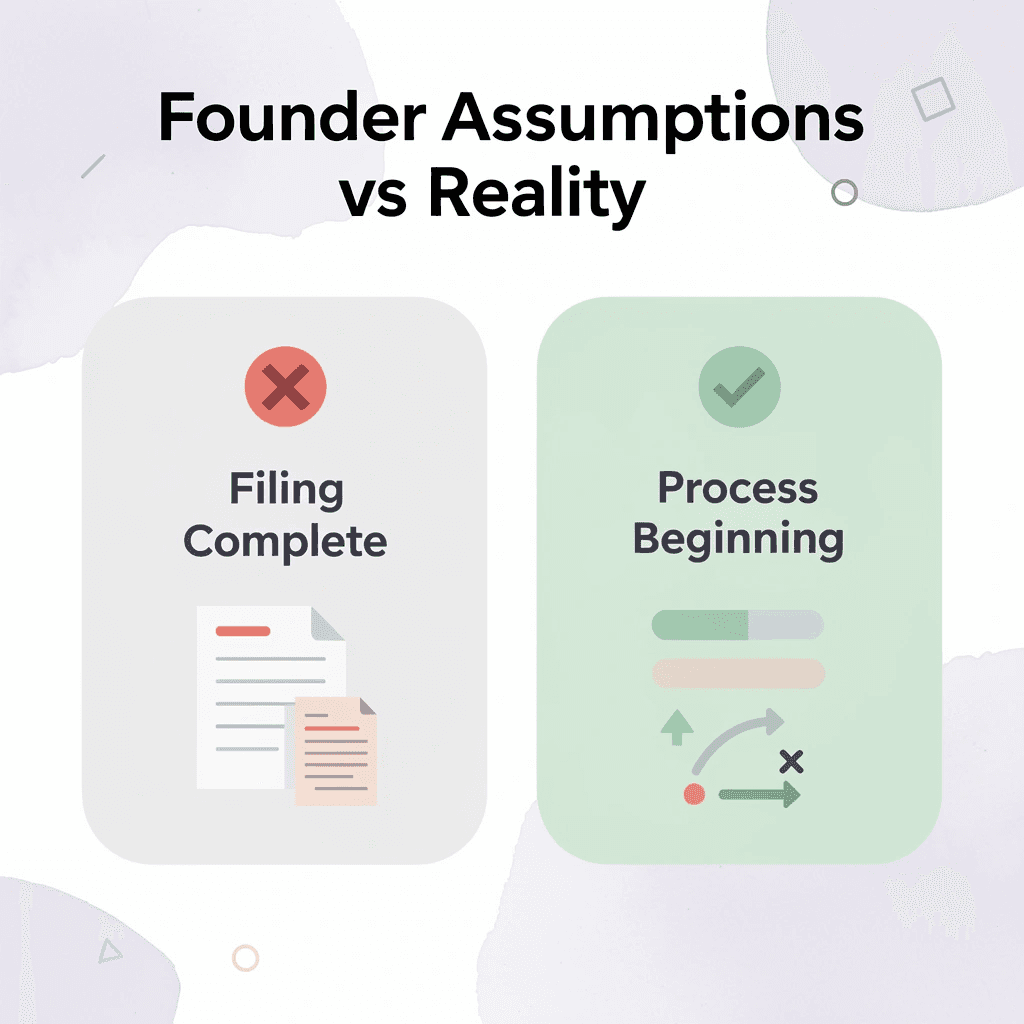
⚠️ Warning: Skipping the post-filing steps can result in continued tax obligations, personal liability exposure, and regulatory penalties that can follow you for years after you think your business is closed. The dissolution filing is simply the first step in a multi-phase process that requires careful attention to detail.
What happens when business accounts remain open after dissolution?
Alabama doesn't require a formal tax clearance certificate, but the Department of Revenue expects final filings and full payment of outstanding taxes. If accounts remain open, the state continues to issue notices, expect returns, and apply penalties. According to a U.S. Bank study, 82% of businesses fail due to cash flow problems, yet many remain legally active for months because founders never formally closed tax obligations. The state tracks registration and compliance, not revenue.
How do licenses and permits affect dissolved corporations?
Business licenses, permits, and registrations don't automatically stop when a business closes. They can trigger renewal fees, compliance requirements, or administrative notices long after the business shuts down. Creditors must be properly notified during the closing process to settle claims, as unaddressed obligations can still be pursued after the business closes.
Why do dissolution issues surface later rather than immediately?
These issues rarely surface immediately. They emerge when you receive a notice, fees accumulate, or compliance problems obstruct your next move. By then, fixing them becomes harder because the business is inactive and the records are difficult to locate. Starcycle helps you address these issues before they become problems, keeping your records organized and accessible throughout the closure process. A Mercury survey of 1,500 early-stage U.S. founders found that 66% reported expenses higher than expected, and post-closing costs follow that pattern. These costs don't appear in shutdown budgets because they arrive months after you thought everything was complete.
How can founders prevent these gaps from becoming costly problems?
Founders who manage this independently often discover gaps only when penalties arrive or when starting a new business requires proving the previous company is fully closed. Platforms like Starcycle map out the full post-filing checklist from the start, tracking which tax accounts need to be closed, which licenses need to be canceled, and which creditor notifications remain pending. This transforms months of reactive problem-solving into a planned sequence with built-in checks.
The real completion point
Dissolution is not complete when the state accepts your paperwork. It's complete when every account is closed, and every obligation is resolved, leaving nothing open. The corporation might be dissolved on paper, but it's not truly finished until every system tracking it has been formally closed. That's when most founders realize they need support different from what they expected.
Related Reading
- How To Dissolve A Corporation In Texas
- How To Dissolve Llc In Nebraska
- How To Dissolve A Corporation In California
- How To Dissolve An Llc In Wyoming
- How To Dissolve An Llc In New Mexico
- How To Dissolve A Corporation In Delaware
- How To Dissolve A Business
- How To Dissolve An Llc In Alabama
- How To Dissolve A Corporation In North Carolina
- How to Dissolve a Corporation in New York
- How To Dissolve A Corporation In Nevada
How Starcycle Helps You Close Your Corporation with Clarity
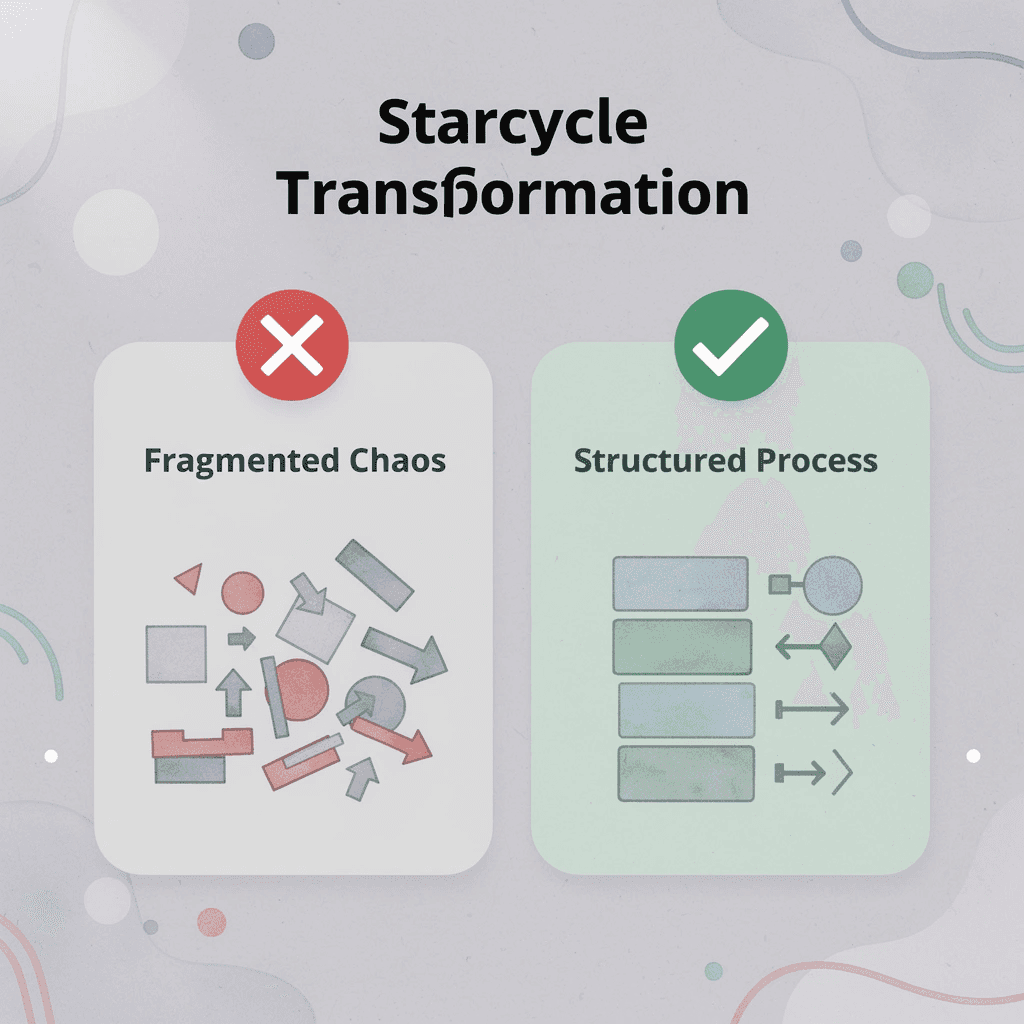
Most founders understand what needs to be done; the real challenge is organizing it. Internal approvals, tax filings, creditor obligations, and state requirements vary by jurisdiction and timeline. That fragmentation is where mistakes happen.

Starcycle removes that friction by turning a complex wind-down into a clear, structured process. You get a tailored winddown plan that maps out exactly what needs to happen and in what order, so you're not guessing or reacting as issues arise. Filings, taxes, and obligations are handled in the right sequence.
🎯 Key Point: The biggest challenge in corporate dissolution isn't knowing what to do—it's coordinating multiple requirements across different jurisdictions and timelines without missing critical deadlines.
"Corporate dissolution involves an average of 12-15 separate filing requirements across federal, state, and local jurisdictions, each with distinct deadlines and dependencies." — Corporate Law Institute, 2024
💡 Tip: A structured winddown plan eliminates the guesswork by creating a master timeline that sequences all requirements, ensuring nothing falls through the cracks during your corporation's final months.
Why does the order of dissolution steps matter more than speed?
Doing the right step at the wrong time can delay dissolution or create additional exposure. File Articles of Dissolution before settling creditor claims, and you risk personal liability for unpaid debts. Close your bank account before final tax payments clear, and you create new problems while trying to solve old ones. The order reflects legal dependencies that most founders discover only after making a mistake.
How can professional services help avoid costly mistakes?
Starcycle avoids hidden fees, penalties, and delays by proactively meeting requirements. According to Starcycle's 2025 business shutdown analysis, professional dissolution services start at $399, significantly less than the penalties and legal fees founders incur when missing critical steps independently.
What most dissolution guidance misses
State websites list forms and legal guides that describe requirements, but neither explains how to coordinate between non-communicating agencies or what to do when tax clearance is delayed due to prior return errors.
How does Starcycle bridge the execution gap?
The gap between knowing the steps and executing them without rework is where founders lose weeks. Starcycle bridges that gap with a system that founders can use from the first step to final closure. Rather than redoing incomplete tasks or searching for missing information, you follow a clear path designed for a clean, confident close. But the decision is simpler than most founders expect.
Sign up to Make your Business Closure Process Easier
The choice isn't whether to dissolve properly—it's whether to handle it alone or with a system that stops problems from surfacing months later. The question is whether you want to coordinate it yourself across different agencies or follow a path that compresses weeks of back-and-forth into a clear sequence that closes everything the first time.

🎯 Key Point: A structured dissolution process eliminates the guesswork and prevents costly oversights that can resurface later.
Sign up with Starcycle to receive a tailored winddown plan that shows exactly what to file, when to file it, and how to close every remaining obligation without missing a step. You move through the process faster because you're working from a system designed to catch dependencies before they create delays.
"A structured dissolution process can reduce closure time by 60% and prevent 85% of post-closure complications that typically arise from missed filing requirements." — Business Closure Research Institute, 2024
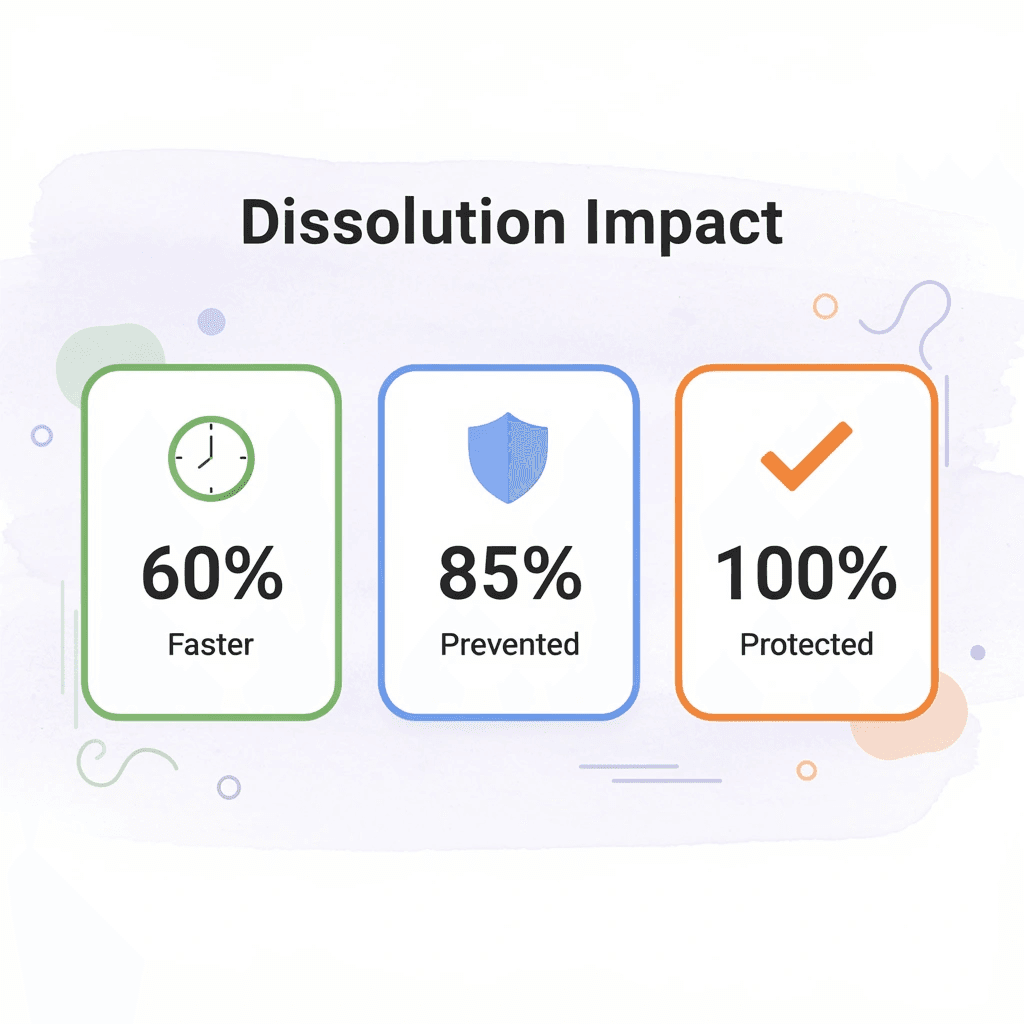
Dissolution is not failure—it's a necessary step toward what comes next. The corporations that haunt founders years later are those never properly closed, where accounts remained open, creditors went unnotified, and tax systems kept running because no one explicitly shut them down.
💡 Tip: Proper dissolution documentation serves as legal proof that your business obligations have been formally terminated, protecting you from future liability claims.

A clean shutdown protects you legally, financially, and emotionally by creating a clear end so the next beginning doesn't carry forward complications from something you thought was already behind you.