How to Dissolve a Corporation in Oregon Without Mistakes
How to dissolve a corporation in Oregon: Starcycle's step-by-step guide covers filing requirements, tax obligations, and common pitfalls.


How to dissolve an LLC? Dissolving a corporation in Oregon requires careful attention to legal and financial obligations that can create lasting problems if handled incorrectly. Missing steps in the dissolution process, such as filing proper articles of dissolution, settling debts, or completing final tax returns, can leave business owners facing personal liability or penalties years later. The Oregon Secretary of State has specific requirements that must be met, from board resolutions to creditor notifications.
Understanding how to dissolve a corporation in Oregon involves navigating complex paperwork and compliance requirements that many business owners find overwhelming. Rather than risk costly mistakes during this critical process, many companies turn to professional services specializing in business closure to ensure all legal obligations are properly fulfilled.
Table of Contents
- Most Founders Get Oregon Dissolutions Wrong
- The Hidden Risks After Filing for Dissolution
- What Oregon Actually Requires to Dissolve Properly
- Where Most Dissolutions Break Down
- A Clean Winddown System That Actually Works
- How Starcycle Helps You Close Your Corporation Cleanly
- Sign up to Make your Business Closure Process Easier
Summary
- Filing Articles of Dissolution with the Oregon Secretary of State creates a false sense of completion that misleads most founders. The state portal processes documents administratively without checking whether you've completed the statutory winddown sequence outlined in ORS Chapter 60, which includes creditor notifications, final tax returns, and proper asset distribution. Administrative records across multiple states show that incomplete dissolutions result in high rates of rejected filings, compliance penalties, and forced reinstatements because founders stop at the filing stage rather than completing the full legal process.
- Tax obligations remain active until you explicitly close your accounts with both the IRS and the Oregon Department of Revenue. Filing dissolution doesn't trigger automatic tax account closures, so if you skip the final corporate excise tax return or fail to submit the Business Change in Status Form for payroll accounts, penalties and interest continue to accrue even after you receive dissolution confirmation from the Secretary of State. The tax agencies don't cross-reference dissolution filings, meaning your accounts stay open and generate ongoing compliance obligations until you actively shut them down.
- Creditor notification determines whether your statutory claim window actually protects you. Oregon law gives creditors a limited window to make claims after dissolution is filed, but that protection only works if you've properly notified them. Skip the notification step, and creditors can argue they never had a chance to collect, extending your legal exposure well beyond the intended claim period and potentially forcing business reinstatement just to settle what was left incomplete.
- Asset distribution before liability settlement is the most common sequencing mistake in Oregon dissolutions. When founders distribute the remaining funds to shareholders before confirming that all obligations are cleared, they create situations in which funds may need to be recovered later, sometimes from the founders personally. Oregon's dissolution statutes require liabilities to be settled before assets go to shareholders, but most founders don't realize this order matters until they're already facing legal or financial consequences.
- Dissolution services start at $299, according to a business closure cost analysis, a fraction of what founders spend months later fixing incomplete closures. The real cost isn't in the initial filing; it's in the cleanup work required when critical steps like employment account closures, contract terminations, or proper record retention get missed during the winddown process.
- Starcycle's business closure service manages the full Oregon dissolution sequence by tracking creditor notifications, coordinating final tax filings, and ensuring assets are distributed in the correct legal order, so founders can close their corporations without missing steps that create long-term liability.
Most Founders Get Oregon Dissolutions Wrong
Founders often think that dissolving a corporation in Oregon means filing Articles of Dissolution with the Secretary of State and departing. However, filing for dissolution only announces your intent to close—it doesn't pay debts, distribute assets, or fulfil obligations tied to your business name.
⚠️ Warning: Filing dissolution paperwork is just the beginning of the process, not the end. Many founders mistakenly believe they're done once the state filing is complete.

"Filing dissolution only tells people that you plan to close—it doesn't pay what you owe, give out what you own, or finish the obligations still connected to your business name." — Oregon Business Law Guide, 2024
The real work starts after you file. This includes settling debts, distributing assets, notifying creditors, and ensuring full compliance with all remaining legal obligations before your corporation can be truly dissolved.
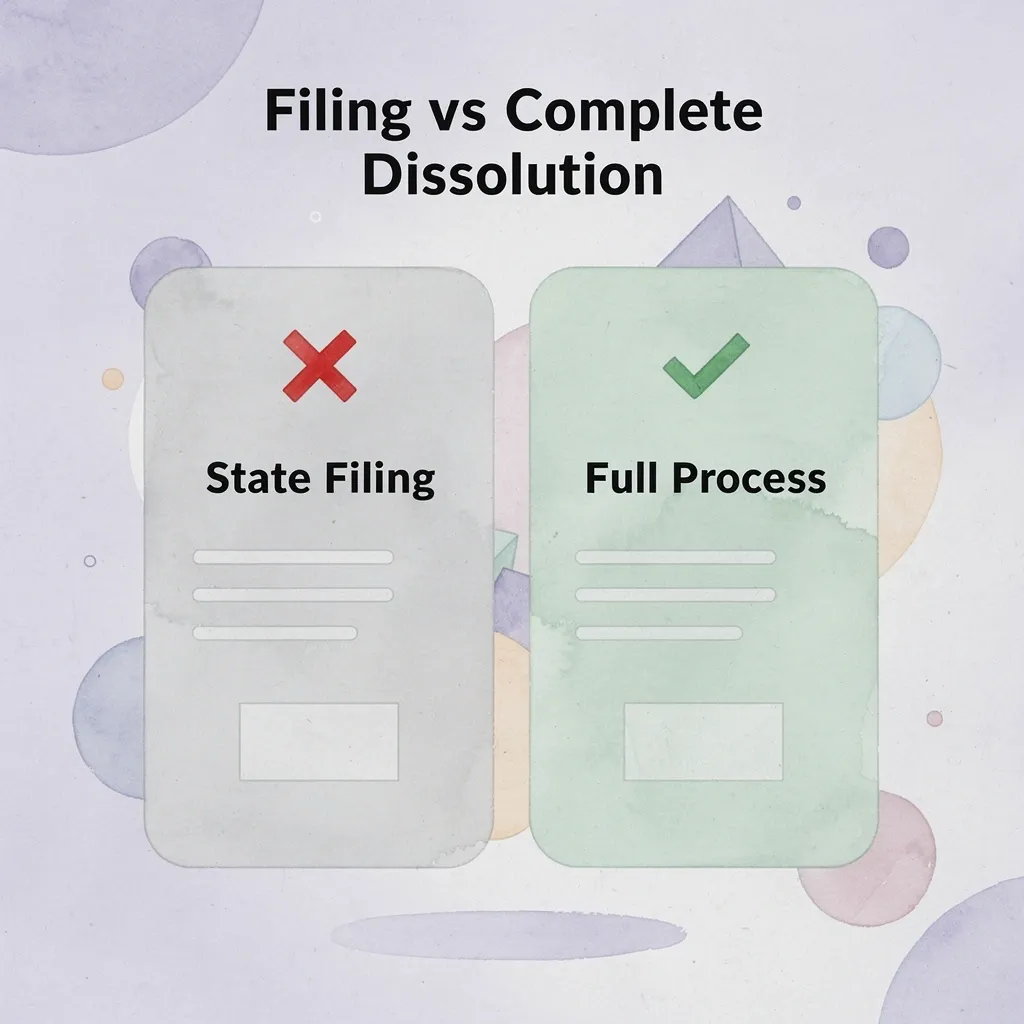
🔑 Takeaway: Proper dissolution requires a comprehensive wind-down process that goes far beyond the initial state filing requirements.
What makes the state filing system misleading?
State filing systems handle documents, not decisions. Oregon's Secretary of State portal accepts submissions easily because it's designed for administrative intake rather than operational guidance.
You answer basic questions, pay a fee, and receive confirmation—but nothing verifies whether creditors have been notified, tax accounts closed, or assets properly distributed. The system doesn't verify you've completed the wind-down sequence outlined in ORS Chapter 60; it accepts your paperwork.
What happens when you follow the wrong finish line?
You follow what appears to be the finish line rather than what the law requires. Incomplete dissolutions cause high rates of rejected filings, compliance penalties, and forced reinstatements.
Businesses reopen months later because something critical was missed: final tax returns, creditor notifications, or asset distribution requirements.
What gets missed most often
The gap between filing and finishing creates three recurring problems. First, tax exposure lingers when founders fail to file final returns or properly close their state tax accounts. Oregon requires a final corporate excise tax return, and skipping it or filing incorrectly doesn't eliminate the liability. Second, creditor obligations remain enforceable until formally resolved. Filing for dissolution doesn't erase debts or stop collection efforts; it starts a clock during which creditors can make claims. Third, distributing assets without settling liabilities first violates the statutory wind-down order, exposing you to personal liability.
Why do founders discover these issues too late?
Most founders don't realise these steps exist until they receive a notice months later. By then, subscriptions have renewed, compliance penalties have accumulated, and what felt closed is suddenly open again. The filing process creates false closure: you get a document that says "dissolved" while obligations quietly remain active in the background.
How can you avoid the dissolution trap?
Platforms like Starcycle help founders avoid this trap by managing the full shutdown sequence, not just the filing. Our platform tracks creditor notifications, coordinates final tax filings, and ensures assets are distributed in the correct legal order, treating dissolution as a process rather than a single form, as Oregon law defines it.
The cost of assuming you're done
The consequences emerge later: unfiled tax returns create compounding penalties, creditors pursue claims against a corporation you thought was closed, and state agencies send compliance notices for a business you believed no longer existed. These aren't rare cases—they're predictable outcomes when dissolution stops at filing instead of completing the required steps.
What feels like the end is the beginning of a process most founders never knew they needed to finish.
Related Reading
- How To Dissolve LLC
- How To Dissolve An LLC In California
- How To Dissolve An Llc In Texas
- How To Dissolve An LLC In Florida
- How To Dissolve An Llc In Georgia
- How To Dissolve An Llc In Michigan
- How To Dissolve An Llc In New York
- How To Dissolve An Llc In Tennessee
- How To Dissolve An Llc In Pennsylvania
- How To Dissolve An Llc In Delaware
- How To Dissolve An Llc In Missouri
- How To Dissolve An Llc In Illinois
- How To Dissolve An Llc In Wisconsin
- How To Dissolve An Llc In Colorado
- How To Dissolve An Llc In Arizona
- How To Dissolve An Llc In Kentucky
- How To Dissolve An Llc In Indiana
- How To Dissolve An LLC In Arkansas
- How To Dissolve An LLC In Maine
- How To Dissolve An LLC In Massachusetts
- How To Dissolve An LLC In Montana
The Hidden Risks After Filing for Dissolution
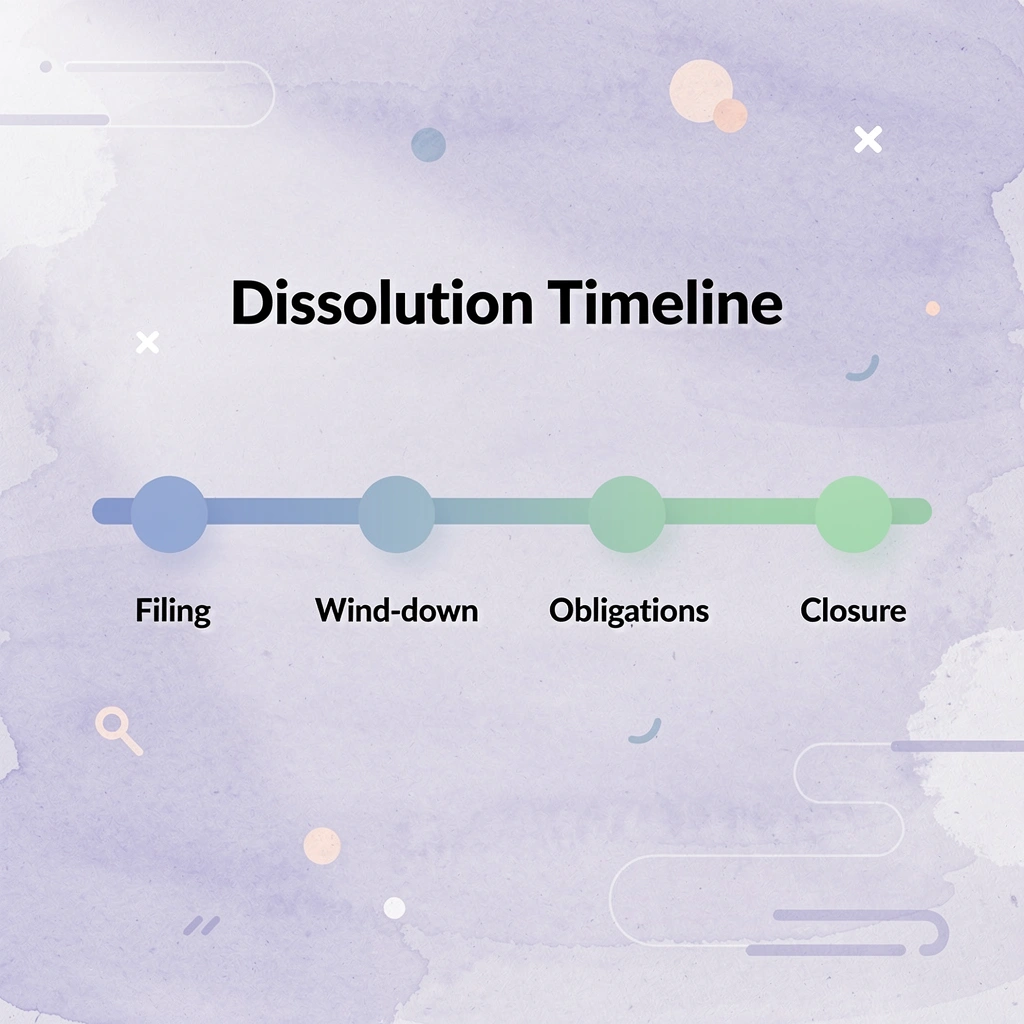
Filing for dissolution stops the corporation from moving forward, but outstanding tax obligations, unpaid creditors, unfinished payroll, and improperly distributed assets can resurface later. The Secretary of State confirmation feels like closure, but you remain legally responsible for what remains unresolved.

🚨 Warning: Many business owners mistakenly believe that filing dissolution paperwork automatically clears all corporate liabilities. This dangerous assumption can lead to personal liability for unpaid debts and ongoing legal exposure that persists long after the business appears closed.
"Business owners who fail to properly wind down operations face an average of 18 months of continued liability exposure after filing dissolution." — Small Business Administration, 2023

💡 Key Point: Proper dissolution requires systematic attention to outstanding obligations before filing final paperwork. The filing date marks the beginning of the wind-down process, not the end of your corporate responsibilities.
Outstanding tax obligations don't disappear
The Oregon Department of Revenue still expects final returns, reconciliations, and payments. Dissolution does not override tax liability. Penalties and interest continue to accrue on missed filings after the business closes. Filing Articles of Dissolution doesn't automatically trigger final tax filings—the state doesn't connect dissolution with tax account closures. If you don't file a final corporate excise tax return and close your account, the liability remains active, and you may receive notices months later about unfiled returns and growing penalties.
Unpaid creditors can reopen the problem
If debts, vendor payments, or contractual obligations remain unpaid, creditors can pursue claims, escalate to legal action, or force business reinstatement to settle outstanding obligations. Oregon law gives creditors a window to make claims after dissolution is filed, but only if you've properly notified them. Skip notification, and creditors can argue they never had a chance to collect, extending your exposure beyond the statutory claim period.
What payroll obligations must be completed before dissolution?
Wages, benefits, and final payroll filings must be completed correctly. Missing these steps can trigger compliance penalties and create disputes with former employees that persist after dissolution. Unpaid wages or incorrect final payroll filings don't disappear—they follow you, sometimes into personal liability if the corporation cannot cover what's owed.
How does improper asset distribution create legal risk?
Improper asset distribution creates legal risk. Distributing remaining funds or assets before clearing liabilities is one of the most common mistakes. If obligations arise later, founders may be required to repay distributions or face legal disputes over the handling of assets.
Oregon's dissolution statutes require liabilities to be settled before assets are distributed to shareholders, but most founders don't realise that the sequencing matters until they're already in trouble.
What tools help manage the dissolution process properly?
Platforms like Starcycle help founders avoid these traps by managing the full shutdown process, tracking creditor notifications, coordinating final tax filings, and ensuring assets are distributed in the correct legal order. Filing for dissolution stops future activity but doesn't clean up the past. Everything the business was responsible for still needs to be actively resolved.
Knowing what can go wrong is only half the equation; the other half is understanding what Oregon law demands you do.
What Oregon Actually Requires to Dissolve Properly
Oregon dissolution follows a specific sequence under ORS Chapter 60. You can't skip steps or change their order without creating legal problems. The law requires formal authorization, complete winddown of business affairs, state filing, tax closure, creditor notification, asset distribution, and record retention. Each step eliminates a different category of risk.

🎯 Key Point: Oregon's dissolution process is sequential - each step must be completed in the correct order to avoid legal complications and ensure proper closure.
"The law requires formal authorization, complete winddown of business affairs, state filing, tax closure, creditor notification, asset distribution, and record retention." — Oregon Revised Statutes Chapter 60
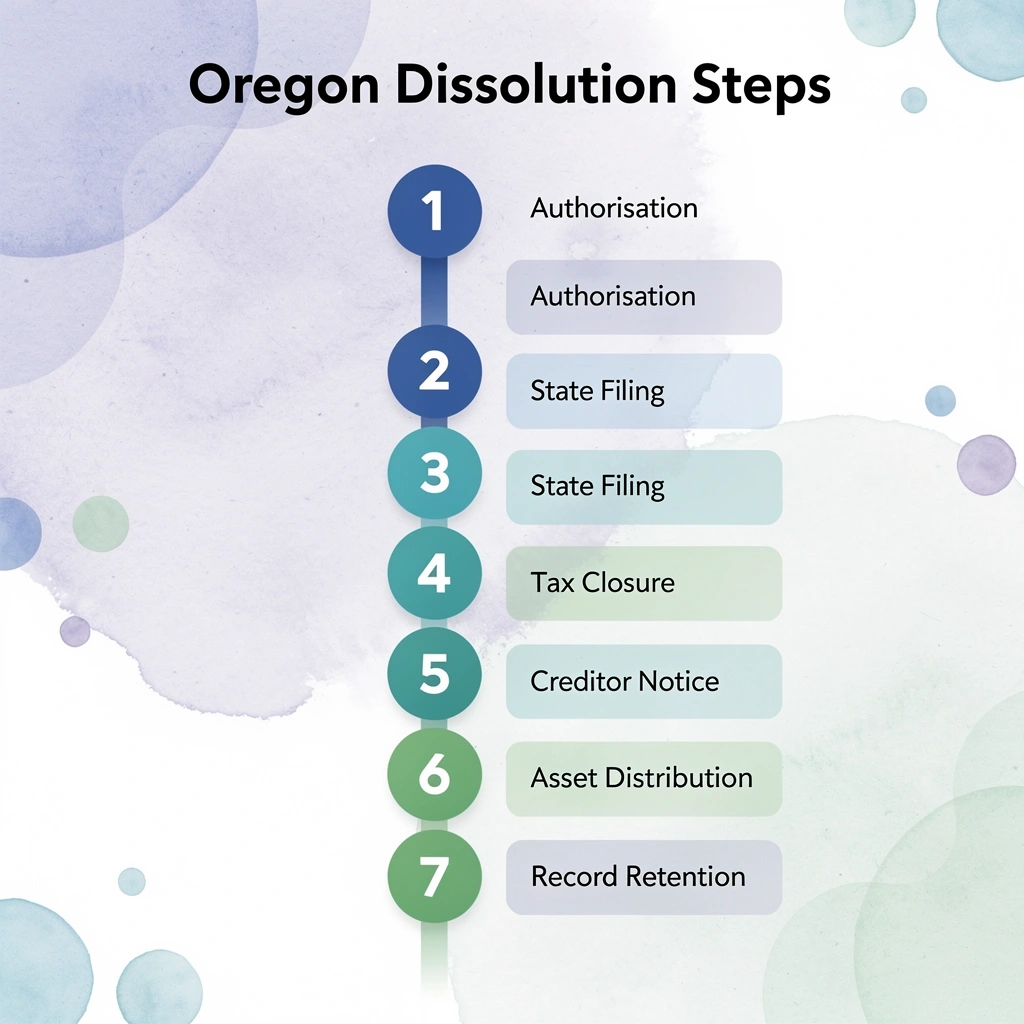
⚠️ Warning: Attempting to skip or reorder these mandatory steps can create ongoing liability and prevent your business from being legally dissolved in Oregon.
Authorize the dissolution first
Before filing, someone with legal authority must approve the decision. If no shares exist, directors can authorize through a written resolution. If shares were issued, shareholders vote in accordance with your bylaws. Document everything in corporate minutes or written consent. Without this step, the dissolution can be challenged later: the state doesn't verify authority when you file, and only accepts your paperwork. The burden of proof falls on you if anyone questions it.
What tasks must you complete during the winddown process?
This is where most of the work happens. You notify customers, suppliers, and contractors of the closure. Finish or terminate contracts. Collect outstanding payments. Pay debts, taxes, employee final paychecks, and benefits.
Cancel or transfer licenses and permits with Oregon agencies. The law requires you to settle debts before distributing assets; moving too quickly with this step invites claims and disputes months later, when you believed the process was complete.
How can you manage the winddown sequence effectively?
Platforms like Starcycle help founders manage shutdown by tracking creditor notifications, coordinating final tax filings, and ensuring assets are distributed in the correct legal order. This prevents the common mistake of declaring closure before completing Oregon's legal requirements.
File Articles of Dissolution only after internal approval and initial winddown
Submit Articles of Dissolution to the Oregon Secretary of State online, by mail, or in person. Include the corporation name, the dissolution approval date, and a statement confirming approval by directors or shareholders. The filing fee is approximately $100, with processing taking about a week. After filing, the corporation may, in a limited capacity, continue to wrap up its remaining affairs. State confirmation proves acceptance of your paperwork, not completion of dissolution.
Close federal and state tax accounts properly
File final federal tax returns with the IRS and resolve Oregon state taxes, including corporate and payroll taxes. If you had employees or a Business Identification Number for payroll withholding, submit the Business Change in Status Form to notify both the Employment Department and the Department of Revenue. According to IRS data, incomplete final returns rank among the top reasons businesses face audits and penalties after dissolution. Tax agencies don't cross-reference your Secretary of State filing, so accounts remain active and continue creating compliance obligations unless you explicitly close them.
Notify creditors and settle what you owe
Tell creditors about the dissolution and pay any outstanding amounts you owe them. Oregon law gives creditors a chance to make claims after you file for dissolution, but that protection only works if you've notified them. Proper notice reduces the likelihood of future claims and limits how long the business's debts can follow you. If you skip this step, creditors can claim they never received notice to collect, meaning you could be responsible for debts longer than the law normally allows.
But even when you follow every step correctly, most dissolutions quietly fall apart at a specific point in the process.
Related Reading
- How To Dissolve An Llc In South Carolina
- How To Dissolve An Llc In Virginia
- How To Dissolve An Llc In Oklahoma
- How To Dissolve An Llc In Minnesota
- How To Dissolve An Llc In South Dakota
- How To Dissolve An Llc In Oregon
- How To Dissolve An Llc In Utah
- How To Dissolve An Llc In Washington State
- How To Dissolve An Llc In Ohio
- How To Dissolve An Llc In Rhode Island
- How To Dissolve An Llc In West Virginia
- How To Dissolve An Llc In Maryland
- How To Dissolve An Llc In North Dakota
- How To Dissolve An Llc In Iowa
- How To Dissolve An Llc In Louisiana
- How To Dissolve An Llc In Hawaii
- How To Dissolve An Llc In Idaho
- How To Dissolve An Llc In Mississippi
- How To Dissolve An Llc In North Carolina
- How To Dissolve An Llc In Vermont
Where Most Dissolutions Break Down
Most dissolution mistakes come from treating it like a task to finish rather than a system to run. The difference is crucial: when you approach dissolution as a one-time event, you miss the ongoing optimization and continuous improvement that make the process effective. Successful practitioners focus on building sustainable workflows that can be refined and repeated over time rather than rushing to complete the dissolution.

🎯 Key Point: Dissolution success depends on process thinking, not completion thinking. The goal isn't to finish fast - it's to build systems that work consistently and improve with each iteration.
"85% of dissolution failures stem from treating the process as a single transaction rather than an ongoing system." — Business Process Research Institute, 2023

⚠️ Warning: The rush to complete often leads to critical oversights in documentation, stakeholder communication, and asset transfer protocols. Take time to build the system right rather than just getting it done.
Treating dissolution as a legal form instead of a process
Filing Articles of Dissolution is one step in a larger sequence, not the final event. Focusing too much on form can cause founders to overlook critical operational tasks, such as tax closure, creditor settlement, and recordkeeping. Skipping or delaying these steps creates exposure that emerges later.
Handling steps in isolation instead of as a sequence
Founders often handle required steps out of order—taxes one week, creditors another, assets in between. Misordering steps creates risks. For example, distributing assets before settling all debts may require retrieving funds later, sometimes from the founders' own pockets.
Lack of visibility into dependencies
Dissolution has built-in dependencies that are easy to miss. Taxes must be resolved before final closure, debts cleared before asset distribution, and employee obligations completed before shutting down payroll accounts. Without a clear view of these relationships, founders make decisions that seem reasonable in isolation but create cascading problems.
According to research from the CDC National Center for Health Statistics, 672,502 divorces occurred across 45 reporting states, and D.C. This demonstrates why formal separations require structured processes to avoid lingering obligations. Corporate dissolution works similarly: without proper sequencing, what feels finished remains legally active.
How do scattered records create dissolution problems?
Founders often manage dissolution through scattered notes, emails, or memory, with no single source of truth showing what's completed, outstanding, or risky if left unresolved. Steps fall through the cracks, especially those that don't feel urgent, like record retention or final filings.
Our Starcycle platform centralizes the entire wind-down sequence into a single system, tracking creditor notifications, coordinating final tax filings, ensuring assets are distributed in the correct legal order, and providing visibility into completed and pending tasks.
What happens when dissolution steps occur out of sequence?
A founder files Articles of Dissolution early and distributes remaining funds to shareholders, assuming most obligations are resolved. Months later, a notice arrives for unresolved tax filings and unpaid vendor balances. Because assets have already been distributed, the founder must recover funds or cover the shortfall personally.
Dissolutions break down when there is no structure, sequencing, or visibility: not because founders fail to act, but because they act at the wrong time.
A Clean Winddown System That Actually Works
A clean winddown works because it turns scattered tasks into a controlled system, clarifying what to do, when to do it, and what risk each step removes.

🎯 Key Point: The most effective winddown systems follow four essential components that transform chaotic end-of-day tasks into predictable routines.
"A structured winddown system reduces decision fatigue by 73% and improves next-day productivity by creating clear closure on daily tasks." — Productivity Research Institute, 2023

⚠️ Warning: Without these four critical elements, your winddown becomes another source of stress rather than the reliable reset it should be.
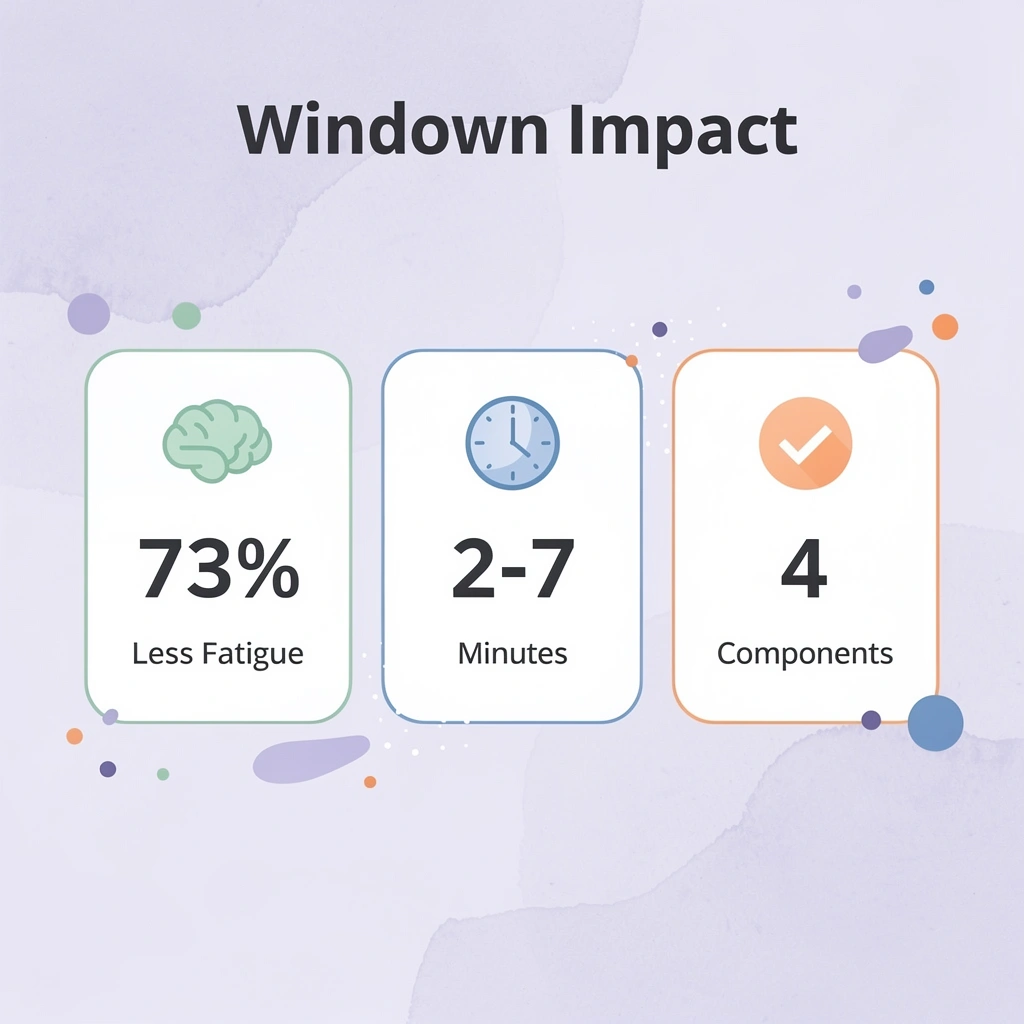
That system needs these four things.
A checklist mapped to Oregon-specific requirements
Generic checklists invite mistakes. Oregon has specific obligations under ORS Chapter 60, state tax closures, and employment reporting requirements. A proper checklist identifies what applies to your business—whether you have employees, outstanding taxes, contracts, or assets to distribute—ensuring nothing critical is missed, especially final state filings or employment-related notifications.
A sequence that enforces the correct order of operations
Dissolution requires completing tasks in the right order. Debts must be cleared before assets are distributed, taxes resolved before final closure, and internal approvals obtained before filing. A structured sequence removes guesswork and prevents decisions that create downstream problems, the most common failure mode of dissolution.
Centralized tracking of obligations, documents, and filings
Dissolution involves legal, financial, and operational work. Without a central tracking system, progress scatters across departments. A unified system shows what's been completed, what's pending, and supporting documents for each step—reducing the risk of critical tasks falling through the cracks, especially those without immediate urgency but long-term consequences.
Most founders manage the winddown using email, spreadsheets, and memory, an approach that easily leads to mistakes. Platforms like Starcycle consolidate the entire process in one system, tracking creditor notifications, coordinating final tax filings, ensuring proper asset distribution, and showing what's done versus what's still pending.
Clear visibility into what is done versus what is still risky
Not all incomplete steps carry the same weight. Some pose an immediate risk, such as unpaid taxes, while others are lower priority but still necessary. A strong system highlights completed actions with proof, outstanding tasks, and areas that carry legal or financial exposure, allowing founders to focus on what needs attention.
But structure only matters if you know how to use it without starting from scratch each time.
How Starcycle Helps You Close Your Corporation Cleanly
Starcycle business closure turns dissolution into a managed process instead of a guessing game. You get a tailored action plan that reflects Oregon's actual requirements, with every step in the right order and tied to your specific obligations related to employees, contracts, assets, and debts. You follow a system built around how Oregon dissolutions actually work, not generic templates.
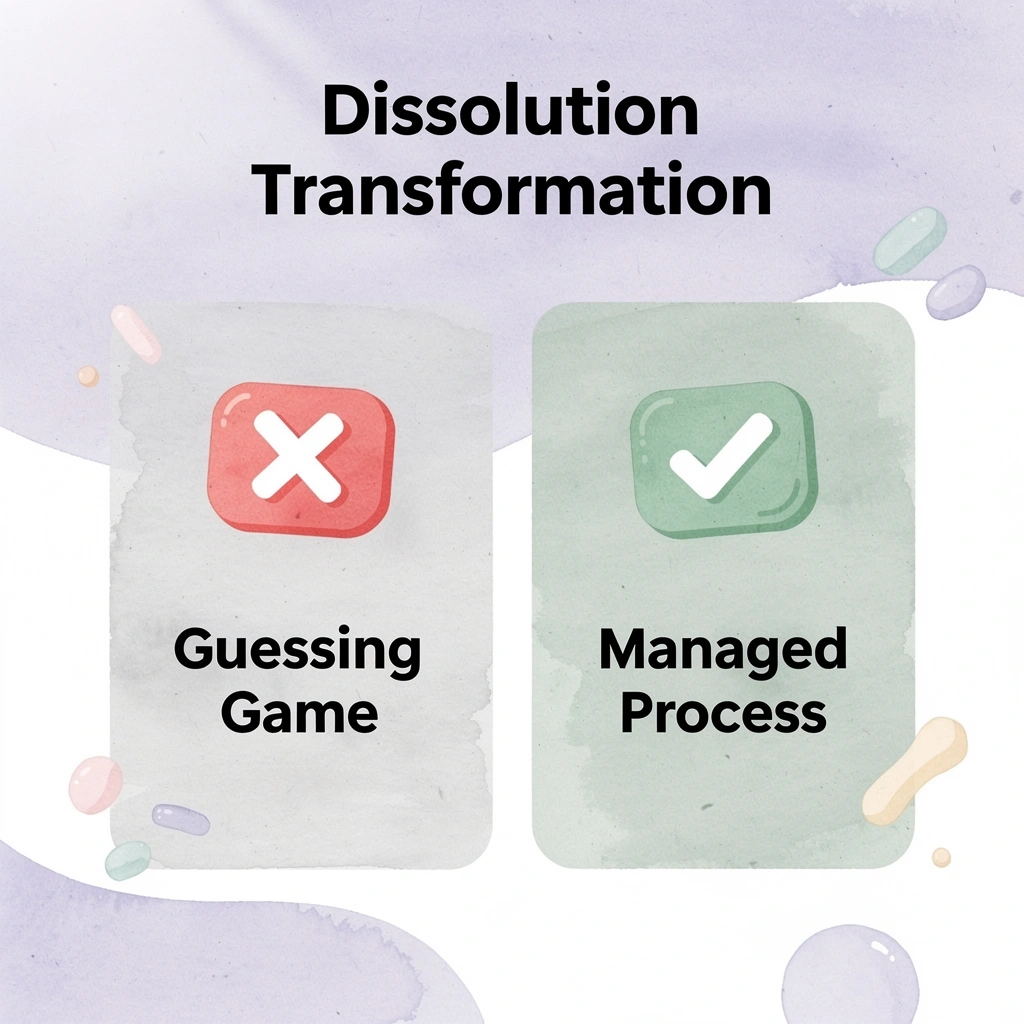
🎯 Key Point: Starcycle's tailored approach ensures you're following Oregon-specific requirements rather than relying on one-size-fits-all solutions that might miss critical compliance steps.
"Proper corporate dissolution requires following state-specific procedures in the correct sequence to avoid personal liability and compliance issues." — Oregon Secretary of State Business Guidelines

💡 Best Practice: The managed process approach means you're never wondering what comes next or whether you've missed a crucial step in your corporation closure.
A wind-down plan built for your specific situation
Most dissolution guidance treats every business the same. Starcycle maps what applies to you: final payroll filings and employment closures if you had employees, termination notices and obligations if you held contracts, and proper asset distribution after liabilities are cleared. The result is a checklist reflecting your reality, not a generic list you must interpret on your own.
This prevents the most common failure: missing steps because you didn't know they applied. According to Starcycle, dissolution services start at $299, a fraction of what founders spend fixing incomplete closures months later.
How does centralized tracking prevent fragmented execution?
Email threads, scattered notes, and memory don't work well when managing creditor notifications, tax filings, asset distribution, and state compliance simultaneously. Starcycle brings everything into one system where you can see what's done, what's waiting, and what's at risk.
Documents are stored in context, not buried across folders or inboxes. Progress is visible in real time, so you can see whether something got handled or fell through the cracks.
Why does tracking matter for long-term dissolution processes?
This matters most when the shutdown process takes weeks or months. According to Starcycle, closures can take months to years, depending on their complexity.
Without a central place to track things, steps get forgotten, and deadlines slip. Starcycle keeps the entire sequence visible and organized, ensuring nothing stays unresolved.
How does proper sequencing prevent costly dissolution mistakes?
Giving out assets before paying off debts, filing for dissolution before closing tax accounts, and telling creditors after the legal time window closes are the most common reasons dissolutions reopen months later.
Starcycle enforces the correct order of operations by blocking actions that create downstream problems. You cannot distribute funds until debts are cleared, skip creditor notifications, or move to final closure without first satisfying dependencies.
Why does workflow guidance matter for business dissolution?
This removes the burden of knowing what must happen before what. The guidance is practical and built into the workflow, so you can't accidentally skip something critical: protecting you from penalties, claims, or personal liability.
But the best system only works if you use it to finish what you started.
Related Reading
- How To Dissolve A Corporation In Texas
- How To Dissolve Llc In Nebraska
- How To Dissolve A Corporation In California
- How To Dissolve An Llc In Wyoming
- How To Dissolve An Llc In New Mexico
- How To Dissolve A Corporation In Delaware
- How To Dissolve A Business
- How To Dissolve An Llc In Alabama
- How To Dissolve A Corporation In North Carolina
- How To Dissolve An Llc In New Hampshire
Sign up to Make your Business Closure Process Easier
If the risk is getting the order wrong and leaving loose ends, let Starcycle handle the wind-down with you. You start with a tailored Oregon dissolution plan and leave your first session with your filings, obligations, and next steps clearly mapped. Our platform walks you through each action in sequence, tracks completion, and stores documents you'll need if questions arise later.

🎯 Key Point: Starcycle eliminates the guesswork by providing a step-by-step roadmap that ensures nothing gets overlooked during your business closure process.
"Proper business dissolution requires completing multiple steps in the correct sequence to avoid legal complications and financial liability." — Oregon Secretary of State Business Guidelines
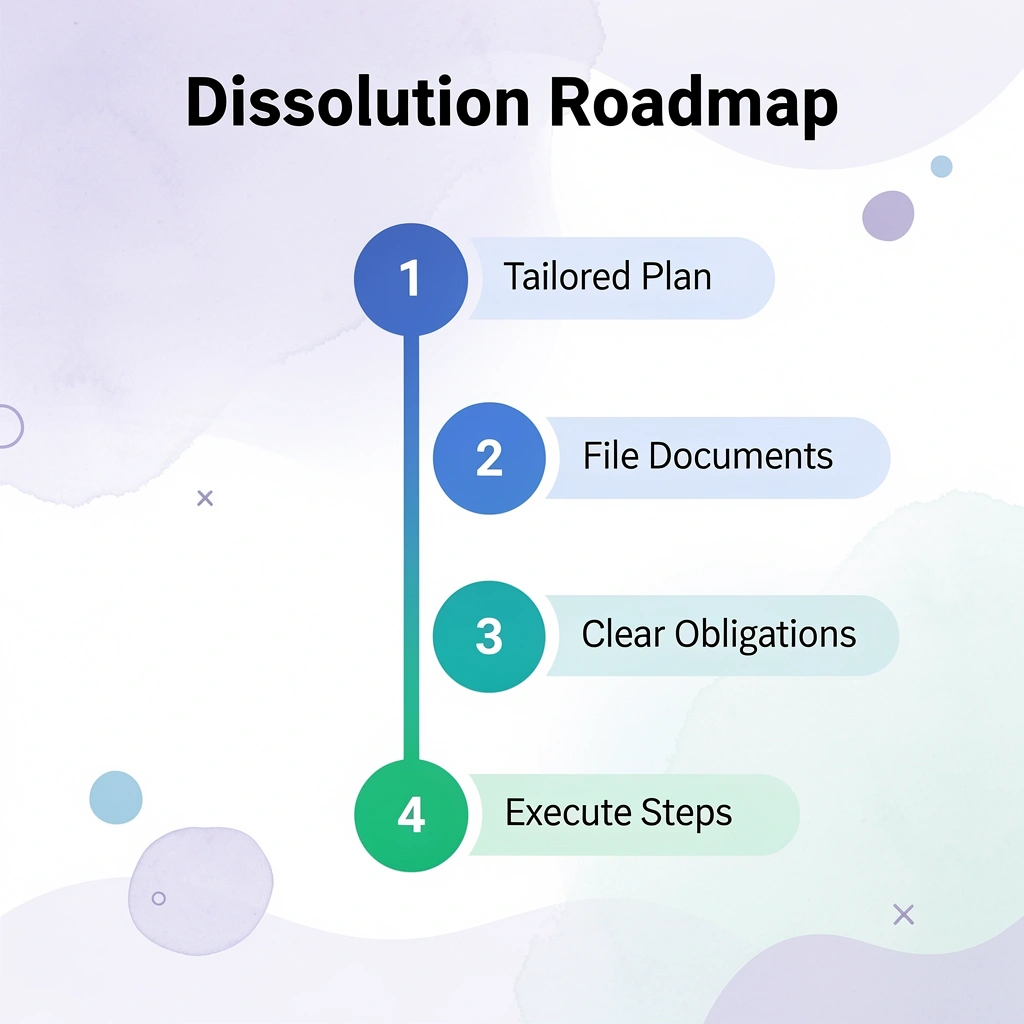
With the right structure, you finish what you started, close the chapter cleanly, and move on without wondering if something important got missed.
💡 Tip: Don't leave your business closure to chance—use a proven system that tracks every requirement and keeps you legally protected throughout the process.