
How to Dissolve a Corporation in Louisiana (Step-by-Step Process)
How to dissolve a corporation in Louisiana: Starcycle's complete step-by-step guide covers filing requirements, fees, and legal processes.


Closing a Louisiana corporation requires more than simply ceasing operations. Proper dissolution protects business owners from ongoing tax liabilities, state fees, and potential legal complications down the road. The process involves filing articles of dissolution with the Secretary of State, settling outstanding debts, and notifying creditors in accordance with specific state requirements.
Business owners must navigate Louisiana statutes, complete multiple forms, and ensure compliance with various regulations throughout the dissolution process. Rather than risk missing critical steps or facing future complications, many choose professional assistance for business closure to ensure their corporation is properly dissolved in accordance with state law.
Table of Contents
- The Hidden Complexity of Closing a Corporation in Louisiana
- Why Most Founders Get Dissolution Wrong
- What Proper Corporate Dissolution in Louisiana Actually Requires
- Step-by-Step: How to Dissolve a Corporation in Louisiana
- The Step Most Founders Skip (And Regret Later)
- How Starcycle Helps You Close Your Corporation with Clarity
- Sign up to Make your Business Closure Process Easier
Summary
- Louisiana corporate dissolution requires sequential coordination across multiple state agencies, not just a single filing. The process involves board and shareholder approvals, Secretary of State filings, tax clearances with the Louisiana Department of Revenue and the IRS, and creditor notifications that must occur in a specific order under Louisiana Revised Statutes Title 12, Chapter 1. Missing a single dependency resets the entire timeline, and each agency operates independently with its own requirements and processing schedules.
- Incomplete dissolution leaves corporations legally active with ongoing obligations. When founders stop operations without completing formal dissolution, annual report requirements continue, franchise taxes accrue, and creditors retain legal standing to pursue claims. State and federal tax accounts remain open and generate notices that escalate into penalties, even after all business activity has ceased. The normal processing time for Louisiana dissolution filings is 7 business days, assuming all prior steps are complete and supporting documentation is in order.
- Tax closure requires separate action beyond filing final returns. Filing a final corporate tax return with the IRS or the Louisiana Department of Revenue does not automatically close the account or terminate the Employer Identification Number. Separate termination forms must be submitted to each agency, and unpaid tax liabilities create personal liability for directors or owners even after the corporation is dissolved. 82% of businesses fail due to cash flow problems, but financial exposure continues until every tax account is formally closed.
- Business licenses and registrations do not automatically cancel when a dissolution is filed. State registrations, local permits, occupational licenses, and industry-specific filings remain active until formally terminated, continuing to generate renewal fees and compliance obligations. A Mercury survey of 1,500 early-stage U.S. founders found that 66% reported expenses higher than expected, with post-closure administrative fees being a common source of that surprise.
- Louisiana offers two paths to dissolution with different eligibility requirements. Short-form dissolution requires a notarized affidavit and is available only when the corporation has no outstanding debts, owns no immovable property, and has shareholder approval. Long-form dissolution triggers a multi-agency review by the Department of Revenue, the Louisiana Workforce Commission, and sometimes the Department of Environmental Quality, with each agency checking for unresolved issues before the Secretary of State issues formal clearance.
- Starcycle's business closure services handle the sequential filing and clearance process for Louisiana corporations, managing dependencies among state agencies so founders avoid recursive delays when tax clearances, final returns, and dissolution paperwork are submitted out of order.
The Hidden Complexity of Closing a Corporation in Louisiana
Closing a corporation in Louisiana requires coordination across state agencies, internal governance, and tax authorities: it is not a single filing. Louisiana Revised Statutes Title 12, Chapter 1 requires formal approvals, sequential filings, and financial reconciliations spanning several months. Most founders expect to submit paperwork and walk away; instead, they encounter a multi-layered unwinding process.

🎯 Key Point: Corporate dissolution in Louisiana involves multiple agencies and can take 3-6 months to complete properly, requiring careful coordination between state filings, tax clearances, and internal approvals.
"Louisiana's corporate dissolution process requires sequential approvals across multiple state agencies and can involve extensive documentation that many business owners underestimate." — Louisiana Secretary of State Business Filings Guide
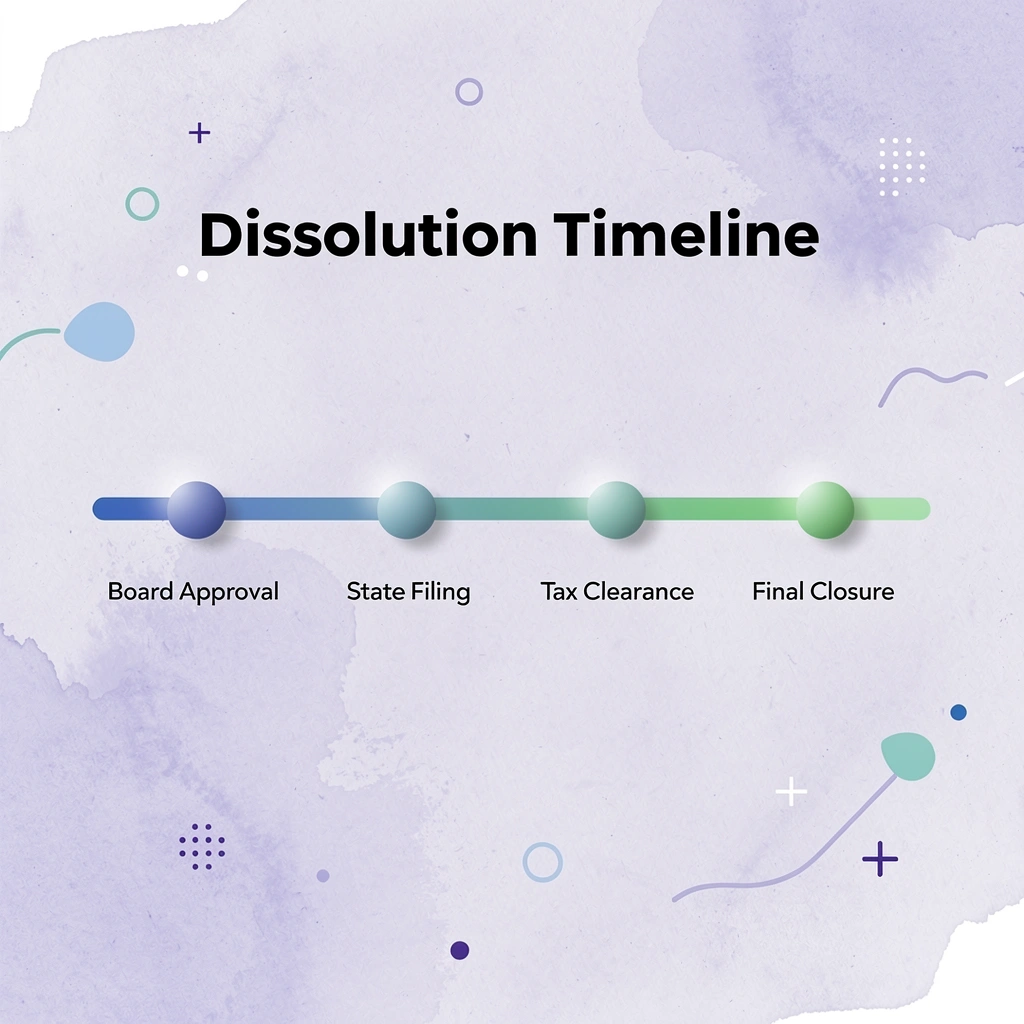
⚠️ Warning: Attempting to rush the dissolution process or skip required steps can result in ongoing tax liabilities, personal liability exposure, and compliance penalties that persist long after you think the business is closed.
What makes the dissolution process so complex?
The process starts with board and shareholder resolutions, then moves through filings with the Louisiana Secretary of State, and extends to tax clearances with the Louisiana Department of Revenue and the IRS. Each step depends on the previous one. Miss a tax filing, and your dissolution remains incomplete. Skip creditor notification, and liabilities can follow you long after the business closes.
What happens when dissolution remains incomplete?
When dissolution is incomplete, the corporation remains legally active. Annual report obligations, franchise taxes, and penalties for non-compliance continue. According to Stone Pigman Walther Wittmann L.L.C., Louisiana corporate law underwent significant changes effective August 1, 2024, affecting how businesses are treated under dissolution and liability frameworks.
State tax accounts remain open, creating notices and filing requirements even after operations cease. Creditors retain the right to pursue claims if obligations were not properly handled during dissolution.
How does time delay compound dissolution problems?
Time compounds the problem. What should be a simple exit turns into months of back-and-forth. Documents get rejected for missing signatures. Filings are returned because tax clearances were not obtained first. Each delay costs founders time they expected to spend on what comes next.
Where founders lose control of the timeline
The familiar approach is to handle dissolution internally by researching statutes, downloading forms, and coordinating filings across agencies. Dependencies emerge quickly: the Secretary of State requires proof of tax clearance before accepting Articles of Dissolution, while the Department of Revenue requires final returns before issuing clearance.
Each agency operates on its own timeline, and missing a single requirement resets the clock. Our Starcycle platform manages these dependencies upfront, handling the sequence of filings and clearances so founders avoid the recursive delays that turn a straightforward shutdown into a months-long administrative burden.
But the real reason this keeps happening runs deeper than most people realize.
Why Most Founders Get Dissolution Wrong
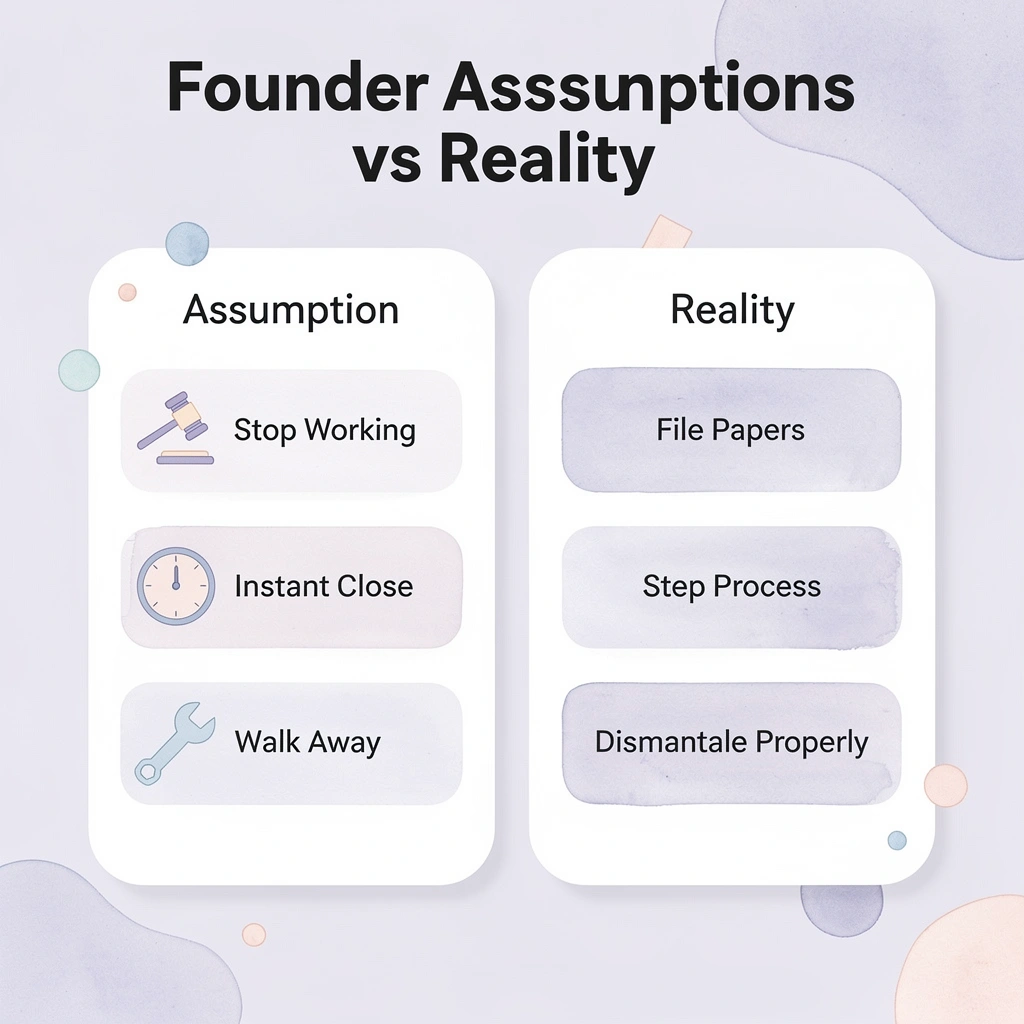
The mistake is not knowing something. It's thinking that stopping activity equals stopping the business itself. Founders treat closing a business like flipping a switch when it's more like taking apart a structure piece by piece, in the right order, with people watching. Louisiana law doesn't recognize the intent to close. It recognizes a completed process.
⚠️ Warning: Many founders assume that simply ceasing operations equals legal dissolution. This misconception can leave you personally liable for ongoing business obligations even after you think the company is closed.
"Louisiana law doesn't recognize the intent to close. It recognizes a completed process." — Louisiana Legal Framework
🔑 Takeaway: Business dissolution requires formal legal steps, not just the decision to stop working. Think of it as dismantling a building rather than simply walking away from it.
What happens when founders skip the formal process?
That gap between what people think is happening and what actually happens creates a risk that builds up slowly. The corporation remains active in state systems. Annual report deadlines continue. The Louisiana Department of Revenue still expects filings. Creditors retain their legal standing to pursue claims because the formal dissolution process never occurred. According to the Bureau of Labor Statistics, 21.5% of startups fail in the first year, yet most founders never plan for the administrative aftermath of closure.
Why dissolution gets deferred
Planning for a business closure happens in the wrong emotional context. When a business is growing, founders avoid thinking about its end. When it's failing, they're too stressed to manage the paperwork and regulations. By the time operations cease, the urgency has passed, but problems accumulate, and attention shifts to what comes next rather than what remains unfinished.
Why does scattered guidance create filing mistakes?
Guidance doesn't help. Information is scattered across the Secretary of State's website, the Department of Revenue's tax portal, and IRS publications—each covering its own requirements without showing how they connect. Founders piece together steps from blog posts, legal templates, and outdated checklists, filing Articles of Dissolution before tax clearance, and assuming final tax returns close the account when separate termination forms are required. Each misstep creates a delay, compounding into another filing cycle.
What are the ongoing costs of incomplete dissolution?
Partial dissolution doesn't create a gray area; it creates ongoing liability. The corporation remains a legal person with obligations that don't pause. Franchise taxes continue. Annual reports remain due. State and federal tax accounts remain open, generating notices that become penalties.
Creditors can still file claims because the statutory process that cuts off liability has not yet run its course. The Small Business Administration reports that 50% of startups fail within five years, but failure and formal dissolution are separate events; only formal dissolution stops the clock on legal exposure.
How can you avoid the dependency delays in dissolution?
The common way to handle it is to do it yourself: download forms, read the laws, coordinate filings across agencies. Problems emerge quickly. The Secretary of State won't accept dissolution paperwork without proof of tax clearance. The Department of Revenue won't issue clearance until final returns are filed. Missing a single requirement resets the timeline.
Tools like Starcycle manage these dependencies upfront, sequencing filings and clearances so founders avoid the recursive delays that turn a clean exit into months of back-and-forth with state agencies.
What appears to be a simple administrative task involves legal, tax, and governance layers that must close in the correct order, or they won't close at all.
Related Reading
- How To Dissolve LLC
- How To Dissolve An LLC In California
- How To Dissolve An Llc In Texas
- How To Dissolve An LLC In Florida
- How To Dissolve An Llc In Georgia
- How To Dissolve An Llc In Michigan
- How To Dissolve An Llc In New York
- How To Dissolve An Llc In Tennessee
- How To Dissolve An Llc In Pennsylvania
- How To Dissolve An Llc In Delaware
- How To Dissolve An Llc In Missouri
- How To Dissolve An Llc In Illinois
- How To Dissolve An Llc In Wisconsin
- How To Dissolve An Llc In Colorado
- How To Dissolve An Llc In Arizona
- How To Dissolve An Llc In Kentucky
- How To Dissolve An Llc In Indiana
- How To Dissolve An LLC In Arkansas
- How To Dissolve An LLC In Maine
- How To Dissolve An LLC In Massachusetts
- How To Dissolve An LLC In Montana
What Proper Corporate Dissolution in Louisiana Actually Requires
Dissolution means undoing every legal connection that created the corporation, from internal operations to state registrations to tax obligations. Louisiana law treats dissolution as a series of steps rather than a single action. Each step must occur in order, and skipping one leaves the corporation legally alive with all accompanying responsibilities.

🎯 Key Point: Louisiana dissolution requires completing every step in sequence—there are no shortcuts that won't leave your corporation legally exposed.
"Each step must happen in order, and skipping one means the corporation is still legally alive, with all the responsibilities that come with it." — Louisiana Corporate Dissolution Requirements
The process starts inside the company. The board of directors votes to dissolve, and shareholders approve that decision under the corporation's bylaws and Louisiana statutes. Without proper authorization, the dissolution filing lacks a legal foundation.
⚠️ Warning: Filing dissolution paperwork without proper board and shareholder approval can invalidate the entire process, leaving you legally responsible for corporate obligations.
Filing with the state
Once internal approval is secured, the corporation submits Articles of Dissolution to the Louisiana Secretary of State. According to Tailor Brands, the normal processing time for Louisiana LLC dissolution affidavits is 7 business days, provided all prior steps are complete and supporting documentation is in order.
Before the state accepts the dissolution, the corporation must resolve all outstanding obligations: debts must be paid, contracts settled or assigned, and creditors notified, with a statutory window to submit claims. Louisiana law requires formal creditor notice, and failure to provide it exposes the corporation to claims long after operations cease.
What tax obligations must be completed before dissolution?
Tax obligations don't end when revenue stops. The corporation must file final state tax returns with the Louisiana Department of Revenue and final federal returns with the IRS, marked as final, with all outstanding liabilities paid before tax accounts can close.
Business registrations, local permits, and industry-specific licenses must also be canceled: they don't terminate automatically, and leaving them active creates exposure to renewal fees and compliance penalties.
How can you avoid delays in the tax clearance process?
The challenge lies in the sequence of steps: the Secretary of State requires tax clearance before accepting paperwork to close the business, and the Department of Revenue requires final returns before granting clearance.
Platforms like Starcycle handle these connected steps from the start, organizing filings and clearances so founders avoid the delays that can extend a shutdown into months of back-and-forth with state agencies.
When can assets be distributed to shareholders?
Only after all obligations are resolved can the remaining assets be distributed to shareholders. Creditors get paid first, shareholders get what's left. Getting there requires closing every legal, financial, and administrative loop in the correct order.
Related Reading
- How To Dissolve An Llc In South Carolina
- How To Dissolve An Llc In Virginia
- How To Dissolve An Llc In Oklahoma
- How To Dissolve An Llc In Minnesota
- How To Dissolve An Llc In South Dakota
- How To Dissolve An Llc In Oregon
- How To Dissolve An Llc In Utah
- How To Dissolve An Llc In Washington State
- How To Dissolve An Llc In Ohio
- How To Dissolve An Llc In Rhode Island
- How To Dissolve An Llc In West Virginia
- How To Dissolve An Llc In Maryland
- How To Dissolve An Llc In North Dakota
- How To Dissolve An Llc In Iowa
- How To Dissolve An Llc In Louisiana
- How To Dissolve An Llc In Hawaii
- How To Dissolve An Llc In Idaho
- How To Dissolve An Llc In Mississippi
- How To Dissolve An Llc In North Carolina
- How To Dissolve An Llc In Vermont
Step-by-Step How to Dissolve a Corporation in Louisiana
Louisiana's dissolution process follows specific steps that cannot be skipped or rearranged without creating delays or compliance gaps. You must complete internal authorization, formal filings, tax closure, and final asset distribution in proper order. Missing a single requirement resets the entire timeline.
🎯 Key Point: The dissolution process is sequential - each step builds on the previous one, and skipping ahead will only create costly setbacks.
"Missing a single requirement in Louisiana's corporate dissolution process can reset the entire timeline, potentially adding months to what should be a straightforward procedure." — Louisiana Secretary of State Guidelines

⚠️ Warning: Attempting to rush or skip steps in Louisiana's dissolution process will always result in longer delays and additional costs than following the proper sequence from the start.

Step 1: Authorize dissolution internally
The board of directors votes to dissolve by a formal resolution, recorded in the corporate minutes or in a written consent. Shareholders must then vote according to thresholds set in your bylaws or, if none exist, Louisiana's default statutory rules. When you file dissolution paperwork with the Secretary of State, you may be required to certify that proper approval was obtained. Without it, the filing lacks a legal foundation.
Step 2: Wind up business operations
Before filing with the state, close operations systematically: end contracts, leases, and vendor relationships; cancel "doing business as" names or trade registrations; sell inventory or distribute assets; pay employees and creditors; and notify creditors of dissolution. Louisiana law requires formal creditor notice. Skipping this step leaves the door open for claims after closure. Document each step as you dismantle the business structure.
Step 3: File final tax returns and resolve obligations
File a final federal corporate tax return with the IRS and mark it as final. Resolve all obligations with the Louisiana Department of Revenue, including final state tax returns and outstanding liabilities. Louisiana does not require a formal tax clearance certificate before dissolution, but unpaid taxes create personal liability for directors or owners after the corporation dissolves. Filing a final return does not close the account; separate termination forms are required, and leaving accounts open generates notices that escalate into penalties.
Step 4: Choose the correct dissolution filing method
Louisiana offers two paths: short-form and long-form dissolution. Short-form is available only if the corporation has no outstanding debts, owns no immovable property, and has shareholder approval. You file a notarized affidavit, making the process faster.
What is long-form dissolution, and when do you need it?
Long-form dissolution applies to corporations with debts or complex shutdown requirements. When you file long-form, the Secretary of State notifies multiple agencies, including the Department of Revenue, the Louisiana Workforce Commission, and sometimes the Department of Environmental Quality. Each agency reviews your account for unresolved issues before the Secretary of State grants formal clearance. Choosing the wrong path risks delays or compliance issues that can extend across months.
How can you avoid delays in the dissolution process?
Handling this internally requires researching forms and coordinating filings across agencies. The Secretary of State requires tax clearance before accepting dissolution paperwork, while the Department of Revenue requires final returns before issuing clearance. Platforms like Starcycle manage these dependencies upfront, sequencing filings and clearances so founders avoid the recursive delays that turn a clean exit into months of back-and-forth with state agencies.
Step 5: Close accounts, licenses, and retain records
After filing, close business bank accounts, credit cards, and merchant services. Cancel business licenses, permits, and registrations. End registered agent services. Retain corporate records, tax filings, and dissolution documents for several years in case of audits or creditor claims. Filing for dissolution does not automatically close accounts or cancel obligations; each must be addressed separately, or they will continue to generate fees and compliance requirements after operations cease.
But there is one step in this sequence that founders consistently underestimate, and it creates the most regret.
The Step Most Founders Skip (And Regret Later)
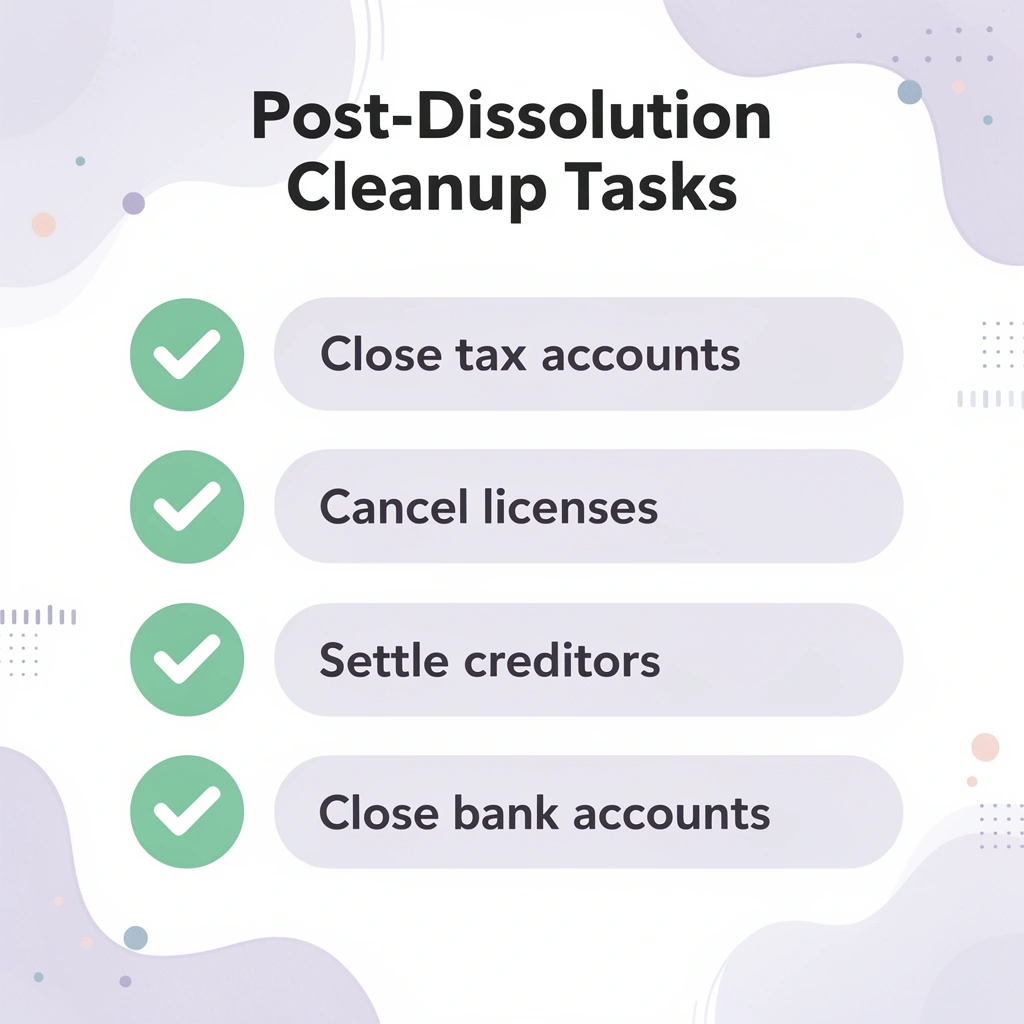
The step most founders skip is cleaning up after filing. They submit Articles of Dissolution to the Louisiana Secretary of State and assume the process is complete. But dissolution paperwork only notifies the state of your intent to close. It does not close tax accounts, cancel licenses, settle creditor claims, or end obligations that continue accruing after you stop operating.
🚨 Warning: Filing dissolution papers is just the beginning, not the end. Many founders discover months later that they're still receiving tax bills, license renewal notices, and creditor demands because they never completed the full shutdown process.
"Dissolution paperwork only tells the state that you plan to close. It does not automatically end your business obligations." — Louisiana Secretary of State Guidelines
💡 Key Point: Think of Articles of Dissolution as your announcement to dissolve, not the actual dissolution itself. The real work happens in the weeks and months that follow, when you must systematically close every account, cancel every license, and settle every obligation your business created.
What happens to tax accounts after filing for dissolution?
Louisiana does not require a formal tax clearance certificate, but tax obligations persist after filing for dissolution. The Department of Revenue expects final returns marked as final, with all liabilities paid.
If you file a final return without submitting separate account termination forms, the account stays open: notices keep coming, and penalties accumulate. According to a U.S. Bank study, 82% of businesses fail due to cash flow problems. Financial exposure does not end when revenue stops; it ends when every account is formally closed.
How do federal tax obligations continue after dissolution?
The same pattern repeats with federal obligations. The IRS requires a final corporate tax return with the "final return" box checked, but filing that return does not automatically close your Employer Identification Number or terminate payroll tax accounts.
Each must be addressed separately, or they remain active in federal systems, generating compliance expectations that founders assume are already behind them.
What happens when licenses and registrations are left active?
State business registrations, local permits, occupational licenses, and industry-specific filings remain active after dissolution until formally ended. Renewal fees become obligations tied to the entity even if operations stopped months earlier.
A Mercury survey of 1,500 early-stage U.S. founders found that 66% of founders reported expenses higher than expected, with post-closure fees a common source of surprise. The business generates no revenue, yet the administrative infrastructure continues generating costs.
How can you manage license termination efficiently?
Handling this internally means tracking down each account and filing termination requests individually. Platforms like Starcycle map these dependencies upfront, identifying every open account, license, and registration tied to the entity and managing termination so nothing generates fees or compliance requirements after dissolution is filed.
The creditor claims that the surface later
Dissolution creates a legal window for creditors to submit claims, but only if properly notified. Skipping formal notification allows claims to be filed after dissolution, exposing founders to personal liability for obligations they believed were resolved. The risk surfaces months later when a vendor files a claim or a contract dispute emerges, and the dissolved corporation no longer shields you.
This step gets skipped because founders are mentally done with dissolution. The business has stopped, the decision has been made, and attention has shifted forward. Administrative cleanup feels like paperwork that can wait, but waiting makes a clean shutdown linger.
How Starcycle Helps You Close Your Corporation with Clarity
Most founders understand what needs to be done; the challenge is putting it all together. Legal approvals, state filings, tax obligations, and creditor considerations span different places with different requirements and timelines. That fragmentation is where mistakes happen.
🎯 Key Point: The complexity lies in coordinating multiple moving parts across different jurisdictions and deadlines.

Starcycle brings this process into one clear, structured path. You get a tailored wind-down plan for your corporation that outlines exactly what needs to happen and in what order. Filing too early or missing a step can delay the process or create additional problems, so sequencing matters.
⚠️ Warning: Improper sequencing of dissolution steps can result in penalties, delayed closures, or unexpected liabilities that could have been avoided with proper planning.
"Fragmented processes across multiple jurisdictions are the leading cause of dissolution delays and compliance issues for closing corporations." — Corporate Dissolution Study, 2024
What is the coordination trap in business processes?
A familiar pattern emerged when someone tried to resolve a lost package claim. FedEx said Best Buy needed to confirm; Best Buy said FedEx needed to investigate. The tracking showed delivery, but retrieval efforts were exhausted. No one took responsibility because the process required manual coordination across entities with different systems, and each side pointed to missing documentation on the other's side, creating an unresolved loop.
How does corporate dissolution create similar coordination challenges?
When a company closes, it creates a significant administrative burden. The Secretary of State requires proof of paid taxes, and the Department of Revenue demands final tax forms. Each office operates independently, so missing a single requirement forces you to restart the process. According to Starcycle, professional dissolution services start at $299, but the primary benefit is avoiding repeated delays that can stretch a simple shutdown into months of back-and-forth with state offices.
How does Starcycle help you avoid common dissolution problems?
Starcycle handles requirements in advance, closing them before they become problems. You avoid hidden fees, penalties, and delays by addressing obligations in the right order and solving issues before they escalate. You move through the process faster because you know what's happening at every step, following a clear system designed for a clean close.
What makes Starcycle different from other dissolution guidance?
Most dissolution guidance tells you what to file, but not how to complete the process from start to finish. Starcycle fills that gap by turning a complex, multi-step shutdown into an organized, manageable process, enabling you to close out fully and cleanly so nothing follows you back.
But knowing the process exists differs from starting it.
Related Reading
- How To Dissolve A Corporation In Texas
- How To Dissolve Llc In Nebraska
- How To Dissolve A Corporation In California
- How To Dissolve An Llc In Wyoming
- How To Dissolve An Llc In New Mexico
- How To Dissolve A Corporation In Delaware
- How To Dissolve A Business
- How To Dissolve An Llc In Alabama
- How To Dissolve A Corporation In North Carolina
- How to Dissolve a Corporation in New York
- How To Dissolve A Corporation In Nevada
Sign up to Make your Business Closure Process Easier
Sign up with Starcycle to get a personalized wind-down plan that shows you exactly what to file, what to close, and what to fix. You receive a structured path built for Louisiana's requirements, not generic advice that leaves gaps.
🎯 Key Point: Personalized guidance eliminates the guesswork that causes most business closures to extend for months.
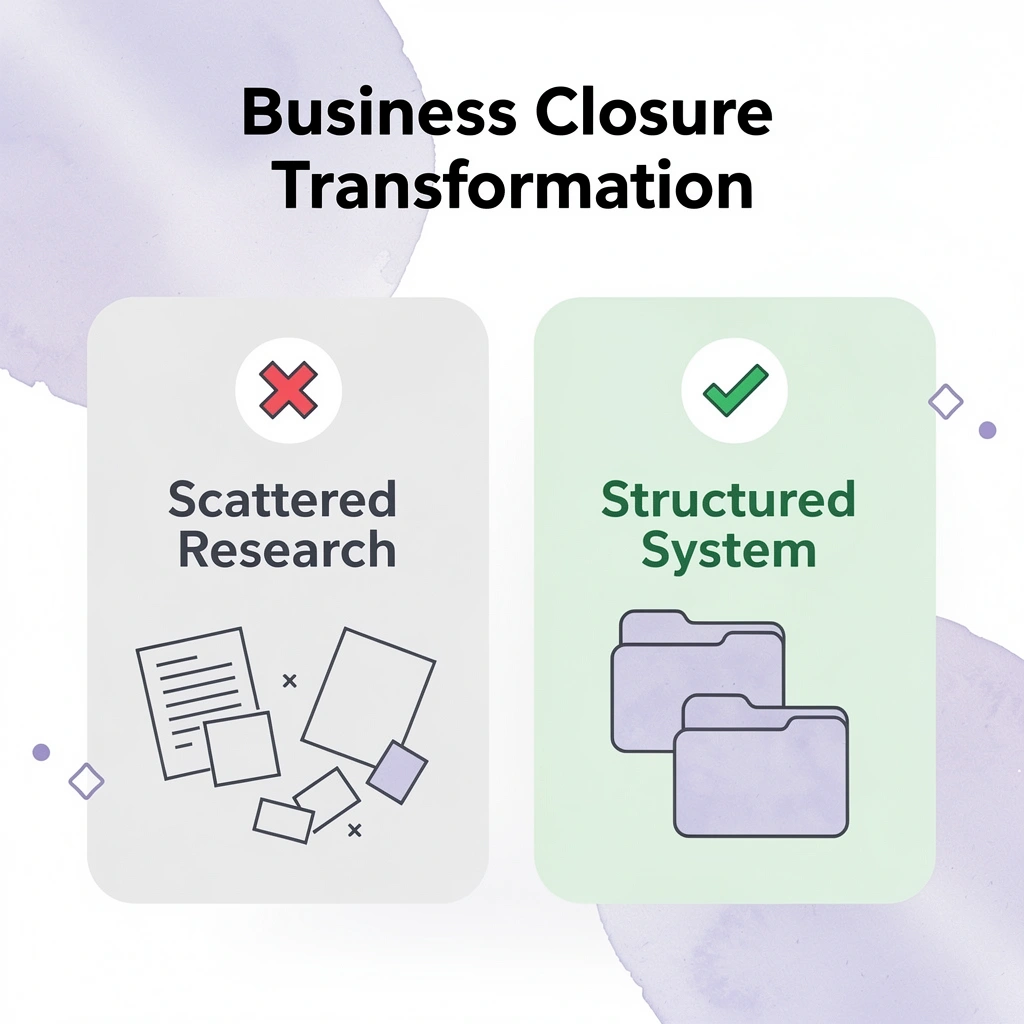
This replaces scattered research, agency coordination, and repeated delays with a system that handles tasks in the right order. You stop wondering if you missed something and move through closure with a clear endpoint in sight.
"78% of business owners report feeling overwhelmed by closure requirements, leading to an average 6-month delay in completing dissolution." — Small Business Administration, 2023
💡 Tip: Following tasks in the correct sequence prevents costly backtracking and regulatory complications.
Dissolution is a necessary step toward what comes next. The faster you close cleanly, the faster you can redirect your energy toward building something new, taking a different role, or reclaiming time consumed by administrative burden. Starcycle makes that transition faster, clearer, and more affordable than coordinating it yourself or paying traditional legal fees that can run into thousands of dollars.
🔑 Takeaway: Clean closure frees you to pursue your next opportunity without legal or financial baggage.